
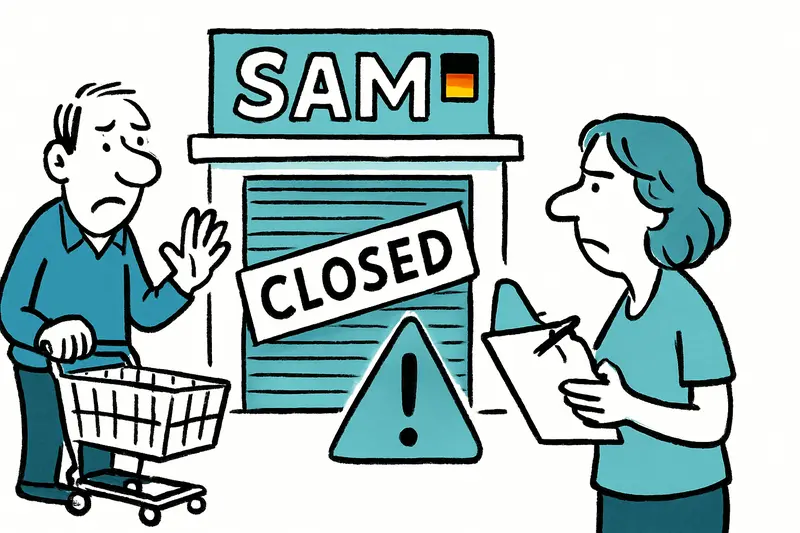
Closure of a German Supermarket in Playa de Palma: A Warning Sign for Food Safety?
The Sam store at Playa de Palma appears to be closing — after accusations of spoiled goods. Time for a reality check: How do inspections work, what alternatives are there, and what should customers pay attention to now?
Closure of a German Supermarket in Playa de Palma: A Warning Sign for Food Safety?
Key question: How safe is our food on Mallorca if a well-known store at Playa de Palma is facing closure after allegations of spoiled goods?
In the morning at Playa de Palma the air still smells of the sea and roast from the early-opening beach bar; delivery vans rumble down the avenue, seagulls cry. In exactly this spot a German specialty market known as Sam has announced it will close during this year. The trigger were reports of spoiled and moldy products, similar to 20 Tonnes of Spoiled Fish in Palma — A Wake-up Call for the Cold Chain.
Critical analysis: Food does not fall from the sky. It goes through supply chains, warehouses and cold rooms. Mistakes can happen anywhere: in storage, in routine checks or in the handling of returns. The reports surrounding Sam show that problems can become visible in one shop — but they also raise the question of how reliable inspection and prevention are.
On Mallorca inspection responsibilities are distributed: local municipal authorities carry out checks in shops, while the health authority monitors larger risks. But inspections are spot checks, staff is limited, and authorities often prioritise based on complaints or reports. That means: as long as no suspicion is reported, many processes remain undiscovered. Past investigations, for example Salmonella Outbreak at Playa de Palma: How Did It Come to This? and 231 kilos of spoiled meat: Guardia Civil reportedly seizes reprocessed goods at plant south of Palma, show how complaints can trigger wider action.
What is usually missing in public debate: a clear presentation of how often inspections take place and with what results. Citizens hear about scandals, then see an announcement of a closure — and are left uncertain. Transparency about inspection intervals, the underlying deficiencies and remedial measures would build trust. Also rarely discussed is how small specialty shops manage their supply chains — from ordering in Germany to storage in the local backroom.
A concrete everyday view: In Santa Ponça, in the southwest of the island, a small German-speaking grocer opens in an industrial courtyard. The operator, who has been on the island for almost two decades, regularly has trucks coming from Germany — on Fridays and Mondays, he explains. His range is smaller than that of large chains; in return he personally checks deliveries and removes expired goods. According to him, expired food is given to social services or animal welfare organisations. Such local solutions work because the owners are close to the process — and because customers keep a watchful eye.
What alternatives do consumers have now? Small specialty shops like the retailer mentioned in Santa Ponça are one option. In addition, the drugstore chains on the island carry a surprisingly wide range of sweet and non-perishable items. And of course discounters like Lidl and Aldi regularly offer products familiar to many from home. Those looking for specific brands can also find them at import shops and some bakeries — though selection and prices vary.
Concrete solutions: 1) More transparency: Authorities could make inspection results more easily publicly available, with clear notes on what was inspected and when. 2) More frequent random tests in warehouses and on imports — not only after complaints. 3) Support for local small businesses in training and cold-chain management, rather than relying solely on sanctions. 4) A local reporting office for consumer hygiene, reachable in German and Spanish, would reduce language barriers and turn tips into action faster. 5) Customers themselves: use cooler bags when on the go, check best-before dates, and return suspicious items rather than risking them.
What the island needs now is less moralising and more pragmatic rules — plus a healthy dose of scepticism when reaching into the cold cabinet. The closure of a shop like Sam is not only a loss for regular customers; it is also a reminder: food control is an ongoing job, not a one-off act.
Conclusion: The debate should have two aims. First: clearer information and more visible inspections so shop owners know where they stand. Second: supportive measures for reputable small businesses so they can meet standards. For everyone shopping in Palma: the alternatives are there — but shop with open eyes. Shopping on Mallorca remains a mix of good judgement, patience and the occasional chat with the shopkeeper.
One final neighbourhood tip: if something looks suspicious, photograph it, document it and report it. That way you help not only yourself but the next customer as well.
Frequently asked questions
How safe is food shopping in Mallorca if a supermarket is closed over spoiled products?
Who checks food shops and supermarkets in Mallorca?
What should I do if food in a Mallorca shop looks spoiled or moldy?
Where can I buy German groceries in Mallorca if a specialty market closes?
Is Playa de Palma a reliable place for everyday shopping in Mallorca?
How do small food shops in Mallorca keep cold products safe?
How often are food inspections carried out in Mallorca?
What can Mallorca shoppers do to avoid buying unsafe chilled food?
Similar News

New trick at Palma Airport: suitcase stolen from the belt — a reality check
On September 28 a 36-year-old allegedly stole a suitcase from the baggage belt of a 51-year-old German passenger at Palm...

Urgent Clearing of Palma's Torrents: Flood Prevention or Symptom of Short-Sighted Planning?
The city of Palma is responding to storm forecasts and has cleared several torrents. We ask: Is the short-term clearing ...
Evaneos and Mexico: A Reality Check for Sustainable Travel
Travel advertising often reads like a promise: local, sustainable, unique. But how deep do these promises really go? A c...

From Megapark to the Altar: Party Singer Now Offers Weddings in Mallorca
A well-known party artist combines partying and marriage: instead of a traditional church there are ceremonies at the Me...

The Maricarmen Case: Why an Eviction Is Forcing Spain's Housing Debate
Images of an 87-year-old woman on a stretcher have sparked a debate in Spain that also runs deep in Mallorca. Who protec...
More to explore
Discover more interesting content

Can Cap de Bou

Townhouse Lleo 72
