
Cocaine in Lacasitos tin: Arrest near Artà and the open questions
Cocaine in Lacasitos tin: Arrest near Artà and the open questions
During a New Year's check in Artà, the Guardia Civil discovered 26 individually wrapped portions of white powder in a Lacasitos tin. A 40-year-old man was arrested. Why such hiding places keep working — and what is missing locally.
Cocaine in Lacasitos tin: Arrest near Artà and the outstanding questions
New Year's check reveals 26 portions in a candy tin — investigations ongoing
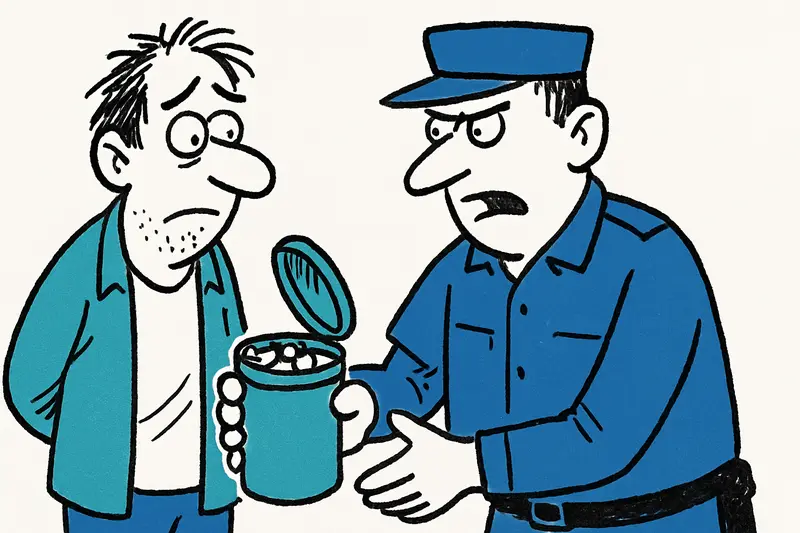
On New Year's Day, a Guardia Civil patrol stopped a vehicle at an exit near Artà after the driver performed an unusual driving maneuver. During the search, officers found 26 individually wrapped sachets of white powder inside a container of the confectionery "Lacasitos." Laboratory analyses later confirmed that the substance was cocaine. The 40-year-old driver was arrested; approximately €275 in cash was also found on him, prompting investigators to suspect drug trafficking and to hand the case over to the judiciary.
Key question: How do drug dealers repeatedly manage to hide substances in everyday items — and what can the island do about it?
The facts are few and clear: hiding places in everyday packaging are not a new phenomenon. Still, the choice of packaging is striking in its lack of imagination — a tin of chocolate lentils appears harmless, attracts no attention and is easy to transport. Checks like the one near Artà succeed in such cases because attentive officers notice irregularities. Here, a sudden evasive maneuver at a control point was the trigger.
Viewed critically, the question arises as to how big the problem really is. Twenty-six portions are more than a personal-use amount for immediate consumption, and the cash sum increases the suspicion of dealing. Public debate lacks figures on how often such finds occur on Mallorca; likewise, which routes or times are particularly vulnerable remains largely unclear. Further context appears in Kilos of Cocaine: What the Find Means for Palma, Inca and Binissalem and in Drugs, Millions and Suspected Abuse of Office: What the Major Operation in Mallorca Reveals.
What is missing in the public discourse is a sober view on two levels: on the one hand, prevention within society — who buys, who sells, and which social circumstances push people into dealing? On the other hand, the organisational perspective of controls: are checkpoints sufficiently distributed, is staffing at the Guardia Civil and Policía Local adequate, and how is cooperation with port and airport authorities, which often play transit roles, organised? See also Arrest of 'El Indio' in Palma: A Step Forward with Many Questions.
One scene is easy to imagine: early January morning, blue flashing lights at the roadside, the smell of diesel and wet tarmac, a farmer in rubber boots drives past, a dog barks somewhere. Such checks disrupt everyday life but are often the most effective method for security forces to make spontaneous finds. They are, however, labour- and time-intensive — and therefore costly.
Concrete approaches that could be discussed locally are not new but are rarely implemented consistently: more systematic checks on known access roads to tourist centres, strengthened cooperation between the Guardia Civil, Policía Local and judicial authorities, funding for specialised units to detect sophisticated hiding places, and low-threshold information services for residents to report suspicious observations. Education in schools and for seasonal workers about the risks of drug use and the criminal consequences would be as necessary as offers for social reintegration for people driven into dealing.
Another practical suggestion: campaigns that highlight smugglers' creativity can help raise awareness of unusual packaging — in supermarkets, among parcel services, and in second-hand shops. Such prevention measures should fit the local context: in villages like Artà, where neighbours know each other, tips and direct enquiries often work faster than anonymous hotlines.
In conclusion: the find in the Lacasitos tin is a small but telling case. It shows that checks can work and that perpetrators try to disappear into the familiar. At the same time, it reveals gaps — in public debate, prevention and the equipment of security forces. When residents in Artà or elsewhere on Mallorca see sirens and flashing blue lights in the morning, they should know: these operations take time and money, but they contribute concretely to safety. The question is whether politics and administration are willing to draw systematic lessons from this and provide the necessary resources.
Frequently asked questions
Why are police checks on Mallorca sometimes effective against drug trafficking?
How do drug traffickers hide cocaine in everyday items?
Is a small amount of cocaine always treated as personal use in Spain?
What should visitors to Mallorca pack if they are travelling in winter?
Is it normal to see Guardia Civil road checks near Artà?
Why are rural access roads in Mallorca watched by police?
What can residents in Mallorca do if they notice suspicious packaging or activity?
What does the cocaine case near Artà say about drug trafficking on Mallorca?
Similar News

"Expensive chaos" and many open questions: What clients can do when a lawyer suddenly stops responding
Several clients complain that a well-known German lawyer in Mallorca has been unreachable for months. Key question: What...

TV tip: 'The Last Problem' — Mallorca as the setting of a classic crime
A classic whodunit on Mallorca: A new miniseries set in spring 1959 brings storm, an isolated hotel and a dense web of s...

Nipping Sea Creatures: Why Bathers in Cala Major and Elsewhere Should Be Cautious
In Cala Major, bathers have reported being nipped by small fish. What is behind it, how can problems be avoided — and wh...

Forced eviction in Santa Catalina: When a 65-year-old slept in her car and showered on the beach — a question of responsibility
The story of Pilar López from Santa Catalina represents a problem affecting many Mallorcans: How can an island with a bo...
New traffic rules from October 1: What Mallorca visitors and locals need to know
From October 1, 2026, Spain will implement far-reaching changes to traffic regulations. Important for Mallorca: greater ...
More to explore
Discover more interesting content

Can Cap de Bou

Townhouse Lleo 72
