
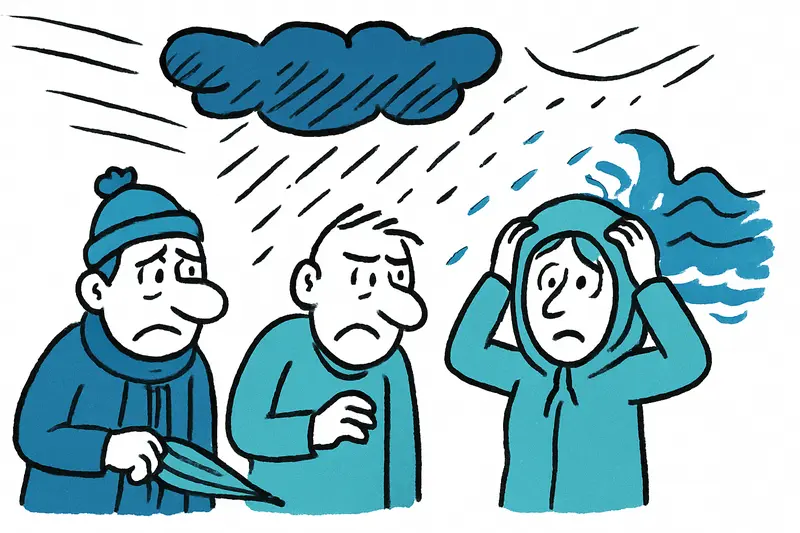
Cold front approaching — what Mallorca's coasts really need now
An arctic cold air front is bringing storm, rain and snow to Mallorca. AEMET warns of an orange alert on the northeast coast and waves up to eight meters high. A reality check: who is prepared and what is still missing?
Cold front approaching — what Mallorca's coasts really need now
Key question: Are we prepared — from fishing boats to hotel terraces — when a cold front with polar air moves over Mallorca from Thursday, as discussed in Short break before the rain: Is Mallorca ready for the fast cold front??
The core facts are clear: the national weather service AEMET has issued an orange alert for parts of the island on the northeast coast; other coastal and mountain areas are under yellow. It expects gusty northeast winds, waves up to eight meters in places, a marked drop in temperatures and persistent rain — even snow at higher elevations, with the snow line dropping to around 1,100 metres and in the early part of next week falling to about 900 metres. The warnings begin in the early hours of Thursday and are initially scheduled until Friday night, but they may be extended, according to AEMET weather warnings.
This is not a theoretical exercise: as recently as Tuesday some stations still showed values around 20 °C, for example in Son Servera or Calvià, but the night brought ground frost at exposed stations like Escorca, Lluc and Son Torrella (around 1 °C); in Campos, at the University of Palma and at the airport only about 2 °C were measured. The swing within a few days makes the situation difficult for farmers, port operators and event organisers, a theme examined in Cold snap in Mallorca: Is the island really prepared?.
Critical analysis: the warning situation is precise for large areas, but practical implementation on the ground often falters. Weather information reaches the island, but not always the right recipients at the right time. Small fishing harbours and leisure moorings receive detailed sea forecasts less often than large marinas. Municipalities react differently: some clearance teams are prepared, others have not even checked the gutter channels in front of cafés and promenades. In Palma one can see on windy days how loose parasols and chairs flapping along the Passeig Marítim cause chaos — this time it is not merely a nuisance but a hazard.
What is missing from the public debate: precise, localised guidance for the vulnerable group of small boat owners, clear recommendations for tourism businesses (e.g. how to secure terrace furniture), binding checklists for coastal construction sites and a multilingual, easily accessible communication chain for holidaymakers. There is also no coordinated overview yet of which roads in elevated areas should be closed first in case of snow or storms — that would be important for scheduled buses, commuters and agricultural transport.
Everyday picture on the island: on Wednesday morning a mild breeze still blows, cafés in La Lonja slowly put away chairs, at the fish market in Port d'Alcúdia harbour workers quietly talk about the coming days, and the pine trees along the roads of the Tramuntana mountains already creak noticeably in gusts. The sea has taken on a grey sheen along the coast, and the heavy surf AEMET warns about is already firmly fixed in the minds of the old captains, as described in Storm warning on the coast: Ten-meter waves and freezing nights in Mallorca.
Concrete, immediately implementable solutions:
For authorities and municipalities: centralised, multilingual warnings with clear location names (e.g. Port de Sóller, Cala Rajada), deployment plans for clearance teams, communicate temporary closures of exposed coastal paths early and consider mobile barriers at critical points.
For ports and boat owners: check secure moorings immediately, attach loose fenders, use extra mooring lines in strong gusts or move boats away from exposed berths. Marinas should pass on swell forecasts promptly.
For coastal restaurants and businesses: secure terrace furniture and umbrellas early, check construction fences and scaffolding, secure bins at accessible locations or move them inland.
For farmers and winemakers: check protection against cold damage, prepare small mobile frost-protection systems, cover plants and sensitive stocks at night where possible.
For mobility and tourism: bus companies should have alternative routes ready, airport services should update passenger information, hotels should proactively inform guests about possible restrictions and tour operators should postpone excursions before they become risky.
Practical everyday tips for residents and visitors: do not park vehicles too close to promenades, secure balcony furniture, avoid walks on exposed waterfront promenades during storms, check local updates from AEMET weather warnings and municipal channels early in the morning.
Concise conclusion: the early warning time is there — that is an advantage. Whether the island benefits depends now on good coordination and on people taking simple precautionary measures. An orange alert is not an event to watch passively but a wake-up call. If ports, municipalities and terraces do not act now, a strong gust can quickly cause property damage and dangerous situations. So: plan, secure, inform — and put the agenda for more precise, locally tailored warnings on the table.
Frequently asked questions
What should I expect from the cold front in Mallorca this week?
Is it safe to go to the beach in Mallorca during strong winds and high waves?
What is the weather alert for the northeast coast of Mallorca?
Can it snow in Mallorca when a cold front arrives?
How should boat owners in Mallorca prepare for rough seas?
What should restaurants and cafés in Palma do before the wind picks up?
Should farmers in Mallorca worry about frost after the temperature drop?
What practical precautions should holidaymakers in Mallorca take during the storm?
Similar News

Rental Car Theft in El Arenal: What This Incident Reveals About Our Gaps
A teenager steals a running rental car in El Arenal, flees on foot, climbs over walls and is caught by the Guardia Civil...
Red Rope in Palma's Library: What Helps Against Selfie Tourism — and What's Missing
Palma's city library cordoned off an area with a red rope to keep selfie tourism away from reading and working activitie...
Fort San Carlos: Museum, Harbor Dispute — and a Conflict That Demands Answers
The military museum at Fort San Carlos sits right on Palma's harbor, with unexpectedly quiet rooms filled with cannons a...
Old Town Under Pressure: When a Doorway Becomes a Sleeping and Shower Place
For months a woman has been living with a parasol, a clothes rack and personal belongings next to the social welfare off...

When Shopping Weighs Heavier: Mallorca Demands a Tax Pause on Food and Fuel
Rising prices are putting pressure on households and agriculture. The Balearic Islands are calling for temporary tax rel...
More to explore
Discover more interesting content

Can Cap de Bou

Townhouse Lleo 72
