

Shock in Costitx: Knife Attack on Ex-Partner — What Fails in the Protection System
In Costitx a 35-year-old woman was attacked and seriously injured by her ex-partner with a knife. The man had a restraining order and a prior conviction for attempted murder. We ask: Why did the protection system fail — and what needs to change?
Shock in Costitx: Knife Attack on Ex-Partner — What Fails in the Protection System
Leading question: Why did the protection that was supposedly in place not prevent a woman from being seriously injured?
On Sunday night a brutal attack took place in Costitx: a 35-year-old woman was injured with a knife by her former partner. Emergency services took her to the central hospital, followed by emergency surgery. She is currently in the intensive care unit; according to the hospital her condition is stable. The suspect was already known: there was a contact and proximity ban against him, and in 2014 he served time for an attempted murder of another woman, as discussed in Pre-trial Detention after Knife Attack in Costitx — What Was Missing to Prevent It?.
Last night people gathered in Costitx on the Plaça in front of the small church; a minute of silence was held as a sign. The bells hung overhead, and in the café next door there was hardly the clinking of cups. Such scenes are familiar on the island: a place usually shaped by olive trees and Sunday strollers suddenly falls silent.
Critical analysis: The facts suggest that formal protective instruments — a proximity ban, a previous prison sentence — are not enough if practice has gaps. A written ban is of little use if its enforcement is not continuously monitored or if those affected do not receive additional help quickly enough. This raises questions about aftercare following releases, information transfer between the judiciary, the police, and social services, and resources for timely risk assessments.
What is missing from the public debate? Most reporting focuses on individual cases, the horrific sequence of events and judicial steps (see After Knife Attack Near Costitx: How Secure Are Protective Orders in Mallorca?). Rarer are discussions about concrete implementation: how are proximity bans enforced in rural places like Costitx? Are previous convictions automatically included in risk assessments? How quickly and bindingly do police, health services, and women's shelters work together? Without addressing these questions, the discussion remains superficial.
Everyday scene from Mallorca: a social worker from the surrounding area regularly reports women who could only take a few things after a separation. They seek refuge with relatives, change doctors, but often stay near their homes because work and children do not allow for a sudden escape. In such cases a formal ban is not enough; practical support is needed, secure phone lines, and a network that takes the smallest signs seriously.
Concrete solutions: First: immediate, binding risk assessment based on recognisable criteria (prior convictions, possession of weapons, frequency of escalation) and transmission of this assessment to all involved agencies. Second: expand electronic monitoring where the risk is high, linked to rapid alarm chains to the Guardia Civil. Third: strengthen local contact points — low-threshold services in villages that organise help, provide transport to shelters and accompany victims. Fourth: training for island police stations so that reports, injunctions and their enforcement are more closely connected. Fifth: better follow-up after release, such as reporting requirements and home visits when prior violence is known.
Such measures require money and personnel. But they save lives and prevent long-term trauma that affects entire families. In smaller communities like Costitx, coordinated local structures can achieve a lot: less bureaucracy, faster responses, more visibility for those affected.
Conclusion: The attack is an urgent wake-up call for the island. The rules and bans exist, but their effectiveness depends on practice. Authorities must identify and close the gaps — and the neighbourhood must not look away. We hope for the woman's full recovery in Costitx; for the community, this case must lead to concrete improvements in protection and their implementation.
Frequently asked questions
How can a protective order fail in Mallorca?
What should someone in Mallorca do after leaving an abusive partner?
Can someone with a past violent conviction still pose a risk in Mallorca?
How are proximity bans enforced in rural Mallorca?
What support is available for domestic violence victims in Mallorca?
Why are village communities in Mallorca so affected by violent incidents?
What does a proper risk assessment for domestic violence in Mallorca include?
What lessons does the Costitx case raise for women’s safety in Mallorca?
Similar News

The End of the Cheap Ride? Why Mallorca Is Hit Harder by the Fuel-Price Shock
Gasoline and diesel average close to two euros per liter. What this means for commuters, supply chains and renters in Ma...
Relaxed liquid rules in Munich: What Mallorca travelers will notice
At Munich Airport the 100-milliliter rule will be lifted at all checkpoint lanes — thanks to new CT scanners passengers ...
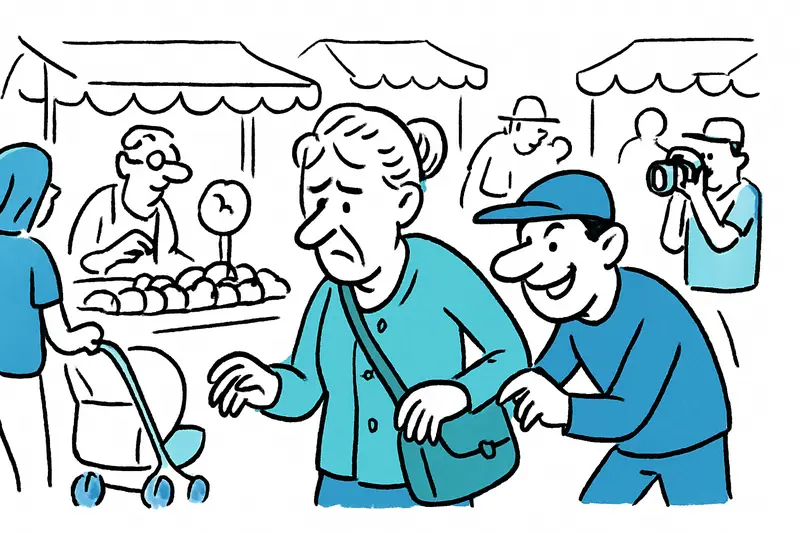
For 45 Years on Mallorca — and Then This: How a Market Visit in Santa Ponsa Became a Lesson
A woman who has lived on the island for decades lost money and important documents at the Mercat Setmanal in Santa Ponsa...
10 percent surcharge on the beach: How legal and transparent is the extra charge at Playa de Muro?
A German part-time resident noticed days after a restaurant visit in Playa de Muro that the bill included a flat ten per...

Body near the Llevant Market: What this death says about our city
A man was found dead on Sunday afternoon near the Llevant Market. Police say the death appears natural. The scene raises...
More to explore
Discover more interesting content

Can Cap de Bou

Townhouse Lleo 72
