
Battle for Green: Court Allows Felling of Ombú Trees at Plaça Llorenç Villalonga
Battle for Green: Court Allows Felling of Ombú Trees at Plaça Llorenç Villalonga
The administrative court has lifted the injunction: Palma may remove the diseased Ombú trees at Plaça Llorenç Villalonga. What is now missing is transparency and an honest plan for replacement greenery.
Battle for Green: Court Allows Felling of Ombú Trees at Plaça Llorenç Villalonga
A court ruling — and many open questions in Palma
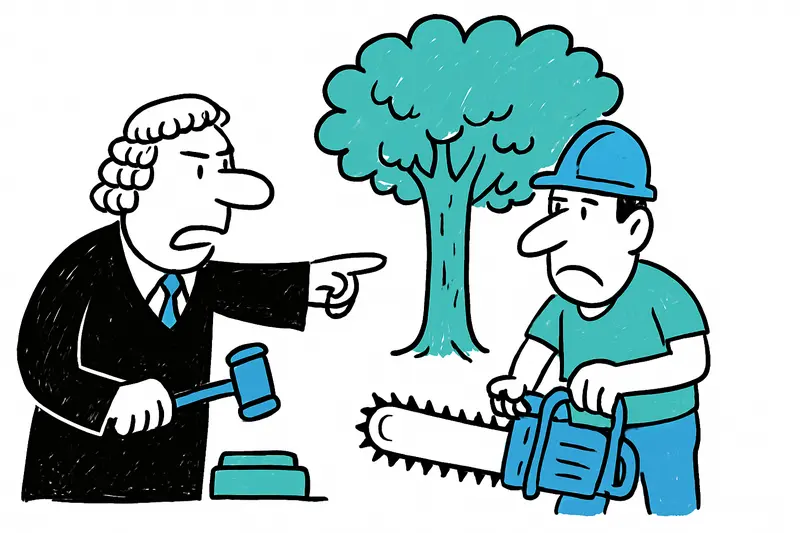
The administrative court has lifted the temporary injunction: the city of Palma may proceed with the removal of the Ombú trees on Plaça Llorenç Villalonga. The decision was based on the official assessment that the trees are in poor condition and pose an increased risk of breakage or uprooting — especially during strong winds or storms.
Key question: Is a court decision enough to regain the neighborhood's trust, as residents protested in Alarm in Palma: Neighborhood Resists Tree Felling on Plaza Llorenç Villalonga, or is more needed than the mere announcement to plant 20 new trees as compensation?
The images of gusts of wind that sometimes sweep through Palma's streets remain in many minds: flapping newspaper pages, rattling market umbrellas at the square. For people who pass Plaça Llorenç Villalonga every day — delivery drivers, café owners, the young father with the stroller — the decision is not abstract. They wonder whether felling really is the only option or whether saving the trees would have been possible, as covered in Dispute over 17 Ombu Trees on Plaza Llorenç Villalonga: Who Decides on Urban Green?.
Critical analysis: The administration relies on a risk assessment — that is necessary. But courts decide on legality, not on the best urban-ecological solution. In this case it remains unclear how extensive the investigations were: root soil analyses, reports from multiple tree experts, possible stabilization measures or phased rehabilitation are not described in detail in the statement. For many, the outcome therefore feels more political than purely technical.
What is missing from the public discourse: transparent data; a recent piece explored why transparency has faltered: When Palma's Trees Fall Silent: Felled Pines and Lost Trust. Citizens should have the opportunity to see which investigations were carried out, which alternatives were considered and how the selection of replacement trees was made. Also scarcely visible is a long-term strategy: Where exactly will the 20 new trees be planted? Are they native species better adapted to the climate and urban conditions? Who will be responsible for future care and irrigation?
Everyday scene from Palma: on a cool morning you can hear delivery vans beeping in the square, an older man sweeps leaves into a bin, youngsters force their skateboards over uneven cobblestones. The Ombú trees stood there as tall providers of shade; birds rested in their dense foliage. Their disappearance will be noticeable — not only visually, but also in summer heat, when sunlight will fall unfiltered on the square.
Concrete solutions that should be pursued now:
1) Full transparency: The city administration and relevant technical departments should make reports and risk analyses publicly accessible and explain them in plain language.
2) Participation: A short dialogue process with residents, business owners and environmental experts before the felling can help create acceptance and address practical objections.
3) Quality control for replacement plantings: The promised 20 trees should be more than a number. Recommendations: predominantly site-appropriate, drought-resistant native species, care guarantees (watering sponsors, irrigation systems) and sufficient substrate so they can take root.
4) Documentation and monitoring: Tree registers, regular health checks during the first five years and publicly accessible feedback on establishment are simple tools to measure success.
5) Examine technical alternatives: For other, less acutely endangered trees, measures such as crown support, root space enhancement or soil improvement could be useful — instead of blanket felling.
Bottom line: The court has set the legal course — but the ruling alone does not replace sustainable green policy. For local people what matters is not only legal correctness, but whether the city credibly shows it will ensure shade, air quality and the quality of public spaces in the long term. Whoever promises 20 new trees has the duty to guarantee their survival — not in five years, but now.
For Palma this means: decisions about trees must be justified not only legally, but also ecologically and socially. The coming weeks will show whether the planting announcement becomes more than a compensatory line in a press release — and whether Plaça Llorenç Villalonga will soon regain greener shade.
Frequently asked questions
Why can Palma now cut down the Ombú trees at Plaça Llorenç Villalonga?
Are the Ombú trees in Plaça Llorenç Villalonga dangerous in strong wind?
What will replace the Ombú trees at Plaça Llorenç Villalonga in Palma?
Will the loss of shade at Plaça Llorenç Villalonga affect summer conditions in Palma?
What should Palma publish before removing trees in a public square?
Could Palma have saved the Ombú trees with other technical measures?
Why did residents in Palma protest against the tree felling on Plaça Llorenç Villalonga?
What happens after a court allows tree removal in Palma?
Similar News

Who Benefits from the Half‑Hourly Flight on the Edge? Aena, Investments and the Island's Interests
Almost one billion euros is flowing into Son Sant Joan. The figures show the scale of investment and expected beneficiar...
Are the Balearic Islands the Southern Border of Europe? A Reality Check on Immigration
The Balearic Islands are again calling for EU aid after a sharp rise in arrivals by sea. Conflicting priorities between ...

"Expensive chaos" and many open questions: What clients can do when a lawyer suddenly stops responding
Several clients complain that a well-known German lawyer in Mallorca has been unreachable for months. Key question: What...

TV tip: 'The Last Problem' — Mallorca as the setting of a classic crime
A classic whodunit on Mallorca: A new miniseries set in spring 1959 brings storm, an isolated hotel and a dense web of s...
Nipping Sea Creatures: Why Bathers in Cala Major and Elsewhere Should Be Cautious
In Cala Major, bathers have reported being nipped by small fish. What is behind it, how can problems be avoided — and wh...
More to explore
Discover more interesting content

Can Cap de Bou

Townhouse Lleo 72
