
Cry for help in Sant Joan: German arrested for domestic violence — What the Balearic Islands lack
In Sant Joan de Labritja on Ibiza, a German man was arrested on June 30 after his wife's cries for help. Neighbors intervened, and police and the Guardia Civil took over. Our reality check asks: Are the reporting channels and protection services on the islands sufficient?
Cry for help in Sant Joan: German arrested for domestic violence — What the Balearic Islands lack
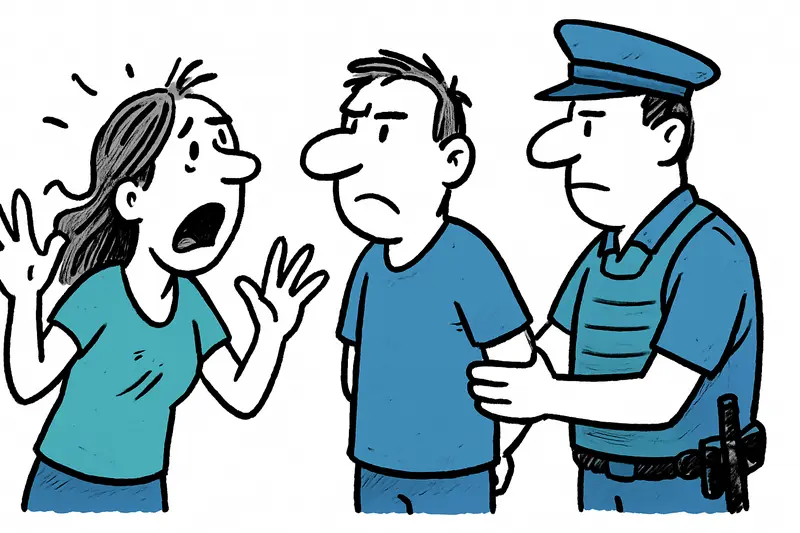
On the evening of June 30, loud cries from an apartment in Sant Joan de Labritja alerted neighbors and ultimately the police. According to the emergency services, a German national was provisionally detained; the alleged victim received protection on site and the judiciary has taken over the investigation. Officers from the local police worked together with the Guardia Civil; five officers entered the apartment after cries for help were heard from inside.
Leading question
Is the structure for victims of domestic violence on the Balearic Islands — especially outside the island centers — sufficient? The arrest is an immediate sign of intervention, but it does not provide a lasting answer. A single intervention protects in the moment; in the long term, more is needed.
Critical analysis
The incident in Sant Joan shows two sides: neighbors who intervene and authorities who respond. But what the scene does not reveal are details about the further care of those affected — for example whether short-term housing, psychosocial support, or legal assistance were immediately available. There are centers and support services on Ibiza, but outside of Eivissa and in rural municipalities like Sant Joan the presence is often thinner. Similar early-morning cases in the islands, like Severely injured in Port d'Alcúdia: When life explodes behind closed doors, show how logistics and timing can be decisive. When an intervention happens at night, every minute counts; logistics are decisive.
A second point is the role of witnesses in very small communities. In a village like Sant Joan, where everyone knows everyone, some neighbors hesitate to help or to testify out of fear of social consequences or entanglement in local conflicts. That can complicate investigations and worsen the protection situation for victims. Past episodes such as Manacor: Chain, Coercion and House Handover – How Long Did This Remain Hidden? illustrate how long abuses can stay concealed.
What is missing in public debate
There is a lot of reporting about individual operations, such as the After Knife Attack Near Costitx: How Secure Are Protective Orders in Mallorca?, but little about aftercare, prevention and local resources. What capacities do municipalities outside the capital have to provide temporary safe accommodation? How quickly do interpreters arrive if the victim does not speak Spanish? Such questions are often missing from the debate, even though they practically decide whether a cry for help results in protection or in further hardship.
Also seldom discussed is the importance of neighborhood infrastructure: good street lighting, reachable emergency numbers, easily accessible information points for victims — these are not luxury issues but safety issues. Someone sitting with a coffee on the Passeig Marítim in Palma early in the morning will notice how present public information and contact details are. In villages, it often looks different.
Everyday scene from Mallorca that connects
On the Passeig Marítim in Palma an older woman sits with shopping bags, listens to the radio and reads local notices about support services — visible and ordinary. This visibility is missing in many parts of Ibiza and smaller Mallorcan communities. If information does not appear in everyday life, help remains abstract instead of tangible.
Concrete approaches
- Mobile contact points: regular consultation hours by social workers in peripheral municipalities, for example once a week in a community hall, so that those affected know where to turn; - Fast access to interpreters: telephone or video interpreting services that police and social services can use quickly; - Expansion of safe emergency shelters: regional agreements so that those affected can be accommodated quickly on a temporary basis regardless of their place of residence; - Neighborhood building: publicly funded workshops in villages to raise awareness; encourage neighbors to report information without fear of reprisals; - Mandatory training for responders: focus on psychosocial first aid, victim protection and cross-cultural communication; - Visible information: notices in town halls, pharmacies and supermarkets with the emergency number 112 and information about local advisory services.
Why this matters
Intervening can save lives — as neighbors in Sant Joan showed. But experience after incidents such as After Arrest in s'Arenal: Police Are Not Enough — Social Solutions Needed suggests police action alone is insufficient. Protection means not only police at the scene, but also safe places, psychological support, legal assistance and a well-informed neighborhood.
Conclusion
The case in Sant Joan is a reminder that cries for help were heard and action was taken. The question remains whether victims will have the same chance of protection across the board in the future — regardless of whether they live in the island capital or in a remote municipality. In the short term the intervention worked. In the long term we need more presence, better information channels and concrete local support services. Anyone who sees the same situation on their street as the woman on the Paseo in Palma should not remain silent: report, help, connect — that can make the difference.
Frequently asked questions
What support options exist for victims of domestic violence in Mallorca, especially outside major towns?
How quickly can help arrive in a small Mallorca town like Sant Joan de Labritja if someone cries for help?
What usually happens after a domestic violence incident in Sant Joan de Labritja?
What concrete steps can Mallorcan communities take to improve protection for victims?
Are safe emergency shelters readily available in rural Mallorca?
What is the role of neighbors in supporting domestic violence victims in Mallorca communities?
Why is visible information about support services important in Mallorca towns like Palma?
What resources exist for non-Spanish speakers in Mallorca when domestic violence occurs?
Similar News

Heat and Power: Why the Balearic Islands Are Sweating Now — a Reality Check
Weeks of heat waves, rising cooling demand and suddenly flickering lights: Mallorca, Ibiza and Formentera have seen an i...
When the Water Taps Run Dry: Why Tankers Are Not the Solution
In villages like Deià, Valldemossa or on Menorca, municipalities are limiting water use because of drought. Who decides,...

Ryanair Flight Diverted to Barcelona: An In-Flight Emergency and the Questions That Follow
A Ryanair jet from Pisa to Málaga landed in Barcelona after a passenger became acutely ill. Why these cases need more at...
Alarm in Port de Pollença: What now for the polluted bay?
Hundreds of people protested on the beach of Port de Pollença. The environmental organization Arrels Marines demands a p...

Micaela Schäfer: Between Playa de Palma and a Berlin Law Firm — New Calm, an Old Tomcat and Solid Finances
The party artist from the Ballermann scene appears surprisingly down-to-earth: a new relationship with a Berlin lawyer, ...
More to explore
Discover more interesting content

Boat Tour with BBQ along Es Trenc Beach

Private transfer from Mallorca Airport (PMI) to Pollensa
