
Deadly accident on the Ma-13a near Santa Maria del Camí: What's missing in the discussion?
Deadly accident on the Ma-13a near Santa Maria del Camí: What's missing in the discussion?
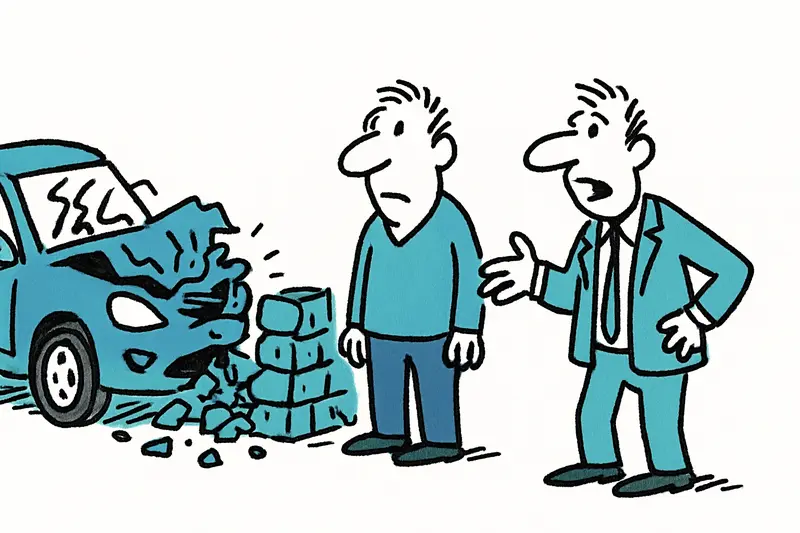
A 67-year-old dies after a nighttime collision with a stone wall on the Ma-13a. Guiding question: Are our country roads still safe enough?
Deadly accident on the Ma-13a near Santa Maria del Camí: What's missing in the discussion?
Guiding question: Are our country roads still safe enough when a stone wall on a bend becomes a death sentence?
On Friday evening around 7:30 p.m., what began as a routine drive on the Ma-13a between Palma and Sa Pobla ended in tragedy. A 67-year-old man was driving alone, left the roadway after a bend and crashed his MG ZS into a stone boundary wall. Residents and passing motorists called for help; firefighters had to free the driver from the wreck with hydraulic rescue tools because his legs were trapped. Despite the presence of several ambulances, the Santa Maria local police and the Guardia Civil, rescuers were unable to save his life.
Those are the sober facts. The aftermath: a completely destroyed bodywork, a cordoned-off road, onlookers standing in the headlights of emergency vehicles, and a community that grew quieter than usual that evening. The smell of petrol still hung on the adjacent road, olive groves whispered in the night, and for a short time the church bells of Santa Maria tolled in the distance — an image familiar to many on the island, but often only noticed after such a tragedy.
Critical analysis: the accident highlights not only the individual fate of a driver but also the weaknesses of the infrastructure. The Ma-13a is an old country road with sections that include bends, narrow shoulders and partly steep embankments. A massive stone wall at the road edge may have developed historically, but under high impact energy it behaves like an immovable opponent. Modern road safety favors energy-absorbing guardrails and sufficient run-off areas. Head-on Crash on the Ma-13 near Alcúdia: Could the Accident Have Been Prevented? underlines how design and protective measures can make a difference.
What is often missing in the public debate: concrete numbers on accident hotspots on the island, transparent reports about recurring danger points and local prioritization in redesigns. Also missing are simple impressions from everyday life: those who cycle here in the evening or return with children from training sense how tight the space can sometimes be. The discussion often focuses on blame in individual cases rather than on the design of the spaces people use every day.
Concrete solutions that could act quickly and cost-effectively on Mallorca: 1) mapping of so-called black spots and publicly accessible accident statistics for municipalities; Severe rear-end collision on the Ma-13: Why the stretch between Inca and Palma often becomes a bottleneck illustrates the value of accessible data; 2) prioritized installation of energy-absorbing guardrails at particularly dangerous bends instead of immovable walls; 3) improved road markings and large-area reflectors that clarify lane guidance at dusk; 4) targeted speed reductions and physical traffic calming on routes with high pedestrian or bicycle traffic; 5) regular visibility checks of road equipment, especially before the tourist season; 6) information campaigns for residents and commuters to raise awareness of risks on country roads.
Another area rarely discussed loudly: the emergency chain. On Mallorca, fire departments, emergency medical services and the Guardia Civil work closely together, as the operation that evening showed. Fatal accident on the Ma-19 near Llucmajor: Why motorcyclists are repeatedly affected shows the importance of reviewing response times and coordination across services. Nevertheless, response times should be systematically reviewed, especially on busy country roads, and accessibility for heavy recovery equipment improved. Local firefighters often know shortcuts and access routes that are important for coordination; their local expertise should be included in planning.
Everyday example from Santa Maria: the Sunday market, livestock transports in the early morning, locals visiting relatives after work — the traffic profile of this route is varied. If one bend can become a death curve, it affects not just a single vehicle but whole daily routines and the mobility of small villages. Local citizen forums where residents can point out danger spots would therefore be a practical tool.
What needs to be done now: the Guardia Civil is investigating the exact cause of the accident; that is the task of the specialists. In parallel, municipalities and the island ministry should inspect the stretch and implement short-term measures that can save lives. Long planning periods are of little help when dangers are acute.
Conclusion: it is painful when a life ends on a familiar country road. Immediate grief must not obscure the view of systemic shortcomings. Those who know the Ma-13a know that many small risks add up there: narrow shoulders, historic walls, unclear bends. If we as a community seriously want to make such accidents rarer, we need fewer accusations and more concrete measures: better safety barriers, clearer markings, transparent data and greater inclusion of local experience. That would not be a technocratic plea but a practical promise to the neighbors still traveling in the evenings.
Frequently asked questions
Is the Ma-13a near Santa Maria del Camí considered a dangerous road?
What makes country roads in Mallorca more dangerous at dusk?
Why are stone walls along Mallorca roads a safety issue?
What road safety improvements would help on the Ma-13a in Mallorca?
How do emergency services respond to serious accidents in Mallorca?
What traffic conditions are common around Santa Maria del Camí on the weekends?
Where can Mallorca residents report dangerous road sections or accident black spots?
What should drivers keep in mind on rural roads in Mallorca after dark?
Similar News

Mueller continues expanding in Mallorca: Artà in 2026, Can Picafort in early summer 2027
The drugstore chain Mueller is opening two new stores in Mallorca: a 1,400 m² shop in Artà on 5 November 2026 and a bran...
The Painter Who Lived Mallorca: Franz Taussig and His Century-Old Secret
A hundred years ago a young Viennese arrived in El Terreno, sketched the island and called himself Francis Caron. Today ...
Airport dispute: Bridge, forecasts and the question of responsibility
A video by the Spanish transport minister has ignited the dispute over DORA figures, capacities and local governance pow...

The Painter Who Invented Himself: How a Young Viennese Drew Mallorca
A hundred years ago a 19-year-old draftsman arrived in El Terreno. His diary and sheets, long known under the pseudonym ...
Released with Conditions: The Plus Ultra Suspicion and a Mallorcan Finca as Residence
A Dutch entrepreneur, sought in connection with the Plus Ultra case, was extradited to Spain after his arrest in Germany...
More to explore
Discover more interesting content

Can Cap de Bou

Townhouse Lleo 72
