
Deaf and Blind Pensioner Hit by City Bus: Family Demands Accountability
Deaf and Blind Pensioner Hit by City Bus: Family Demands Accountability
An 82-year-old deaf and visually impaired man was struck by a municipal bus at a zebra crossing in Palma in February. What began as seemingly moderate injuries turned into a need for long-term care; the relatives demand clarification and compensation.
Deaf and Blind Pensioner Hit by City Bus: Family Demands Accountability
A routine trip turned into a new, difficult life for a family in Palma
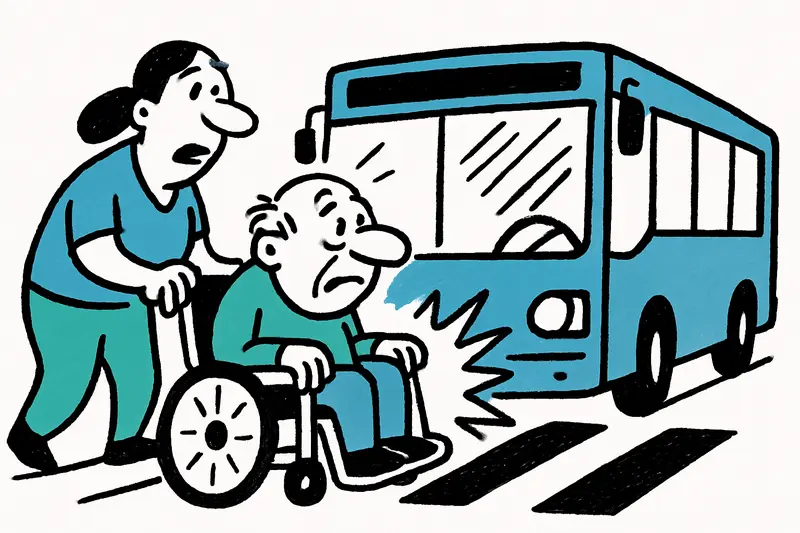
In February, an accident occurred on Enric Alzamora in Palma that upended an elderly couple and their relatives: an 82-year-old man, dependent on a wheelchair after surgery, was struck by a bus of the municipal transport company while crossing a zebra crossing. The retiree is both deaf and visually impaired. He was accompanied by a caregiver. After the impact he suffered severe fractures to his hip and thigh and required surgery. What initially seemed relatively minor developed into a series of serious medical complications including infections, breathing problems, confusion, and repeated hospital stays.
Key question
Who is responsible when an injured, vulnerable person falls apart in everyday life after a traffic accident, and why does professional aftercare often fall short of the pain experienced by those affected?
Critical analysis
The facts are sparse: the bus driver left his details at the scene, the police made a report, and the insurer has so far covered the medical costs. Nevertheless, this is not enough for the relatives. Compensation for treatment costs is only one piece of the puzzle. What matters are the long-term consequences: loss of independence, the need for comprehensive care, adapting a home, family members having to give up work, and above all the question of whether the driver's behavior or organizational shortcomings at the transport company were causal, a concern also raised in debates about TIB working conditions. This shows how legal and administrative handling of accidents often focuses narrowly on material matters, while social and emotional long-term consequences are neglected.
What is missing from public debate
In discussions about road safety in Mallorca there is a lot of talk about speed controls, tourists and road conditions — the everyday reality of people with disabilities quickly falls out of view. No one talks enough about how bus companies handle incidents internally, how victims and families should be supported immediately after an accident, and what standards should govern communication with those affected. Preventive measures for safe crossings in areas with heavy pedestrian traffic are similarly not consistently discussed; accessibility measures such as automatic stop announcements in TIB intercity buses are part of the broader conversation about inclusion and safety.
Everyday scene from Palma
Walk along Enric Alzamora one morning and you'll hear familiar sounds: EMT buses, wheels, pedestrians' voices, the clatter of a wheelchair on the curb. It's the street where neighbors carry bread from the bakery and older people stroll slowly toward the market. It is here that it happens: a bus is driving, the caregiver helps with crossing, a moment of inattention or an unfortunate reaction — and life turns upside down for a family in an instant.
Concrete solutions
- Clear reporting and contact obligations: transport companies must contact those affected immediately and appoint a person responsible to serve as a contact. A simple message or call is the minimum. - Proactive aftercare: public authorities should offer coordinated assistance — an initial social and legal consultation for accident victims, contacts to care services and immediate psychological support. - Training and awareness: driver training focused on interacting with people with disabilities, recognizing risky situations at pedestrian crossings and defensive driving. - Technical measures: low driving speeds in residential areas, improved sightlines at pedestrian crossings, and where possible sensors and automatic emergency braking on city buses. - Transparent investigations: independent reviews of accidents whose results are accessible to the victim's family build trust. - Municipal infrastructure: wider sidewalks, reduced lanes in front of senior centers and more visible markings at crossings.
Practical tip for relatives
If you are faced with an injured family member: document every treatment, request the accident reports, note the names of witnesses and doctors, and seek legal and care advice early. Not only invoices are important, but also assessments of cognitive capacity and long-term care needs.
Conclusion
The case is more than an accident report: it is a test of how we in Palma treat vulnerable people and how transparent transport companies must be after incidents. The family demands justice — this is not an abstract claim but a demand for recognition of a destroyed everyday life and for concrete measures to make such incidents less likely. If the city and the transport company seriously want to take responsibility, now is the time to learn systemic lessons from individual cases such as the Son Gotleu bus collision.
Frequently asked questions
What should I do if a vulnerable person is hit by a bus in Palma?
How are bus accident claims handled in Mallorca when the injured person needs long-term care?
What compensation can families in Mallorca ask for after a serious bus accident?
Are pedestrian crossings in Palma safe for older people and people with disabilities?
What happens after a bus accident involving EMT Palma?
How should a family document injuries after an accident in Mallorca?
What support should Mallorca authorities offer after a serious road accident?
Why is Enric Alzamora in Palma mentioned in bus safety discussions?
Similar News
Warning to Bathers: Nipping Fish in Cala Major and Other Coves — a Reality Check
In Cala Major and several beaches around Mallorca, bathers report painful “nips”. Who are the animals, why are they gett...
Rental Car Theft in El Arenal: What This Incident Reveals About Our Gaps
A teenager steals a running rental car in El Arenal, flees on foot, climbs over walls and is caught by the Guardia Civil...
Red Rope in Palma's Library: What Helps Against Selfie Tourism — and What's Missing
Palma's city library cordoned off an area with a red rope to keep selfie tourism away from reading and working activitie...
Fort San Carlos: Museum, Harbor Dispute — and a Conflict That Demands Answers
The military museum at Fort San Carlos sits right on Palma's harbor, with unexpectedly quiet rooms filled with cannons a...
Old Town Under Pressure: When a Doorway Becomes a Sleeping and Shower Place
For months a woman has been living with a parasol, a clothes rack and personal belongings next to the social welfare off...
More to explore
Discover more interesting content

Can Cap de Bou

Townhouse Lleo 72
