
When the Bus Speaks: More Orientation — but Also New Questions for the TIB
New automatic stop announcements in TIB intercity buses are intended to give people with impairments greater confidence. However, technology, voice quality, and rural stops remain challenges.
When the Bus Speaks: More Orientation Instead of Guesswork
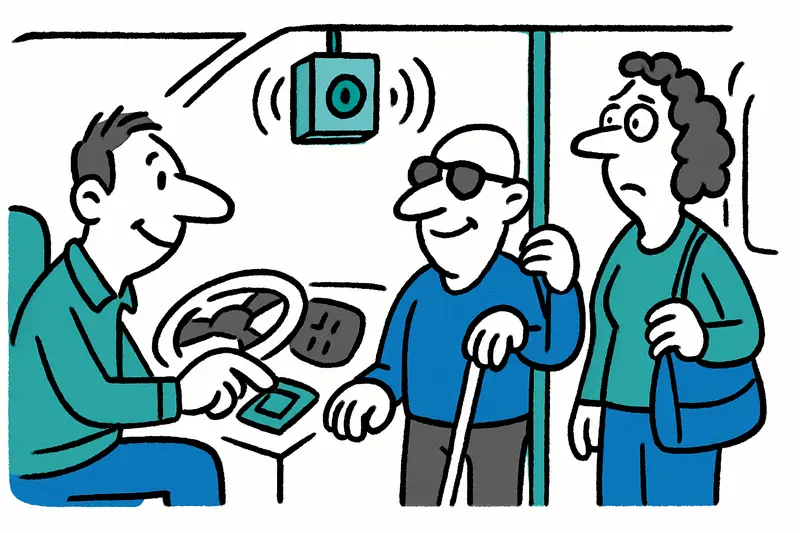
There is midday quiet on Plaça d’Espanya: pigeons coo, a motorcycle rumbles past, and at stop 321 driver Manuel taps his display. Shortly after, a clear voice announces: "Próxima parada: Estació Intermodal, transbordo con línea 1." A small detail? Not for everyone. For some passengers, especially those with visual impairments, this voice makes the difference between uncertain hoping and getting off independently.
Key question: Does the technology really make bus travel more accessible?
The government has started equipping the TIB intercity fleet with automatic announcement systems, as reported in Los autobuses de TIB reciben anuncios automáticos de paradas: más orientación para todos. GPS-controlled announcements are intended to provide more consistent information, relieve drivers, and reduce sources of error. On routes like Palma–Inca or the Ctra. de Sóller, when wind and sea noise add an extra layer of sound, that initially sounds like a clear gain. But how robust is the solution in practice—especially off the main axes?
Technicians have been working for weeks in depots on control consoles and speakers. More than half of the fleet has already been retrofitted; all buses should follow by the end of the year. The domestic voice from the speaker names the next stop, transfer options and—importantly—accessibility information. Passengers like Carmen, who is visually impaired, report noticeable relief: "The announcement told me when I need to get off. I feel safer."
What works — and what doesn't?
The technical advantages are obvious: automatic, consistent volume, fewer lapses, no more frantic calling out. Bus drivers say they can concentrate better on the road, and recent agreements on driver breaks are discussed in Two times 15 minutes for TIB drivers: A step forward — but is that really enough?. At the same time, new questions emerge: GPS signal interruptions in narrow mountain valleys, similarly named stops in villages, and the correct pronunciation of place names in Catalan versus Spanish. A system that mispronounces "Son Ferrer" is of little help.
The speed of the announcements is also a problem for some. Older travelers would like slower pacing and clearer pauses. Others suggest adding visual cues on onboard monitors or at stops—especially when the upper deck offers little visual comfort due to wind and road dust.
The less visible aspects
Less attention is often paid to how such systems are organized: Who maintains the database of stop names? How quickly are changes after construction work or route adjustments updated; timetable adjustments are examined in When Breaks Shape Timetables: TIB Changes and What They Mean for Mallorca? And what about data protection when buses constantly report GPS data? Without transparent processes, inconsistencies threaten to set back the very people these systems aim to help.
Moreover, the technology changes the role of the driver. Instead of constant announcements, drivers now monitor an automatic system. That sounds more modern but creates new requirements for training and system understanding—especially if an announcement fails or plays incorrectly.
Concrete opportunities and solutions
The rollout is an opportunity for Mallorca to make public transport more inclusive. Concrete practical suggestions are on the table:
- Multilingual support: Standardized announcements in Catalan and Spanish—optionally complemented by English on tourist-relevant routes.
- Adjustable speaking speed: User-friendly settings that can be activated regionally or individually.
- Visual supplements: Uniform, high-contrast displays at doors and stops, particularly for windy upper decks.
- Maintenance and participation: A publicly accessible register of stop names and a reporting channel for incorrect announcements so local issues can be corrected quickly.
- Backup solutions: Offline fallbacks for GPS failures and regular maintenance intervals so the technology does not become a new weak point.
Outlook: Small voice, big impact
The new voice on the bus is more than a comfort upgrade. It can enable mobility, strengthen independence, and make travel on the island safer. At the same time, the project shows how much detailed work lies behind seemingly simple solutions: voice quality, data maintenance and user involvement are decisive.
In the end, a practical image remains: Manuel leaves Plaça d’Espanya, the sound of the sea mixes with the electronic voice from the speaker, and Carmen straightens up—ready to get off at the right stop. For that to happen as often as possible, technology is needed, but above all good craftsmanship and local participation.
Frequently asked questions
How do automatic stop announcements on Mallorca buses help passengers?
Are TIB bus announcements in Mallorca reliable on all routes?
Can tourists use TIB buses in Mallorca without speaking Spanish or Catalan?
What should I do if a Mallorca bus announcement sounds wrong or unclear?
Is the new bus announcement system in Mallorca useful for people with visual impairments?
Does Mallorca need visual screens as well as spoken bus announcements?
What is the role of the driver now that Mallorca buses have automatic announcements?
What are the main benefits of automatic stop announcements on the Palma–Inca bus route?
Similar News

When Housing Becomes a Matter of Survival: Mallorca Between Rental Frenzy and Everyday Life
The case of 87-year-old Maricarmen showed that on Mallorca many people's lives are poised between affordable and uninhab...

Autumn in Mallorca: When Melancholy Gets a Window
Why autumn quietly tightens here — and how to make use of the mood: walks, culture, candles and the light from Palma to ...
Near-miss on Lanzarote: Landing Ryanair Jet and Iberia Takeoff — what really went wrong
On Lanzarote there was a dangerous incident: A Ryanair flight (FR5910) from Dublin landed on runway 03 while an Iberia E...

Eurowings introduces new Premium Business seats on Mallorca routes
From December 1, selected Eurowings flights to Palma and other destinations will feature eight particularly generous sea...

Car on MA-13 near Inca in flames – a safety check for the island
A vehicle caught fire on the MA-13 towards Alcúdia on Tuesday afternoon. The driver was uninjured, the car was destroyed...
More to explore
Discover more interesting content

Can Cap de Bou

Townhouse Lleo 72
