
Three Days Without Water: Deià on the Edge of Supply
Deià shuts off drinking water three days a week. Why the measure is more than just a summer problem — and which solutions could really help.
Three days without tap water: Deià moves to rationing
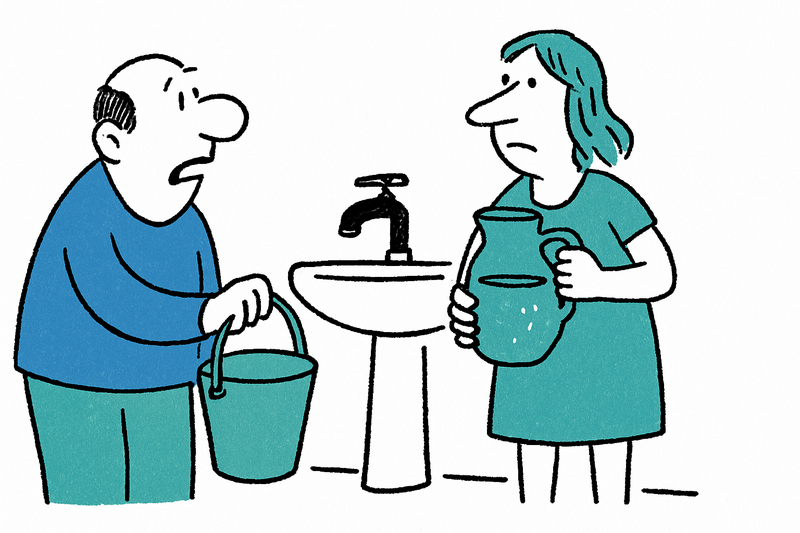
In Deià, the steep village of stone walls, cicada noise and views of the rugged north coast, the everyday flow from the tap has suddenly ceased to be a given. The mayor and the town council have decided: Deià is rationing water: three days a week — Monday, Wednesday and Friday — the drinking water will be turned off in parts of the municipality, mainly in Cala Deià and Llucalcari. For locals and visitors this means rethinking showering, dishwashing and watering plants.
The central question: Can a tourist paradise survive on well-based water supply?
Deià effectively relies on only one well and one spring. In summer the influx of visitors upends the balance: more guests, higher consumption, less rain. Daily water deliveries by truck from Palma ease the shortage but do not replace a sustainable supply, as discussed in Drought Alert in Deià: Luxury Without Water — A Village Between Tourism and Drought. The key question therefore is: do we want and can we continue to operate local infrastructure as we have been — or do we need a radical rethink in supply policy?
More than drought: causes and blind spots
Of course climate change plays a role: hotter summers, rarer but more intense rainfall. Yet beneath the surface lie other problems that are often underdiscussed. One aspect is distributed responsibility: hotels, holiday homes with pools, private gardens and second homes consume enormous amounts seasonally. Added to this are outdated pipes, insufficient storage and legal hurdles to develop new sources. And finally: the costs. A new pipeline, a reservoir or a desalination plant are expensive — who should pay?
Another blind spot is the local ecology. Overuse can jeopardize the quality of the spring, up to seawater intrusion and salinization of groundwater. This is not a distant concern but affects the water cycle right here in Deià's narrow streets; similar measures have been taken elsewhere in Mallorca, described in Water alarm in Mallorca: Seven municipalities turn off the tap — is saving alone enough?.
How everyday life changes
At the market, the bakery, and the small harbor you hear the same sentences: “Today the water is on, tomorrow it's not.” A fisherman in Llucalcari describes quietly mending nets while waves crash on the rocks and the sun hangs low over the sea. In apartments without large storage tanks people collect water in jerrycans early in the morning. Guests who enjoyed the sparkle of the sea at breakfast later find an empty tap with confusion. The municipality organizes emergency supplies and posts notices — but information alone does not replace a reservoir.
Concrete, often overlooked solutions
There are paths out of scarcity that are less spectacular, but quicker to implement and locally effective. Some of them:
Rainwater storage and greywater reuse: On Mallorca simple cisterns and systems to reuse shower or washing machine water for toilets and garden care are efficient and relatively inexpensive; examples of greywater reuse systems show how this can be done at household scale. Municipal subsidies could have rapid impact here.
Smart meters and dynamic pricing: Intelligent meters can help manage consumption. Higher prices for excessive use during peak times steer demand and generate revenue for infrastructure.
Small, mobile desalination or treatment units: For coastal stretches like Cala Deià, temporary, decentralized solutions could reduce dependence on truck deliveries; information on desalination technologies outlines types of small-scale units used in emergencies.
Cooperation instead of going it alone: A shared water network with neighboring municipalities could bring economies of scale — through joint reservoirs, shared wells or coordinated applications for funding.
What should be done politically now
The debate must not remain at the level of lip service. In the short term, clear emergency plans, transparent prioritization (medical care, schools) and financial aid for vulnerable households are necessary. In the medium term, a combination of expanded storage, more efficient use and a realistic tourism policy that accounts for water use in the high season is needed.
In the long term the question is strategic: do we continue to aim for unlimited growth — or do we design infrastructure around limits and resilience? Deià could become a pioneer if intelligent, small-scale and broadly supported solutions are tried here now.
A call: every drop counts — and so does every decision
The measure to shut off water three days a week is a wake-up call. It shows how vulnerable even idyllic places are when supply depends on few sources. It will take not only patience and creativity from residents — it will also require courage from politicians, investors and the tourism sector. Otherwise Deià risks a new normal: picturesque alleys, less water and a higher price for it.
In the short, hot hour of the afternoon, when the cicadas chirp and the scent of pine and sea salt drifts through the village, it becomes clear: this is not only about comfort. It is about the future of this place. And that future begins with the next investment decision made today.
Frequently asked questions
Why is Deià cutting off tap water three days a week?
Can you still stay in Deià when the water is turned off?
What should travelers pack or prepare for a water shortage in Mallorca?
Is summer the worst time for water shortages in Deià?
Why are some parts of Deià, like Cala Deià and Llucalcari, affected first?
How does tourism affect water supply in Deià?
What long-term solutions are being considered for water problems in Mallorca villages?
What can residents do when tap water is only available on certain days in Deià?
Similar News

Release after bloody attack in Palma: Why the court's decision raises questions
An 18-year-old who allegedly inflicted a serious neck injury on a man at Plaza Gomila using a wristwatch wrapped around ...
Kidnappings in Inca: Three young men forced into car trunks and abused in the forest – a reality check
In Inca, three 18-year-old men were forced into car trunks by masked assailants at the Plaça des Bestiar, taken to a for...
Spreading Massification: The Brake That Still Has Much Work to Do
Marga Prohens announces limits on volume tourism. The measures sound harsh — but are they enough to save everyday life, ...
Through the Keyhole onto the Party Yacht: How Daniela Katzenberger Is Planning Her 40th on Mallorca
Daniela Katzenberger turns 40 and wants to celebrate it on the island — likely with a boat, cake and her mother. A relax...
By Boat Instead of the Road: Palma's Water Bus — a Reality Check
The 'Bus Nàutic' launches in two stages — but questions remain over interim operations, fares and environmental requirem...
More to explore
Discover more interesting content

Can Cap de Bou

Townhouse Lleo 72
