
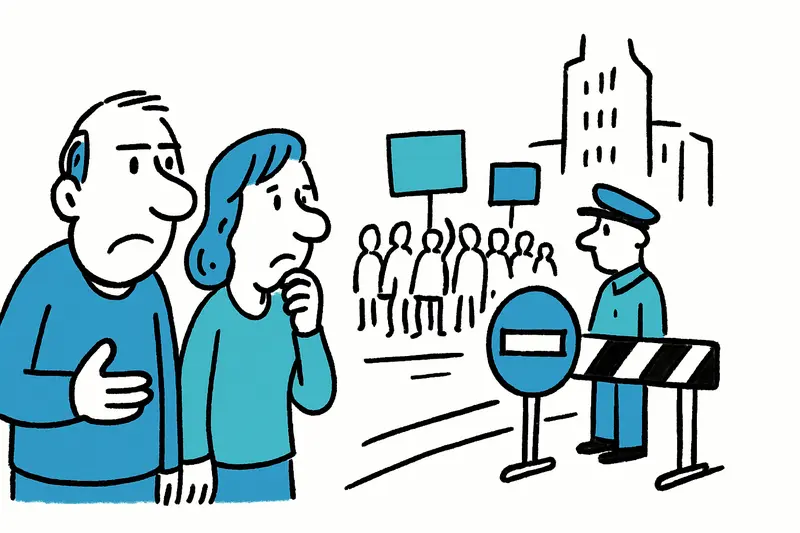
31-D demonstration in Palma: road closures on Paseo del Borne — what does this mean for residents and traffic?
31-D demonstration in Palma: road closures on Paseo del Borne — what does this mean for residents and traffic?
Tonight (30.12.2025) the platform 31-D will hold a rally at Paseo del Borne. Street closures and detours in central Palma are possible. A reality check: who is affected, what's missing in the debate, and what pragmatic solutions exist?
31-D demonstration in Palma: road closures on Paseo del Borne — what does this mean for residents and traffic?
Key question: How can Palma allow protests without unnecessarily paralysing everyday life in the city centre?
Tonight, December 30, 2025, the platform 31-D has announced its rally for 6:00 p.m. at Paseo del Borne. The group, which regularly advocates for the independence of Catalan-speaking territories, is focusing this year on the debate around the so-called Diada de Mallorca, officially observed on September 12 since 2024 and referring to the reconquest by King Jaume I in the 13th century. For the city, the announcement means a possible bottleneck during evening rush hour, fenced-off streets and detours in the historic centre. Reports such as Evening Road Closures in Palma: Between the Right to Protest and Traffic Chaos document similar evening movements.
If you stroll past Plaça de Cort in the late afternoon you hear delivery vans struggling through the alleys, the bell of a bicycle courier, the clatter of cups in a café on Carrer Comercial. Such an evening feels harmless — until the barriers go up and taxis are stuck in traffic in front of the Ayuntamiento. That is the reality: a demonstration brings legitimate political demands to the streets, but it also changes the daily rhythm of residents, businesses and commuters for hours.
Critical analysis: current planning shows gaps in two areas. First: information. Many residents only learn about upcoming closures at short notice via social media or notices in café windows. Second: coordination. There is police presence and cordons, but delivery routes for hotels and shops, bus lines and taxi routes are often redirected improvisationally, creating chaos instead of order.
What is often missing in public discourse is a sober distinction between the right to assemble and the real consequences for third parties. Protests are a democratic tool; at the same time people in Palma depend on functioning traffic for their livelihoods — couriers, restaurant owners, craftsmen. These considerations are rarely connected in the debate. Also rarely discussed: preventive communication that not only reaches the usual target groups but specifically informs residents in side streets, older people with limited mobility and small businesses.
Everyday example from Palma: at the corner of Paseo del Borne / Carrer de Sant Miquel an elderly woman sits on a bench and wants to go to her physiotherapy appointment. When the police close the street, buses stop, the pavement fills with people, and she has to wait an extra half hour. Such scenes are typical and make the abstract debate about demonstration rights suddenly very concrete.
Concrete solutions that could help immediately: 1) Early, multi-channel warnings: radio, local neighbourhood WhatsApp groups, large signs at main access roads from the afternoon. 2) Designated alternative routes for delivery traffic, agreed in advance with business associations. 3) Temporary parking areas outside the centre with shuttle buses for employees who need to get into the district in the evening. 4) Prioritised access for emergency vehicles and people with reduced mobility, visibly marked with mobile posts. 5) A regular round table city — organisers — associations that develops standard protocols for permits and traffic management so that each action is not improvised.
Many measures can be implemented practically without a large budget. Simple signs at the approach roads that already indicate closures in the morning cost little and save trouble, as suggested after the Sunday in Palma: Paseo Marítimo largely closed on 16 November — tips for residents and visitors closure. A list of contact persons (organisers, police, local transport companies) should be public and up to date so that a bakery or craft business knows who to call if a delivery is blocked.
In Palma history and the present meet in a small space. Paseo del Borne is not only a boulevard with plane trees and tourists, but also a route to work for many people. The memory of Jaume I is part of the identity, the Diada de Mallorca has symbolic function — and yet city policy must ensure that symbols do not permanently choke everyday life, a balance also discussed in Patronal festival in Palma: Streets closed — what does this mean for residents and visitors?. Good civic participation would mean: listen to demands, measure effects and negotiate solutions.
Conclusion: demonstrations like tonight's by 31-D are part of democratic culture. To prevent them from becoming unnecessary social or economic burdens, clear rules, early information and pragmatic logistical solutions are needed. Palma can be both: a place for political expression and a city where people can reach their appointments in the evening. Both can be organised — if the city administration, organisers and neighbourhoods communicate better with each other.
Frequently asked questions
Will the 31-D demonstration in Palma affect traffic around Paseo del Borne?
What should I do if I need to travel through Palma city centre during a protest?
How can residents of Palma find out about road closures in time?
What time of day do demonstrations in Palma usually cause the most disruption?
How does a protest in Palma affect local businesses and deliveries?
What is the Diada de Mallorca and why is it mentioned in Palma protests?
Is Paseo del Borne in Palma easy to cross during a demonstration?
What is the main issue with managing demonstrations in Palma city centre?
Similar News
Who Benefits from the Half‑Hourly Flight on the Edge? Aena, Investments and the Island's Interests
Almost one billion euros is flowing into Son Sant Joan. The figures show the scale of investment and expected beneficiar...
Are the Balearic Islands the Southern Border of Europe? A Reality Check on Immigration
The Balearic Islands are again calling for EU aid after a sharp rise in arrivals by sea. Conflicting priorities between ...

"Expensive chaos" and many open questions: What clients can do when a lawyer suddenly stops responding
Several clients complain that a well-known German lawyer in Mallorca has been unreachable for months. Key question: What...
TV tip: 'The Last Problem' — Mallorca as the setting of a classic crime
A classic whodunit on Mallorca: A new miniseries set in spring 1959 brings storm, an isolated hotel and a dense web of s...
Nipping Sea Creatures: Why Bathers in Cala Major and Elsewhere Should Be Cautious
In Cala Major, bathers have reported being nipped by small fish. What is behind it, how can problems be avoided — and wh...
More to explore
Discover more interesting content

Can Cap de Bou

Townhouse Lleo 72
