
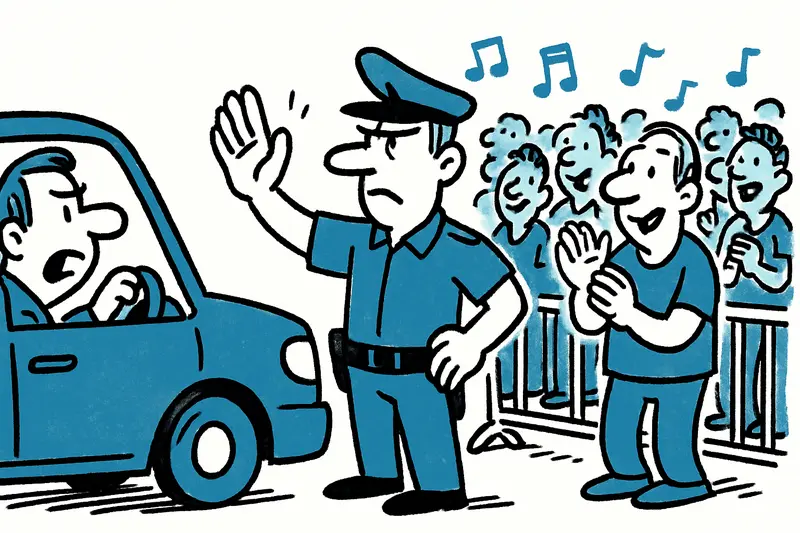
Patronal festival in Palma: Streets closed — what does this mean for residents and visitors?
A large concert at the Parc de la Mar brings closures around the cathedral. A guide for residents, commuters and concertgoers — with a critical look and practical solutions.
Patronal festival in Palma: Streets closed — what does this mean for residents and visitors?
This weekend Palma is alive again: the patronal festival in honor of the Mare de Déu de la Salut brings a large concert to the Parc de la Mar on Saturday. Sea air, guitars and then the crowds — that's part of our city. At the same time, the traffic closures around the cathedral are causing frustration for those who live here or have to pass through regularly.
The key question: How can celebration and everyday needs be better balanced?
The city and the police advise leaving the car at home. That's sensible, but not possible for everyone. With the closure of Avenida Adolfo Suárez from Friday evening to Sunday morning (staggered closure times, complete closure from Saturday 12:00 to Sunday 04:00) a central bottleneck of the city will be blocked (see Palma: Wide-area closures around the Seu during the patronal feast – What residents and visitors need to know). For visitors this is a short note; for residents, tradespeople, delivery services and people with reduced mobility it can quickly become a problem.
What can specifically go wrong — and what is rarely said
Most people know the obvious consequences: detours, longer bus rides, full bike racks. Less visible but relevant are:
Emergency and rescue routes: Are clear corridors for fire engines and ambulances being kept open? In previous years you could see improvised solutions on site. A planned, marked corridor would be reassuring.
Supply for shops: Bakeries, kiosks and restaurants often receive goods early in the morning or at night. If trucks cannot access delivery points, supply shortages may occur.
Mobility for vulnerable groups: Older people and people with disabilities need reliable alternatives. Temporary stops closer to residential buildings — clearly marked — are often missing.
Public transport and detours: What to expect
EMT line 25 will be rerouted during the main closure via Porta des Camp, the Avenidas and Plaça de la Reina; the stop at Parc de la Mar will be suspended. That means anyone who normally gets off directly at the cathedral will have to walk or take a detour (see Restricciones de tráfico en Palma: así transcurre la Fiesta Patronal (del 5 al 7 de septiembre de 2025)). Expect delays and overcrowded buses — especially on departures after the event ends.
Concrete suggestions that could help in the short term
The discussion about traffic closures repeats almost every year. Small, pragmatic measures would help a lot:
1. Shuttle services: Short-distance shuttles from Cala Mayor or Son Espanyolet to Plaça de la Reina could shorten the walk for older visitors and reduce parking pressure.
2. Temporary parking zones outside the closed areas: Clearly marked short-term parking spaces with continuous pedestrian signage would ease pick-up and drop-off operations.
3. Reserved passage zone for emergency vehicles and suppliers: Clear physical marking and advance communication would prevent chaos with deliveries and emergencies.
4. Pop-up bike parking: Quickly installed, supervised parking areas for bikes along the seafront and the Avenidas would encourage more people to switch modes.
5. Better advance communication: QR codes on the main access roads, information boards at Plaça Cort and Plaça de la Reina as well as coordinated social media updates from the city and EMT — this reduces calls and uncertainty (see Palma: Cortes extensos alrededor de la Seu por la fiesta patronal – lo que deben saber residentes y visitantes).
Practical tips for visitors and residents
If you are going to the concert or the old town: come on foot, by bike or use earlier bus connections. If you rely on a car: park outside the closure zone (e.g. towards Son Armadans or Cala Mayor) and plan for a 20–40 minute walk. Bring water, wear sturdy shoes and save alternative meeting points — Plaça de la Reina is a good landmark this time.
If you need to pick someone up: meet outside the Avenidas. The exit from Parc de la Mar to the motorway will be closed at times — this can be surprising if you are leaving late.
Conclusion: Palma celebrates — but it could run smarter
The event belongs to Palma like the Tramuntana wind belongs to an autumn storm: loud, present and sometimes unpredictable. With a few organisational adjustments the burden on residents could be significantly reduced without killing the atmosphere. My recommendation: a combination of short-term measures (shuttles, parking zones, pop-up bike parking) and better communication — this would make many visitors more relaxed and spare the neighbours' nerves.
We will keep following this: write to us with your experiences or questions — we will inquire and update the information as soon as there are new details. And: a little patience — Palma is celebrating, and a bit of noise is part of it. But a planned procedure makes the celebration easier for everyone.
Frequently asked questions
What road closures should residents expect in Palma during the patronal festival?
Will public transport in Palma run differently during the patronal festival?
Is it better to go to the Palma festival without a car?
Where should I park for the Palma patronal festival?
How busy does Palma get during the patronal festival concert at Parc de la Mar?
What should visitors wear and bring for a festival evening in Palma?
Can people with reduced mobility get around Palma safely during the closures?
Are deliveries and emergency access affected around Palma’s cathedral?
Similar News
After Being Admitted to Hospital Again: Heinz Hoenig and the Questions We Should Ask in Mallorca
Long-time Mallorca resident Heinz Hoenig was admitted to hospital again. A clear “what next?” is missing from the covera...
Yellow Alert: Is Mallorca Prepared for the Next Rain Band?
Aemet has issued a yellow alert for the south, southwest and the island's interior. Thunderstorms and heavy rain are for...
Kegel brothers trial postponed: Why Mallorca must wait for a verdict
The trial of 13 German holidaymakers will not begin until May 2028. The long wait raises questions — for victims, defend...

Chaos on Palma's Runway: Why the Summer at the Airport Was So Disrupted
This summer laid bare where Palma airport is faltering: only just over half of departures were on time and seven percent...
Cocaine Offer on Ham Street: Why the Open Trade Should Ring Alarm Bells
In the middle of Pare Bartomeu Salvà a tourist was offered a packet of cocaine as part of a sunglasses deal. A short int...
More to explore
Discover more interesting content

Can Cap de Bou

Townhouse Lleo 72
