
Demolition halted in Palma: What Gaspar Bennazar’s house teaches us about heritage protection
A demolition on Carrer 31 de Desembre was stopped: the cultural authority ordered an inventory. A small win for heritage protection — and an invitation to find sustainable rules for Palma's streetscape.
Demolition halted: a house, an excavator and the question of how much history Palma can bear
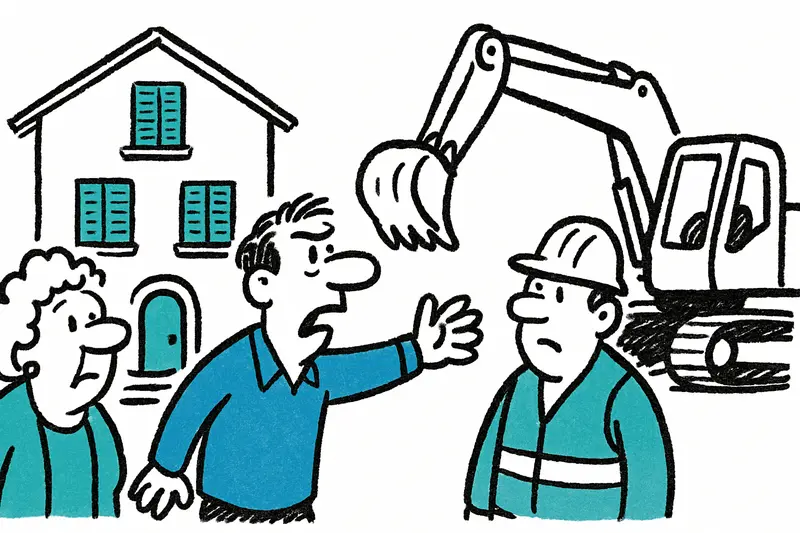
Around 3:30 p.m. on Carrer 31 de Desembre the usual afternoon calm turned into a small spectacle: an excavator half in the driveway, men in high-visibility vests, and neighbours who stopped to watch. Then what many had hoped, and some had feared: the demolition of Gaspar Bennazar's house was halted, according to a local report on the halted demolition of the Gaspar Bennazar house. Not out of sentimentality, but because the island council's cultural authority demanded a detailed inventory before any further work could be authorised.
The guiding question: how much history are we willing to sacrifice?
This is not a rhetorical question. The building is more than a façade. The green shutters, the simple balustrades, the original carpentry and historic tiles on the upper floor — all of this makes the house a testimony to the 1930s and a piece of the streetscape that cannot be translated one-to-one into concrete. Parts of the interior fittings had already been removed. Now the rule is: catalogue first, decide later.
The authority's intervention may feel like a bureaucratic brake in the short term, but it serves an important function: it prevents protectable elements from disappearing in the shadow of rapid construction activity — sold off, discarded or irreparably damaged. A related article documented how demolition began on Calle 31 de Diciembre and the risks of reconstruction replacing originals. In Palma, especially in the Eixample, such decisions shape the city of tomorrow.
What often gets overlooked
Public debate usually focuses on two sides: investors who want to optimise space, and residents who defend the familiar. Less visible are three other factors:
1) The grey market for historical building elements: Original doors, fittings or tiles often end up on the market before authorities step in. A young carpenter from the neighbourhood reported doors already taken to the backyard — a loss that is hard to compensate later.
2) The capacity of the authorities: Inventories require expertise and time. Cultural authorities are often understaffed. Without a clear process, decisions take longer — which in turn creates uncertainty for owners and neighbours.
3) Economic incentives are lacking: Those who want to preserve an old house often face higher costs. Those who demolish and rebuild calculate profit faster. As long as preservation is not made financially more attractive or at least not disadvantaged, the gap remains.
Neighbours, craftsmen, everyday life
The scene on Carrer 31 de Desembre made it clear: a neighbour who called her dog "Gofi Gofi" dryly commented, "Better this way. The city is not a construction site for quick profits." A carpenter spoke of original doors that "should not simply be replaced." Those remarks may sound small. They are not. They are the everyday knowledge authorities often need to collect before they can make informed decisions.
And then there is the acoustic image of the city: the distant noise of an excavator, the clatter of scaffolding, but also the voices of people debating. That makes the discussion tangible, here and now — not in distant committees.
Concrete opportunities and solutions
The halt is a breathing space. That time should be used not only to secure but also to plan. Some possible steps:
- Rapid, binding initial inventory: A standardised first check within a few days to secure and document important original elements.
- Transparent deadlines and responsibilities: Clearer procedures help owners and neighbours avoid unnecessary rumours and uncertainty.
- Financial incentives for preservation: Tax relief, grants for professional restoration, or support programmes for local craftspeople who conserve historic elements.
- Community monitoring: Citizens and local craftsmen should be formally involved in observation and reporting processes — they are often the first to notice losses.
A small ruling that can have consequences
Gaspar Bennazar's house remains standing for now. It is not a final monument, but a symbol: Palma is in motion, but not infinitely malleable. Walking through the Eixample you hear not only the traffic but also the stories in the façades. The protection achieved today is a small victory for those voices that say: not everything that sounds modern makes the city better.
Whether lasting rules with real effect emerge depends not only on expert reports but on political will — and on the willingness to see more in a small thing like an original door than just wood.
Frequently asked questions
Why was the demolition of Gaspar Bennazar’s house in Palma stopped?
What should I know about heritage protection rules in Palma before a building is demolished?
Can original doors, tiles or carpentry be lost during house demolition in Mallorca?
Is it worth preserving an old house in Palma even if redevelopment is planned?
What is the Eixample in Palma known for when it comes to old buildings?
How do neighbours in Palma usually react when a historic house is being demolished?
What happens after a demolition in Palma is temporarily halted?
Why do heritage disputes over old houses matter for Mallorca’s future?
Similar News

Release after bloody attack in Palma: Why the court's decision raises questions
An 18-year-old who allegedly inflicted a serious neck injury on a man at Plaza Gomila using a wristwatch wrapped around ...
Kidnappings in Inca: Three young men forced into car trunks and abused in the forest – a reality check
In Inca, three 18-year-old men were forced into car trunks by masked assailants at the Plaça des Bestiar, taken to a for...
Spreading Massification: The Brake That Still Has Much Work to Do
Marga Prohens announces limits on volume tourism. The measures sound harsh — but are they enough to save everyday life, ...

Through the Keyhole onto the Party Yacht: How Daniela Katzenberger Is Planning Her 40th on Mallorca
Daniela Katzenberger turns 40 and wants to celebrate it on the island — likely with a boat, cake and her mother. A relax...
By Boat Instead of the Road: Palma's Water Bus — a Reality Check
The 'Bus Nàutic' launches in two stages — but questions remain over interim operations, fares and environmental requirem...
More to explore
Discover more interesting content

Can Cap de Bou

Townhouse Lleo 72
