
Did we really come across Tucis? A reality check on the discovery of Son Fornés
Did we really come across Tucis? A reality check on the discovery of Son Fornés
Archaeologists report Roman urban structures at Son Fornés — but how certain is the identification with Tucis or Guium? A critical look at the evidence, gaps and next steps.
Did we really come across Tucis? A reality check on the discovery of Son Fornés
The reports from the Son Fornés site near Montuïri have captured the island's imagination: a research team from Arqueología Social Mediterránea (Universitat Autònoma de Barcelona) sees in the recently uncovered structures signs of a planned Roman town — perhaps even one of the two long-sought settlements, Tucis or Guium. Such announcements sound breathtaking. But how far do the proofs reach, and what remains unresolved?
Key question
How plausible is the assignment of Son Fornés to one of the cities named by Pliny the Elder — and what evidence would actually secure this hypothesis?
Critical analysis
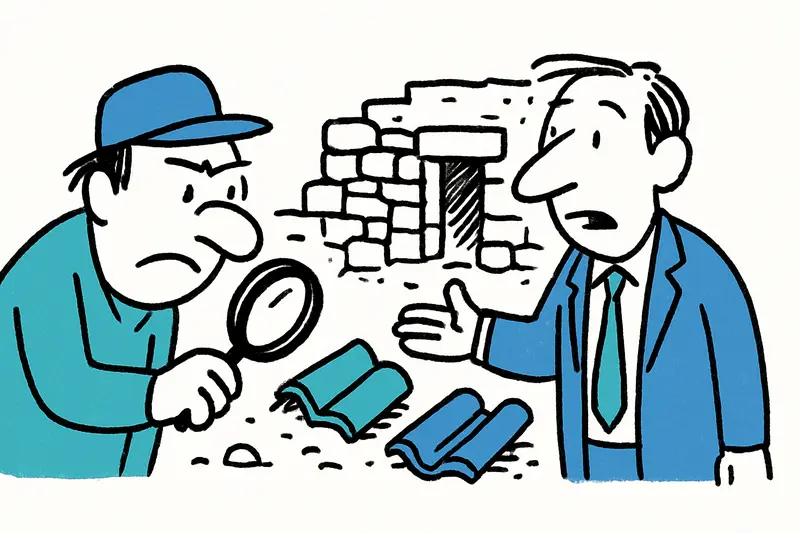
The available facts are promising: a broadly exposed area (the report mentions around 5,000 square meters), numerous Roman roof tiles (tegulae), amphora fragments and tableware indicate permanent settlement and building investments in the Imperial period. These finds point to a settlement of some status, not just scattered farmsteads.
But from an archaeological perspective the leap from “significant Roman finds” to “identified Roman town with the name Tucis/Gium” is still large. A secure attribution requires more: clearly defined public monuments (forum, curia, baths with inscriptions), urban street systems with datable stratigraphy, inscriptions or amphora stamps with place-reference, and a typological match of ceramics with established assemblages. Simply finding large buildings and tegulae are strong indicators, but alone they do not constitute proof of a name.
What is missing in the public discourse
The debate so far has largely revolved around the spectacular thesis. Less visible are two points: first, detailed publications of the test trenches and artifact inventories in an open-access academic format are still lacking. Second, there is little discussion of protection measures for the yet untouched areas — an important issue on Mallorca when soil work, agriculture or tourist pressure in the surroundings increase, as seen when Sencelles saves a piece of the past: Municipality buys prehistoric cave.
A scene from everyday life on Mallorca
Imagine Montuïri on a mild winter morning: the little bell of the parish church of Sant Bartomeu, a tractor rumbling along the Carrer d’en Xercavins, and pigeons pecking on the wall remains. At the access to Son Fornés walkers hear the clatter of tiles in the wind and see the lights of the excavation tents. Such small details remind us that archaeology does not take place in the abstract, but in living landscapes that bring together different interests — farmers, residents, researchers and the local community — Deeper Cistern, a Thousand Shards: What the New Finds at Alaró Castle Mean.
Concrete solutions
1) Systematic geophysical prospection: magnetometry, ground-penetrating radar and LiDAR surveys can make subsurface features visible without excavation and enable targeted trenches. 2) Prioritization of excavation areas: instead of large-scale exposures, targeted interventions should be combined with 3) a clear publication strategy — quick technical reports (preliminary reports) and detailed specialist publications. 4) Secure the chronology: samples for radiocarbon dating, thermoluminescence of ceramics and careful contextual documentation help date layers. 5) Public communication and protection: local site visits, information panels and legal monument protection prevent uncontrolled interventions. 6) Interdisciplinary analyses: amphora stamps, brick taxonomy, bioarchaeology (palynology, archaeozoology) and GIS reconstructions will assemble the puzzle with greater evidentiary power.
Why these steps matter
Archaeological sensations are good for public interest — but science needs control mechanisms. Without a transparent data situation there is a risk that a “find with potential” is presented as a certain identity confirmation. That undermines later trust if subsequent analyses weaken or reframe the thesis.
Pithy conclusion
Son Fornés is undoubtedly a key site for the island’s history: a settlement place with 2,000 years of continuity, where processes of community organization, elite formation and Romanization can be observed. Whether Tucis or Guium really lies there, however, has not yet been proven. The next excavation season can bring a lot — but only the combination of targeted prospection, secure datings, inscription finds or clearly urban infrastructure will support the hypothesis. Until then: high expectations, but please with scientific patience — and with regard for the people who pass the walls every day.
Frequently asked questions
What has been found at Son Fornés near Montuïri in Mallorca?
Could Son Fornés in Mallorca really be the Roman town of Tucis or Guium?
What would archaeologists need to prove that a Roman site in Mallorca was a real town?
Why are the Son Fornés excavations in Mallorca getting so much attention?
What is still missing from the Son Fornés research in Mallorca?
Why is protecting archaeological sites in Mallorca such an issue?
What is Son Fornés like as a historic place near Montuïri?
How can archaeologists date Roman finds at a site like Son Fornés in Mallorca?
Similar News

New trick at Palma Airport: suitcase stolen from the belt — a reality check
On September 28 a 36-year-old allegedly stole a suitcase from the baggage belt of a 51-year-old German passenger at Palm...
Urgent Clearing of Palma's Torrents: Flood Prevention or Symptom of Short-Sighted Planning?
The city of Palma is responding to storm forecasts and has cleared several torrents. We ask: Is the short-term clearing ...

Evaneos and Mexico: A Reality Check for Sustainable Travel
Travel advertising often reads like a promise: local, sustainable, unique. But how deep do these promises really go? A c...

From Megapark to the Altar: Party Singer Now Offers Weddings in Mallorca
A well-known party artist combines partying and marriage: instead of a traditional church there are ceremonies at the Me...

The Maricarmen Case: Why an Eviction Is Forcing Spain's Housing Debate
Images of an 87-year-old woman on a stretcher have sparked a debate in Spain that also runs deep in Mallorca. Who protec...
More to explore
Discover more interesting content

Can Cap de Bou

Townhouse Lleo 72
