
Dispute at Palma Harbor: When Self-Proclaimed Parking Attendants Demand Payment and the Situation Escalates
Dispute at Palma Harbor: When Self-Proclaimed Parking Attendants Demand Payment and the Situation Escalates
A video shows a heated confrontation between a self-proclaimed parking attendant and tourists at Palma's harbor. Who is responsible for safety and the rule of law?
Dispute at Palma Harbor: Self-Proclaimed Parking Attendants, Paying Tourists and a Video That Raises Questions
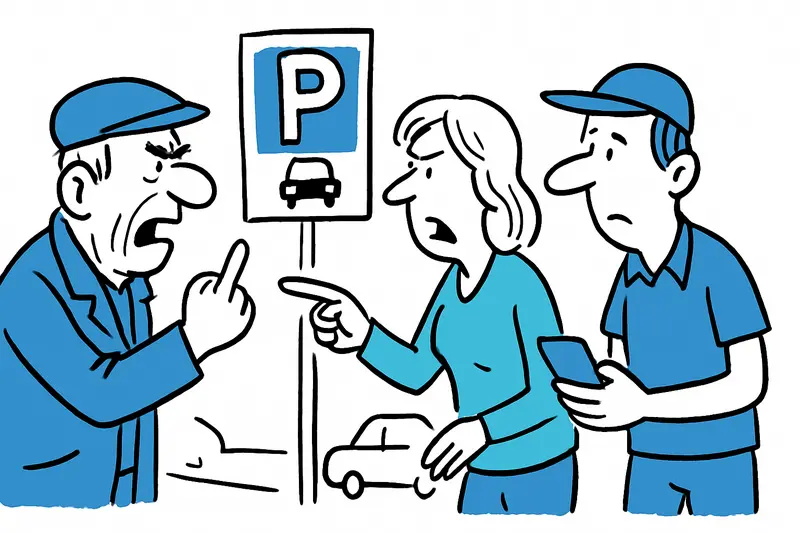
In a short mobile clip that recently circulated on social networks, the harbor promenade of Palma can be seen: tourists with suitcases, seagulls over the quay, the constant roar of motorboats. A man stands in a marked parking area and apparently demands money from a driver. A woman intervenes, saying that one can obtain a parking ticket at this spot — and that what the man is doing is not lawful. A loud argument ensues, which eventually culminates in an insulting gesture by the man. Later there is another conflict with a different driver in the immediate vicinity of the harbor.
Key question: Who protects tourists and residents from informal "services" that quickly turn threatening?
The scene is not a mere footnote. It points to a well-known problem in Palma: people who position themselves in front of paid parking zones and, for a fee, give the impression of assigning or monitoring parking spaces. To the uninitiated this can look plausible: a friendly nod, a pointing finger — and travelers are tempted to hand over cash instead of buying a ticket from the machine. This pattern has surfaced before, for example in When a Dispute in Portopí Ended Up in the Harbor: Crash Without Driver's License Raises Questions.
The critical analysis reveals several layers. First the legal situation: in many parts of the city there are clearly designated zones with parking meters or digital solutions (the so-called "zona azul"). There payment at the machine or via app is required. Private collectors have no official function. Second, the security issue: informal controls create power dynamics without a legal framework. If a dispute arises, contacting official authorities becomes more complicated — participants often do not know a number or an authority that will step in. Third, the social component: people working on the street often do so out of economic pressure. Some behave harmlessly, others provoke or do not shy away from insults. Other disputes have ended in damage and court cases, for example Parking dispute in Ses Illetes: Scratches, court and the question of fairness.
What is often missing in public debate is a sober look at prevention rather than just outrage. It is not only a matter of condemning individual provocations, but of how city administration, police, businesses and tourism interact so that such scenes do not arise in the first place.
A typical everyday scene in Mallorca: it is a stiflingly hot September midday, the sun is low, taxi horns mix with voices from cafés. Retirees search for a shady spot on the Passeig Marítim while holidaymakers rummage for coins at parking meters. An older man in a worn jacket waves to drivers as if he were a parking attendant — some tourists get out and politely want to give him money, others take out a phone and call the Guardia Urbana. Such small escalations are noticeable everywhere, not just at a single hotspot, as reflected in reports like Tumults at Playa de Palma: When Controls Threaten the Beach Scene.
Concrete solutions that can be implemented locally are pragmatic and combinable:
1. Increase visibility of the rules: Clear signs in parking areas, notices in several languages at main access routes to the harbor and pictograms on parking machines help avoid confusion. Hotels and landlords could briefly inform new guests at check-in.
2. Short information campaign at arrival points: Flyers or brief announcements at the airport, train station and ferry terminals with a simple message: where there is a parking ticket, please use the machine or app — do not pay private attendants.
3. Strengthen the presence of the Guardia Urbana: Patrols in known conflict zones during peak times can have a deterrent effect. What matters is not permanent presence but a reliable response to reports.
4. Simple reporting channels: An easily accessible online reporting option or a local city hotline for incidents of this kind would help identify patterns and react quickly. Without clear reporting, much remains anecdotal.
5. Social support measures: People working on the street need prospects. Local social services or job-broker programs could offer alternatives that reduce dependence on informal income.
Another point: tourism providers and landlords should not leave guests to fend for themselves. A brief note at check-in, a card in the holiday home folder or a sign in the rental car would be simple precautions.
Conclusion: The video from the harbor is not an isolated sensational incident but a mirror of a system with gaps. Law and order can be reinforced locally without criminalizing people who are often just trying to survive. Practical steps — better signage, targeted presence of the city police, information on arrival and supportive social work — could peacefully resolve many such encounters. The wider pressures on the harbor are also part of the picture, as noted in Port of Palma Under Pressure: New Harbor Fees Threaten 500 Jobs and the Harbor's Identity. Anyone parking in Palma should know: buy the ticket at the machine. And someone who witnesses an incident will help more by calling the Guardia Urbana than by reacting angrily at the quay.
Frequently asked questions
What is the best time to visit Mallorca for warm weather and swimming?
Is it safe to swim at Mallorca’s beaches?
What should I pack for a Mallorca beach trip?
What are some must-see natural spots in Mallorca?
How can I get around Mallorca without renting a car?
What should I know about Mallorca’s weather year-round?
Are there family-friendly activities on Mallorca?
How do I pick a beach in Mallorca that fits my plans?
Similar News
More water than last year: Mallorca's reservoirs breathe easier
September rain refilled the Tramuntana's reserves: overall fill around 35 percent, Cúber at 40.42 percent, Gorg Blau at ...
Three Luxury Hotels in Banyalbufar: Lots of Money, Many Questions
A Danish investor plans three exclusive accommodations in Banyalbufar — including the historic Son Valentí. The announce...
2.1 tonnes of cocaine on sailing yacht off Spain's coast – a reality check for the coastguard
A 14-metre yacht was seized with 2.1 tonnes of cocaine. Who monitors the ports, how does the international hunt succeed ...

Heat Bonus in Mallorca: 100 Euros Extra for Outdoor Staff at MarSenses
MarSenses pays employees who worked outdoors in August an extra €100 as recognition. Lighter uniforms, reduced hours for...
Renovating in Mallorca: What You Really Can Do Without Neighbour Consent
Many think they can do whatever they want in their apartment. That's partly true — but only as long as structural elemen...
More to explore
Discover more interesting content

Can Cap de Bou

Townhouse Lleo 72
