
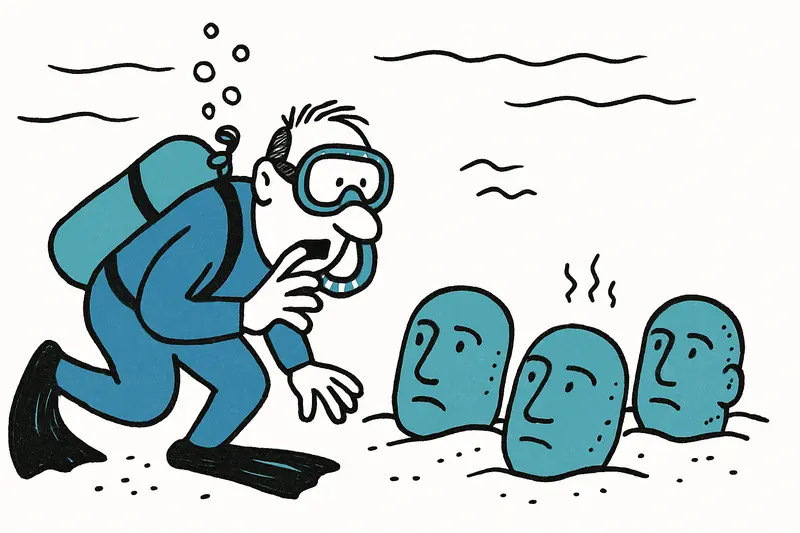
Mysterious 'Heads' in Shallow Water at Son Caios — Police Follow Lead
A diver discovered several face-like objects in the shallow water near Son Caios early in the morning. The Guardia Civil is investigating the find — the question remains: art, trash, or ritual?
Mysterious "Heads" in Shallow Water at Son Caios — Police Follow Lead
An ordinary diving trip turned into a small sensation yesterday morning at a quiet stretch off Son Caios. Around 9 a.m. — the sea still reflected the mild morning sun, seagulls cried over the waves — a recreational diver came across several objects in shallow water between Cala Estancia and Es Carnatge that at first glance looked like human heads, as described in a local report about the diver who found heads on the seabed.
What exactly is lying on the seabed?
The man, who says he has dived occasionally in the coves around Can Pastilla for years, initially thought of decorative figures or broken garden ornaments. On closer inspection he noticed details: only the upper parts were preserved, facial features were recognizable, some with a kind of expression. Several of these pieces lay a few meters apart. Nearby he also found half-plucked chickens — a detail that made the scene even more puzzling to many witnesses.
A fisherman who currently works between the small coves and often sees the same routes shrugged: "I've never seen anything like this here." Voices on the beach offered different explanations: junk dumped from the mainland; a crate torn open by a storm; perhaps a quirky art action. According to witnesses, the Guardia Civil and local emergency services were informed and are said to have secured the items and taken samples. There were no official statements at first.
The open question: art, waste, or ritual?
The most obvious hypothesis is illegal dumping: plastic and concrete remains from garden or restaurant decorations occasionally end up on Mallorca's coasts, especially after storms, a form of marine debris documented by NOAA's marine debris information. A second possibility is an artistic installation damaged in the sea. A third — and the one that sparked the most speculation in conversations on the beach — is ritual actions. Half-plucked animals and objects that appear symbolic are quickly associated with spiritual ceremonies.
A practical aspect receives little attention: animals or parts of them attract scavengers and local fauna. Half-decayed chicken bodies pose health risks for bathers and diving children, including zoonotic infections described in the WHO fact sheet on zoonoses. In addition, unidentified objects can introduce chemical contaminants into the water. Such risks are often overlooked in public discussions in favor of the sensational question "art or ritual?"
Why the island should respond sensitively
Son Caios and the surrounding coves are popular spots for families, snorkelers, and small boaters. A discovery like this not only causes talk but can temporarily harm the reputation of a bathing area. More important: it's about health, environmental protection, and law enforcement. Who decides whether something is "just decoration"? Who disposes of it properly? Who determines whether a possible ritual involving animal carcasses was illegal?
The authorities have the task of examining the material forensically, taking samples for pollutants, and identifying possible owners or perpetrators. Transparency would also be important for the local community: a short, clear update on what was found and what measures will follow. Until then, eyewitnesses advise keeping a distance and warning beachgoers — especially families with small children.
What would be sensible now — concrete steps
Some suggestions that we consider sensible based on local everyday experience:
Safe recovery and analysis: The items should be recovered and examined by marine biologists, forensic specialists, and Balearic environmental authority website before speculation takes over.
Hazard notices on site: During the investigations, signs can be mounted at the access points to the coves to warn swimmers.
Transparent communication: A brief situation update from the municipality or Guardia Civil official website helps prevent rumors and gives people on site reassurance.
Prevention of illegal dumping: More controlled collection points on the mainland, increased checks after stormy weather, and awareness campaigns can prevent further cases.
Strengthen community reporting: Photos and observations from residents are often crucial. A clear phone number or an online form with the local Policía Local would centralize tips.
An uneasy feeling on a sunny morning
The scene off Son Caios remains eerie as long as facts are missing. Maybe it really is just a pile of broken decorations that a few waves and a storm brought here. Maybe a harmless artistic action is behind it, or maybe something else. On a small island, residents, fishermen, and visitors share the beaches — and with them the responsibility to keep them clean and safe.
Anyone who has noticed anything unusual between Cala Estancia, Can Pastilla and Es Carnatge in recent days should contact the local police station. Photos and exact times are helpful.
Frequently asked questions
What was found in the shallow water off Son Caios in Mallorca?
Is it safe to swim near Son Caios after strange objects were found?
Could the objects off Son Caios be illegal dumping?
Why would police and environmental services check something found in the sea in Mallorca?
Could the Son Caios objects be part of an art installation?
What should beachgoers do if they spot something suspicious in the water in Mallorca?
Why are Cala Estancia and Es Carnatge sensitive areas for this kind of incident?
What kinds of risks can half-decayed animal remains in the sea create?
Similar News
Failed before the first flight: How Fischer Air's plans for Palma were ground down
Announced routes, repeated postponements and now apparent insolvency: Why the Fischer Air project for Mallorca is not me...
Seconds in the Water: 19-year-old Fights Her Way Out of Flooded Car in Palma
A 19-year-old managed to rescue herself from her half-submerged car after sliding under the Verge de Lluc underpass. Res...

Between Dream and Reality: Thorsten Legat and the Challenges of FC Germania Mallorca
The former Bundesliga pro has assembled a colorful squad in a short time. But how realistic is the grand plan for promot...

Arrest warrant at check-in: Why two travelers at Cologne/Bonn Airport suddenly had to pay
At Cologne/Bonn Airport, federal police in mid-September found two German passengers subject to enforcement measures. Bo...
Balearic Islands as a New Route: A Reality Check on Rising Boat Migration
For the first time the Balearic Islands are ahead of the Canary Islands in boat arrivals. What do the numbers really say...
More to explore
Discover more interesting content

Can Cap de Bou

Townhouse Lleo 72
