
Sleeping in a Stolen Car Outside the Station: Why the Playa de Palma Incident Is More Than a Curious One-Off
Sleeping in a Stolen Car Outside the Station: Why the Playa de Palma Incident Is More Than a Curious One-Off
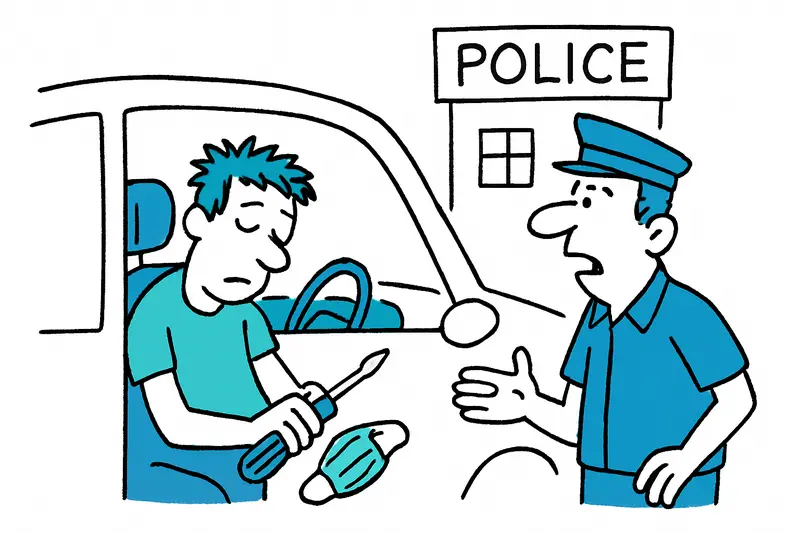
An 18-year-old was found asleep at Playa de Palma in a car reported stolen, right in front of a police station. A screwdriver, glove and mask were discovered — and no driving licence. What does this case tell us about prevention, youth and policing in Mallorca?
Sleeping in a Stolen Car Outside the Station: Why the Playa de Palma Incident Is More Than a Curious One-Off
A young man, a stolen car and a rather senseless act in front of the police
The sober facts are quickly told: During the night an 18-year-old was arrested at Playa de Palma in a vehicle reported stolen, as noted in a Spanish report on the Playa de Palma incident. He was asleep in it — directly in front of the police station. During the check officers found a screwdriver, a rubber glove and a mask. Also: no driving licence. At the station the young man smashed a cell door, so the case now also involves criminal damage.
The picture almost looks like a scene from television: an alleged car thief who nods off in his coup in front of the authority's door. The punchline is easy and provokes laughter on street corners — until you look more closely.
Key question: How did it come to pass that an alleged offender was sleeping in a stolen vehicle right outside a police station? Behind this simple question lie several problem areas: prevention of vehicle thefts, the role of young adults in crisis situations and the local capacity for investigation and accommodation.
Critical analysis: At first glance it may be sheer brazenness or naivety — perhaps both. The items found (screwdriver, glove, mask) are typical tools for break-in attempts, which suggests there was at least some intent. No driving licence points to inexperience or lack of legitimate authorisation. And smashing the cell door in the station shows how quickly a situation can escalate when young people come under stress or do not know their limits.
What is often missing in public debate is a look at the causes: Are such offences mainly isolated juvenile actions or are organised groups involved? Do social hopelessness, a lack of meaningful leisure options, or alcohol and drugs play a role? And how does the presence of tourism and holiday rentals along the Playa de Palma affect these crimes?
Everyday image of Mallorca: It is early morning, the street sweepers are out, the sounds of bus traffic pass along Avinguda Grau i Morey, seagulls quarrel over a piece of bread. Outside the police station the night shift talks about the previous night's call-out; on the promenade the first bar staff are already opening their shutters. Into this seemingly calm routine the incident bursts — and then becomes the subject for the blue-uniformed officers and the morning coffee circle.
Missing points in the discourse are also pragmatic: How are seized stolen cars stored, how quickly can owners be informed, and is there enough staff to not only register young suspects but also provide social support? The latter is often lacking: short-term support by social workers or streetwork teams could prevent escalations in cells.
Concrete approaches: More visible prevention at sensitive locations such as car parks and promenades; better marking of rental and hire car fleets; expansion of CCTV networks with clear data protection rules; cooperation between police, municipalities and youth centres so that conspicuous young people quickly receive stabilising offers; and information campaigns for vehicle owners (burglary protection, alarm-secured parking), as discussed in a Spanish analysis of prevention in the Playa de Palma case. For the stations themselves, training in dealing with young people in crisis situations would be sensible, complemented by binding contact routes to social services.
Moreover: an honest public debate about the consequences of sanctions and about prevention. Crimes must be punished, but imprisonment alone does not sustainably reduce youth crime. There needs to be reintegration between justice, police and social work so that an arrest does not automatically produce a repeat offender.
In conclusion: The incident at Playa de Palma at first glance is a curious item — a young man asleep in a stolen car outside a station. On closer inspection it is a focal point for many open questions: How do we deal with young people on the threshold of adulthood, how do we protect our neighbourhoods and how do we prevent police work from turning into routine without recognising social causes? The scene with the sweeping machines and the coming day shows: such cases are more than headlines. They are small alarm bells loud enough for the right authorities on the island to hear.
Frequently asked questions
Why was an 18-year-old arrested in Playa de Palma for sleeping in a stolen car?
What usually happens after police seize a stolen car in Mallorca?
How can car owners in Mallorca reduce the risk of theft?
Is Playa de Palma considered a problem area for vehicle theft?
Why do young adults sometimes end up in police cells in Mallorca?
What does a screwdriver, glove and mask in a stolen car suggest?
Can damage caused inside a police station lead to extra charges in Mallorca?
What can Mallorca do to prevent repeated vehicle thefts around tourist areas?
Similar News
Who Gets Left Out? Why Overbookings Will Hit Many Mallorca Travelers This Summer
On hot check-in days at Son Sant Joan, frustrated travelers pile up. New figures from Reclamador.es show that a large sh...

When the Handyman Came: How an Engagement Ring Disappeared in Mallorca and What It Says About Trust
During a repair in Andratx a highly personal engagement ring went missing — a case that calls not only for punishment bu...

How Burglars Test Fincas in Mallorca — and What You Can Do About It
The Spanish National Police warn of a simple but effective trick: small markings on doors reveal whether a finca is occu...
Palma doubles blue zone: What this means for residents, tourists and narrow streets
From 1 January 2027 Palma's ORA area will grow from around 12,000 to 24,000 spaces. Key question: Will the expansion bri...
Engagement ring disappears during repair: court upholds prison sentences for plumber and partner
During a heating repair in an apartment in Andratx an engraved engagement ring disappeared. After a trace to a pawnshop ...
More to explore
Discover more interesting content

Can Cap de Bou

Townhouse Lleo 72
