
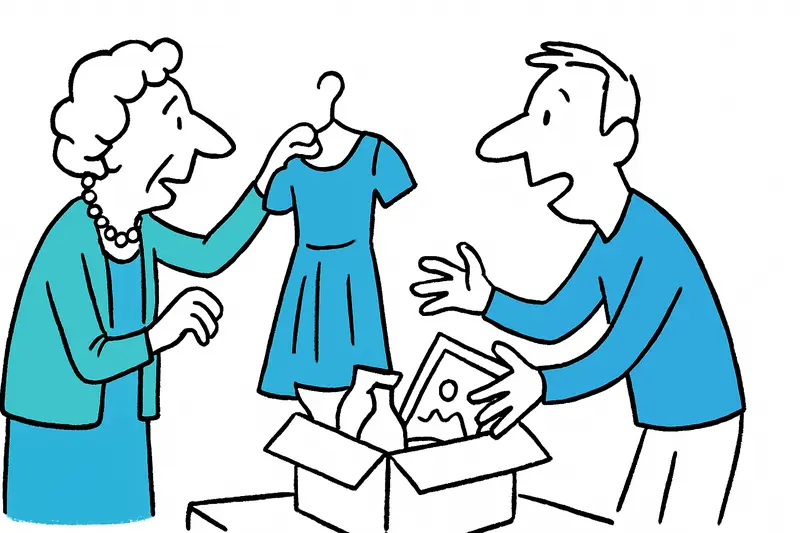
Fine dresses for a good cause: Duchess Diane establishes foundation in Felanitx
Fine dresses for a good cause: Duchess Diane establishes foundation in Felanitx
85-year-old Duchess Diane of Württemberg has registered a foundation in Felanitx at Carrer Major 7. The plan is to sell personal garments, paintings and decorative objects at island markets to benefit children in need and disadvantaged elderly people.
Fine dresses for a good cause: Duchess Diane establishes foundation in Felanitx
Market stalls from a personal collection to generate social funds
In the narrow lane of Carrer Major 7 in Felanitx – where the church still strikes the hours and on market days the smell of fresh bread and roasted almonds drifts through the plane trees – 85‑year‑old Duchess Diane of Württemberg has Duchess Diane establishes foundation in Felanitx. The notice now filed at the town hall states that garments, paintings and decorative objects from her possession will in future be offered at the island's markets. The proceeds are destined for children in need and disadvantaged elderly people.
The Duchess, born in Brazil and now a widow, is no stranger on Mallorca. Over the years she has repeatedly spent periods on the island and lived in several properties – houses still named by locals: a villa in Calvià, an estate in the Andratx area and a house north of Palma. Artistically active, she works as a painter and sculptor; the pieces now to be sold come from this personal world.
The plan follows a simple, almost old‑fashioned logic: give high‑quality, often unused items a second life and use the proceeds to finance local aid projects. At the busy weekly market in Felanitx, but also in other places on the island, small stalls could be set up according to the principle “value for help.” For the island this means more than money: markets would gain a new attraction, people could start conversations, and the often anonymous flows of donations would get a face.
If you are in Felanitx early in the morning you see market women unpacking baskets of oranges and sobrasada, retirees taking their breakfast at the square’s bar, and tourists strolling between stalls. It is precisely in this liveliness that the potential lies: instead of a big auction in a distant auction house, solidarity should take place where it is visibly effective.
The project is both pragmatic and symbolic: pragmatic because used but high‑quality clothing and art actually raise money; symbolic because a representative of old aristocratic circles consciously makes her personal belongings available. This creates a rare bridge between a private lifestyle and concentrated charity.
What will be important for the organization is transparency. People want to know where donations go and how much from a sale actually reaches the beneficiaries. Concrete steps that the foundation and local initiatives could now take together include clear accounting of sales proceeds, cooperation with established welfare associations on Mallorca, and regular public information about the concrete aid projects made possible by the sales. Related cultural fundraisers include Esther Schweins Reads for Charity at Bodega Binivista.
Practically conceivable is a rotation plan for market stalls: one Saturday in Felanitx, the next weekend perhaps in Inca or Santa María del Camí, so that both locals and visitors have the opportunity to contribute. Volunteers from neighborhood groups could run the stalls; younger volunteers could provide social media updates about how much money was collected and what it is being used for.
Also providing small grants to local initiatives would help to achieve visible effects quickly—such as school supplies for children, heating subsidies in winter or meal distributions in community kitchens. Such concrete uses are easy to track and build trust.
On Mallorca the combination of tradition and community spirit has a long history. It is the small actions that often move the most: a blanket for an elderly neighbor, a few euros for schoolbooks, a quality coat that generates funds for a warm meal. If the new foundation targets these small, concrete needs, the project has a good chance of having a lasting impact.
Some might be surprised that items from an upscale household will soon sit between olive stalls and ceramics. I find it rather refreshing: the creak of old wooden doors, the sound of plates clattering in a bar at the plaza and a velvet blazer at a market stall – these are images that make Mallorca a little more human.
Looking ahead there is plenty of room for quiet cooperation: neighborhood associations, parishes and social services could become partners; local craftsmen could help refurbish items; schools could be involved in the packaging work. It is also possible that the foundation will later seek further partnerships to amplify its impact.
Thus a private collection will not become something extravagant that disappears in a magazine column, but something visible on the cobblestones and under market awnings. And perhaps that is the point: help you can pay for next to the sobrasada stand, giving everyday life on the island slightly warmer contours.
If you walk through Felanitx in the coming weeks, pause for a moment, hear the bell, have a coffee and read the price tags. Maybe there hangs a coat with a story – and with it the chance that a child gets a pair of warm socks and an extra smile.
Frequently asked questions
What is Duchess Diane’s new foundation in Felanitx meant to do?
Will Duchess Diane’s items be sold at Mallorca markets?
Why are Mallorca markets like Felanitx a good place for charity sales?
What kind of items from Duchess Diane’s collection are expected to be sold in Mallorca?
How can people know the money from Mallorca charity sales is used properly?
Could Duchess Diane’s charity stalls move to other towns in Mallorca?
What makes Felanitx market special on a market morning?
Has Duchess Diane lived in Mallorca for a long time?
Similar News
German tourist dies in Sa Calobra – a reality check for emergencies on Mallorca's beaches
A 40-year-old tourist died at the Torrent de Pareis. The emergency call, a doctor who happened to be present, a defibril...
Deadly Tractor Accident in Bunyola: What Needs to Be Done Now
In a work accident on an estate near Bunyola, a roughly 40-year-old man lost his life. His wife and a small child were o...
Head-first dive into the shallow part of Cala Fonoll: An accident and the unresolved question of responsibility
A young tourist dove into Cala Fonoll and was seriously injured. Key question: Why are clear warning signs missing at da...
Mistaken identity with fatal consequences: Brutal assault in S'Aranjassa — what's missing in the follow-up?
At S'Aranjassa a visitor to a finca was tied up, beaten and thrown out of a van. Three men have been arrested, including...
High heel slips, car accelerates: accident on Camí de Son Hugo
A woman lost a high-heeled shoe on the forecourt of the sports facility at Camí de Son Hugo. The car accelerated, mounte...
More to explore
Discover more interesting content

Can Cap de Bou

Townhouse Lleo 72
