
Emergency Center for Unaccompanied Minors in Son Tous: Well-Intentioned, But What Is Still Missing?
Emergency Center for Unaccompanied Minors in Son Tous: Well-Intentioned, But What Is Still Missing?
On the former military site Son Tous in Palma, an emergency center for unaccompanied minor refugees has been opened. Initially 16 places, later up to 64. The facility is prepared — but still empty. What does that mean for the young people and the neighborhood?
Emergency Center for Unaccompanied Minors in Son Tous: Well-Intentioned, But What Is Still Missing?
A new effort on the city’s edge — and many questions
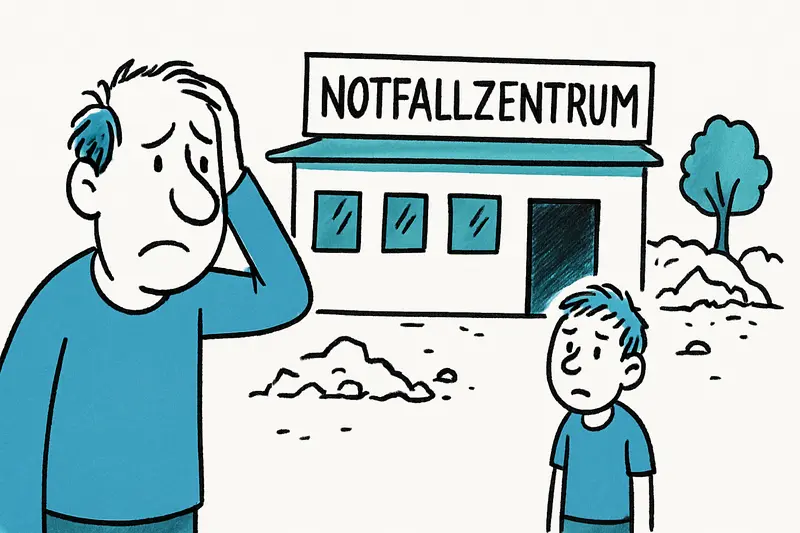
On the former Son Tous military site on the outskirts of Palma a new emergency shelter for unaccompanied minor refugees has been set up. At first 16 places are available; later the facility can accommodate up to 64 minors. The plan foresees rapid initial care, supervision, psychological help and social support. So far, however, no one has been housed there.
The facts are sparse, the images are clear: a fenced area, the cool façade of a converted building and silence in the courtyard, where delivery vans once rattled by and seagulls circled over the city. For residents this means: on windy days you hear the nearby bypass and the chatter from cafés — and you wonder how the new center will actually operate in concrete terms.
Key question: Why does the center stand empty even though there is a need for short-term accommodation? Empty beds can mean two things: good preparation and controlled admission processes — or a lack of staff, missing permits or slow coordination between authorities, as highlighted in Mallorca sues Madrid: Who bears responsibility for unaccompanied minors?. This is precisely where public debate often stalls: the number and equipment of beds are mentioned, but the operational plan less so.
From a critical perspective several issues come together. First: staffing. Psychological first aid and continuous care require experienced teams available around the clock. Are there enough social workers, psychologists and childcare staff planned? Second: legal protection and guardianship. Unaccompanied minors need a legal representative quickly so decisions can be made — from medical care to school attendance. Third: follow-up provisions. An emergency center alone is not enough; there must be clear pathways into longer-term accommodations, foster families and educational offers.
What is often missing in public discourse: concrete timelines, transparent responsibilities and the perspective of neighbouring communities. Local politicians and neighbours are not only interested in numbers, but also in noise, traffic and safety issues — and in how integration will work in practice: school places, language courses, medical appointments, leisure activities.
An everyday scene makes this tangible: a pensioner with a shopping bag stops in front of the fence, looks at the windows and casually asks the site’s cleaner when the first children will arrive. The cleaner shrugs: "They say soon. But no one told me who is responsible." Such small conversations show that information flow and community outreach on the ground are lacking.
Concrete proposals that could have quick effects: first, publish a public timeline — when will approvals be completed, when will admissions start, who is the operator? Second, a transparent staffing plan with details on qualifications and shift schedules, plus an emergency contact for residents. Third, a local coordination committee: representatives from youth services, health services, schools and the municipality should provide weekly updates. Fourth, short-term cooperations with NGOs and volunteers who have experience with children affected by trauma, as during the installation of Provisional Measures at Pier 3: Palma Sets Up Emergency Shelters in the Port.
In the medium term the young people need prospects: language support, regular school attendance and long-term psychological care. One idea that has proven effective: mobile school and counseling buses that offer lessons and advice on site until permanent school places are organised. Also important: clear procedures for family reunification and transparent information for the children in a language they understand.
The island municipality must also clarify how resources will be financed. An emergency center must not become a patchwork where different authorities pass on responsibilities; similar concerns arose around hotel use in Hotels as an Emergency Measure: Between Humanity and Routine on Mallorca. Fixed budgets, stable operators and contractually regulated procedures create reliability — for the children and for the neighbourhood.
Conclusion: The facility in Son Tous can be a pragmatic tool to quickly protect acutely vulnerable young people. That the first 16 places are still empty, however, shows: planning needs more than rooms. It needs staff, clarity and cooperation. Those who fail to provide that risk delays and frustration — for the children who need protection and for the people living next door.
The island has experience with reception projects, and integration works well in some places, as reported in New Reception Center in Palma Port: First Assessment and Open Questions. Son Tous has the potential to become a temporary, professionally run place of stabilization — if authorities and operators finally provide concrete answers and involve the local community early on. Not a bureaucratic showpiece, but an opportunity that must not be squandered by uncertainty.
Frequently asked questions
Why is the new minors' shelter in Son Tous in Mallorca still empty?
What is an emergency center for unaccompanied minors meant to do in Mallorca?
What needs to be in place before unaccompanied minors can be admitted to a center in Mallorca?
How could the Son Tous shelter affect people living nearby in Palma?
What kind of support do unaccompanied minors need after arriving in Mallorca?
Why is legal guardianship important for unaccompanied minors in Mallorca?
How should Mallorca authorities communicate about a new minors' shelter?
What happens after an emergency stay at a minor reception center in Mallorca?
Similar News
Mistaken identity with fatal consequences: Brutal assault in S'Aranjassa — what's missing in the follow-up?
At S'Aranjassa a visitor to a finca was tied up, beaten and thrown out of a van. Three men have been arrested, including...

High heel slips, car accelerates: accident on Camí de Son Hugo
A woman lost a high-heeled shoe on the forecourt of the sports facility at Camí de Son Hugo. The car accelerated, mounte...

Phone Scam: How Two Hotel Employees at Playa de Palma Lost Thousands of Euros
One morning in September, two reception employees at Playa de Palma were pressured by alleged alarm-company staff — in t...
When the Wallet Becomes a Danger: Attack in Peguera and Lessons for Mallorca
In Peguera, two women are said to have stolen the wallet from a 75-year-old German couple. When the victim intervened, t...
Plata stays Plata: Young people take over, Llonguets remain
A small bar on Carrer de l'Argenteria will continue: Tolo Serra hands the place over to young Mallorcans at the end of t...
More to explore
Discover more interesting content

Can Cap de Bou

Townhouse Lleo 72
