
Es Fogueró: Glamour, Graffiti and the City's Neglect
Es Fogueró: Glamour, Graffiti and the City's Neglect
The dilapidated Es Fogueró arena in Port d'Alcúdia is today simultaneously an open-air gallery, emergency shelter and danger zone. Who is responsible for safety, art and people?
Es Fogueró: Glamour, Graffiti and the City's Neglect
Key question: Who owns this lost place — the artists, the people without roofs, or the public authorities?
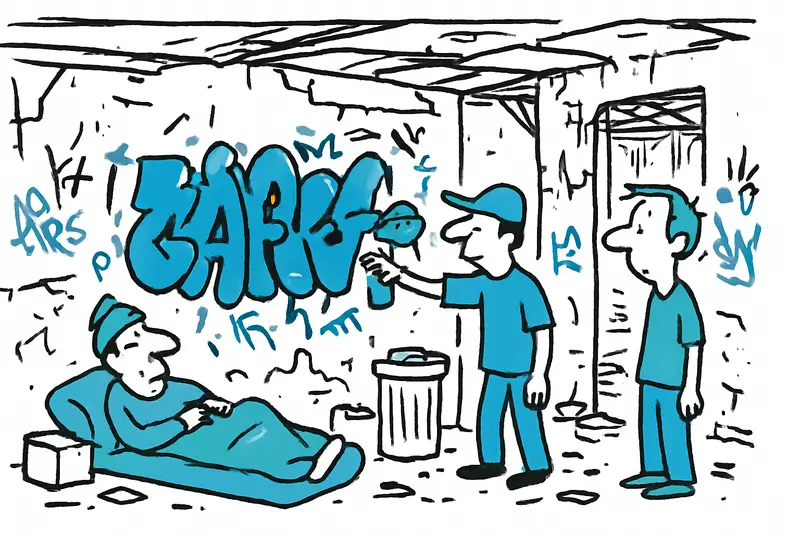
From the outside, the building still reveals the massive concrete skeletons that once held celebrities and audiences. Inside, time has rearranged the space: colorful murals cover every metre of wall, metal parts lie rusted, and remnants of the roof structure hang from the ceiling. In Port d'Alcúdia, in the north of the island, Es Fogueró has long become a kind of open-air gallery. At the same time, people sleep there on cardboard, and there have already been dangerous incidents, including a dead man found in the ruins of the former Es Fogueró Palace disco in Alcúdia.
The mix of urban art and precarious housing complicates the situation. Graffiti artists, many of them from Germany, use the walls as a huge canvas; their works are spectacular and often of high artistic quality. But they work in a ruin: stairs are crumbling, roof beams are loose, dust and rubbish have gathered in corners. Those who take photos often do so next to exposed waste and plastic containers, beside improvised sleeping places.
The situation cannot be handled with a quick judgment. Es Fogueró is simultaneously an expression of urban decay, cultural use and social shortcoming. The site has stood empty for three decades; its brief operating period in the early 1990s belongs to local memory of concerts and events. Today people sometimes speak of “lost place” romanticism, while the real danger inside is the less romantic flip side.
What is missing in the public discourse is a combined consideration of art, safety and social policy. Graffiti are often condemned as vandalism or celebrated as a trendy attraction. Both are too simplistic. Equally missing is an honest debate about how municipalities deal with idle commercial spaces that are at the same time used by people as emergency accommodation — and what responsibility hotels, neighbourhoods and regional authorities bear, as highlighted by the situation at the Espigol Apartments in Can Picafort.
A typical everyday scene: on a warm late afternoon you can hear animation teams from afar, light music, children's laughter from the beach. Taxis and delivery vans flow along the access road; seagulls circle. In front of the crumbling portal youths meet, open beer cans, someone sprays a stencil onto a pillar. In a hall further inside a catering worker, fresh from the night shift, rests on a blanket. The sounds — long-distance traffic, voices, occasional clinking — remind us that this place is in the middle of the tourist machinery, yet cut off from it.
Concrete solutions must not sound like a one-size-fits-all recipe. In the short term what is needed is secure fencing and a risk inspection by certified structural engineers to rule out the danger of collapse and exposed electrics. In parallel, municipal social services and street work teams should be regularly present on site to reach those affected, offer low-threshold services and, if necessary, arrange temporary accommodation, as has been urged for other municipal sites such as the Carrer Manacor municipal parking garage.
In the medium term there needs to be a plan for the site: a usage review that takes the artistic interests of the street scene seriously without sacrificing safety and human dignity. Options could include authorised wall spaces, supervised art projects, time-limited open-air exhibitions or workshops with local youth. Such formats would increase oversight, reduce vandalism and at the same time channel creative energy.
In the long term the decisive construction site is housing policy. Vacant buildings like Es Fogueró resist regular use as long as they are not integrated into a coherent urban development concept. The administration must decide: renovate and reuse, secure and demolish, or formalise it as a social interim-use site. Without a binding strategy the place remains a symptomatic example of administrative blindness.
Responsibility does not lie solely with artists or homeless people. A tripartite alliance of municipality, social work and cultural mediation is needed. That people sleep there is not moral proof of cultural authenticity; it is a silent demand for help, as in other parts of the island such as Pastilla, where makeshift shelters have raised concerns. That there is painting does not justify endangering people. Those who combine both owe concrete solutions.
Conclusion: Es Fogueró is more than an Instagram motif. It is a touchstone for the island: can Mallorca's politics distinguish beauty from danger and at the same time avoid social failure? If not, the arena remains a place where the colours still shine while the promised help fails to appear.
Frequently asked questions
What is Es Foguero and why does it matter for Mallorca today?
Who should be responsible for Es Fogueró — the artists, the homeless residents, or the authorities?
What are the main safety concerns at Es Fogueró?
How could Es Fogueró be managed to respect art while improving safety in the near term?
What long-term policy changes could address vacant buildings like Es Fogueró in Mallorca?
What practical steps should Mallorca authorities take right away to reduce risk at Es Fogueró?
How does Es Fogueró reflect the balance between street art and Mallorca's tourism economy?
Why is Es Fogueró more than just an Instagram moment for Mallorca?
Similar News

Palma's Subway Project: Environmental Review Begins — More Questions Than Answers
The environmental review for Palma's planned subway extension to Son Espases has started, raising concerns and unanswere...
When Tents Return by the Sea: Palma Between the Congress Palace and Sleeping Places
Tents repeatedly appear in Albert Camus Park and on the beach at Can Pere Antoni. Why don't evictions solve the problem ...
Alleged Rape in Palma: How Home Videos Changed the Investigation
A woman reports an assault in Palma. Secretly recorded videos are said to have supported her account. Why migrant women ...

After Major Partners Exit: Palma Rewrites the Rules for the Waterbus
The port authority has changed the rules for the planned waterbus: removal of rigid minimum revenue guarantees, higher u...

Rats in Llucmajor: How Uncollected Garbage Became a Health Problem
In Llucmajor, uncollected trash bags, overflowing containers and rain are leading to increased rat sightings. An assessm...
More to explore
Discover more interesting content

Can Cap de Bou

Townhouse Lleo 72
