
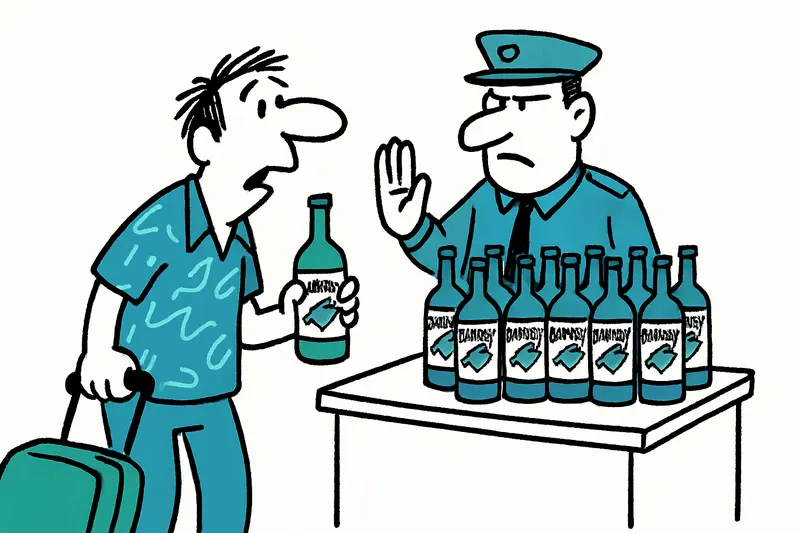
Packaged for tourists but not genuine: 118 bottles of 'Mallorca' sangria seized at the airport
Packaged for tourists but not genuine: 118 bottles of 'Mallorca' sangria seized at the airport
At Palma Airport a shipment of 118 bottles of sangria branded 'Mallorca' was seized after being bottled elsewhere. What does this mean for travelers, producers and inspections on the island? A reality check from the arrivals hall to the wine cellars.
Packaged for tourists but not genuine: 118 bottles of 'Mallorca' sangria seized at the airport
Reality check: Who benefits from the Mallorca brand, and who pays the price?
The Balearic government seized a shipment of 118 bottles of sangria at Palma Airport that were being sold under the name 'Mallorca' but had actually been produced and bottled off the island. The bottles came in various sizes — 4, 24 and 75 centiliters — and were apparently aimed at travelers who wanted to bring a "piece of Mallorca" home. The responsible ministry speaks of a possible breach of labeling and product quality rules; the minimum fine is 3,001 euros.
Key question: Are the current controls at the airport and in tourist retail outlets sufficient to ensure visitors take home genuinely local products — and not mere brand imitations?
Outside the arrivals hall at Son Sant Joan you see luggage carousels early in the morning, taxis pulling up, and small souvenir stalls often offering bottles branded with island motifs. A tired buyer decides in five minutes whether the souvenir has to say "Mallorca". That's precisely where the problem begins: trust is created by packaging, not always by origin.
The seizure at the airport is a clear intervention by the authorities, and shows that inspectors are vigilant; it follows other enforcement actions such as Packages Full of Counterfeits: Van with Over 700 Fakes Stopped in Palma. At the same time, the case raises questions: How systematically are goods checked that are offered at the airport, in duty-free shops, at market stalls or in the outlet alleys around Playa de Palma? And how many products with misleading labeling slip through undetected, as earlier seizures like 231 kilos of spoiled meat: Guardia Civil reportedly seizes reprocessed goods at plant south of Palma suggest?
Another area of concern is legal clarity for consumers. Since 2014, current regulations state that the name "Sangría" may only be used for products made in Spain or Portugal. But applying this rule to brands that bear place names like 'Mallorca' is more complicated: it's not just about geographical indication but about protection of tradition, competition law and consumer deception. Authorities such as the Directorate-General for Food Quality are tasked with sanctioning violations — and they do, as the current case shows.
What often gets short shrift in public debate is the perspective of small producers on Mallorca. Winemakers, presses and traditional producers invest in origin, traceability and quality, pay for certifications and comply with rules. When third-party companies use cheap imitations and the 'Mallorca' brand, local suppliers suffer twice: lost sales and reputational damage, because tourists may take home a false taste experience and think it is typical of the island. Analyses such as Big Blow Against Product Counterfeiting: What Mallorca's Role Really Reveals underline the need for prevention and responsibility.
Critically, there is also a lack of a clear, easily accessible marker for consumers to recognize genuine Mallorcan products. A photo of the producer or a short code on the label linking to producer information would be simple aids — such uniform marking is currently missing.
Everyday scene: On a rainy afternoon in Palma de Marqués you can see market sellers stacking bottles with island labels on plastic tarps and older regular customers asking suspiciously where the product comes from. In such moments trust is decided. Inspections help, but they only create the basis — not the customers' trust.
Concrete solutions that are often overlooked in the discussion are practical:
- Uniform labeling requirements for "place" products with mandatory indication of the bottling location plus a short info via QR code that can be quickly accessed by mobile phone.
- Stronger controls at key points (airport, ports, large markets) combined with spot product checks before peak seasons.
- A publicly accessible producers' register for the Balearic Islands listing producers with proof of origin. Retailers could quickly verify whether an offered brand is legitimate.
- Awareness campaigns for tourists at the airport: brief notices at exits or rental car centers about what makes a product genuinely local and what to look for when buying.
- Harsher sanctions for repeat offenders and transparent publication of violations so consumers are better informed.
These measures would not only strengthen law enforcement but also protect the reputation of genuine producers. The bureaucratic effort is manageable, and the impact on buyer trust would be significant.
Conclusion: The seizure of 118 bottles is not an isolated incident but a symptom. Anyone using the 'Mallorca' brand must comply with origin rules — and controls should focus where tourists buy their souvenirs: in the arrivals hall, at markets and in souvenir streets. Fines from authorities are important. Even more important are transparent labels, a public producers' register and on-site information. Otherwise the word 'Mallorca' on the label often remains only a sales argument — and buyers' trust disappears between the luggage belt and the taxi.
Frequently asked questions
What should I check before buying sangria in Mallorca airport shops?
Is sangria sold under the name Mallorca always made on the island?
Why are authorities in Mallorca cracking down on misleading food labels?
Can I bring sangria home from Mallorca in my suitcase?
How can I tell if a Mallorca souvenir food product is genuinely local?
What kinds of tourist shops in Mallorca are most likely to sell branded imitation products?
What is the penalty for selling mislabeled sangria in Mallorca?
What can Mallorca do to protect genuine local producers better?
Similar News
Injured captain, big plans: Germania Mallorca before the away match in Consell
The newly founded FC Germania Mallorca travels to Consell on Saturday. Captain Bastian Müller is out injured, but coach ...
Palma, Palma de Mallorca, Palma‑Mallorca: What is it really about?
The debate over the city's name is more than grammar: it concerns identity, law and branding policy. A sober reality che...
Warning to Bathers: Nipping Fish in Cala Major and Other Coves — a Reality Check
In Cala Major and several beaches around Mallorca, bathers report painful “nips”. Who are the animals, why are they gett...

Rental Car Theft in El Arenal: What This Incident Reveals About Our Gaps
A teenager steals a running rental car in El Arenal, flees on foot, climbs over walls and is caught by the Guardia Civil...

Red Rope in Palma's Library: What Helps Against Selfie Tourism — and What's Missing
Palma's city library cordoned off an area with a red rope to keep selfie tourism away from reading and working activitie...
More to explore
Discover more interesting content

Can Cap de Bou

Townhouse Lleo 72
