
Fall at Plaça Barcelona: Café Terrace Becomes Accident Scene — What's Missing in Our Response?
Fall at Plaça Barcelona: Café Terrace Becomes Accident Scene — What's Missing in Our Response?
A man fell from a residential building at Plaça Barcelona onto a café terrace. Three people suffered serious injuries. A stocktake: How could this happen and what must we do differently?
Fall at Plaça Barcelona: Café Terrace Becomes Accident Scene — What's Missing in Our Response?
A 45-year-old man fell from the roof of a residential building onto a busy terrace on Friday afternoon. Two guests and the man were seriously injured.
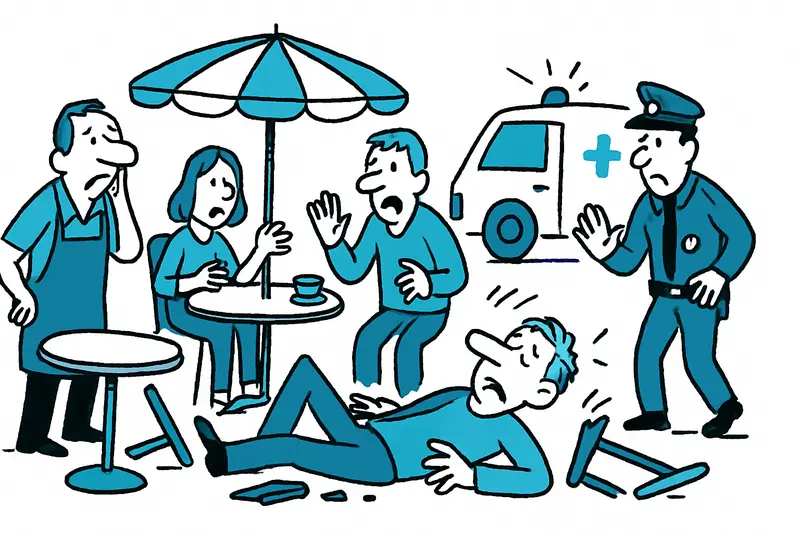
Around 4 p.m. a sunny afternoon at Plaça Barcelona in Palma turned into a scene that is not easily forgotten: ambulances and sirens, the murmur of voices, opened sun umbrellas, broken furniture. According to available information, a 45-year-old man climbed onto the roof of a residential building and fell down. Prior to the fall there had reportedly been an argument with his ex-partner. He landed on the terrace of a café; a tree is said to have slowed his fall initially. Rescue teams stabilized three injured people, two of whom were treated at Son Espases and one at Son Llàtzer. Police cordoned off the area and are securing evidence. Investigations are ongoing. Similar incidents have raised questions about safety and responsibility, such as the Ceiling Collapse at Plaza de l'Olivar.
Key question: How can a single, sudden act affect so many people — and which gaps in urban life make such scenes more likely?
The scene reveals several layers: personal crises, structural conditions and the way the city's emergency apparatus responds. Mental distress appears to have been a trigger. At the same time, structural factors raised the question of how easily accessible roofs are and how dangerous roof edges can become in densely built neighborhoods. Comparable cases include a balcony fall in Palma that highlighted similar vulnerabilities. Finally, the mobilization of emergency services shows that a functioning rescue service can save lives — but that only works if access routes are clear and personnel can act quickly.
The public debate often misses the connection between these levels: people talk about a "tragedy" or "jealousy," but rarely about concrete prevention. There is little discussion about how property managers deal with risk points, what safety standards apply to roof access, or how readily available mental health services are for those in need. Landlords and property managers are responsible here, with municipal support if necessary; this has been a theme in reporting on the Playa de Palma trial. Residents, café staff and guests remain background voices; their experiences of those incomprehensible seconds are rarely recorded systematically.
An immediate everyday snapshot: Neighbors stood on the Plaça with sweat-stained shirts and clammy hands. A delivery scooter was parked too close to the police tape, children watched the scene silently from a park bench, the smell of fried fish mixed with petrol and disinfectant. Glasses fell silent in the surrounding cafés, waiters pushed tables together, an elderly woman clutched her bag and wept quietly. Such images stick and say something about the neighborhood: crowded, loud, full of life — and vulnerable.
Concrete approaches can be identified:
- Make building accesses safer: lockable roof doors, clear signage and regular checks by owner associations. Landlords and property managers are responsible here, with municipal support if necessary.
- More visible prevention resources: post information and crisis hotline numbers at municipal offices, health centers and other prominent public places. Hotlines, such as the German telephone helpline Telefonseelsorge (0800/1110111, 0800/1110222) or the Spanish suicide crisis line (024), must be widely known.
- Training for hospitality and retail staff: first aid, resuscitation, basic psychological first aid and how to behave in acute emergencies should become standard, at least for employees in high-traffic areas.
- Better data and transparency: authorities could collect anonymized figures on falls and suicide attempts to identify hotspots and plan targeted prevention measures.
- Keep access routes for emergency services clear: the "green protocol" that gives emergency vehicles a free path only works if access roads are not blocked by parked vehicles or stalls. Municipal controls during the season are necessary.
A concise conclusion: The incident at the Plaça is more than an individual misfortune; it is a stress test for the urban environment. We need fewer hasty judgments and more concrete precautions that give people in acute crisis a chance to receive help — and that better protect the neighborhood. Solidarity can be a shared chair, but we also need locks on roof doors, more visible support services and clear rules for rescue routes.
Anyone in desperate circumstances can seek help: the German telephone helpline Telefonseelsorge at 0800/1110111 or 0800/1110222; in Spain the hotline 024 is available. If you see an immediate danger, call the emergency number 112.
Frequently asked questions
How can building owners in Palma improve rooftop safety to prevent accidents on busy terraces?
What steps can cafés and plazas in Mallorca take to reduce risk on busy terraces?
Where can people find crisis helplines in Mallorca or Spain if someone is in distress?
How does Palma manage emergency access on busy streets and plazas?
What broader lessons can Mallorca communities draw from a plaza incident about prevention?
What does Mallorca's climate mean for enjoying outdoor terraces and staying safe on sunny days?
How can property managers in Palma balance vibrant public spaces with safety concerns?
What should residents and visitors in Mallorca do if they notice hazard points or risky roof access?
Similar News
More water than last year: Mallorca's reservoirs breathe easier
September rain refilled the Tramuntana's reserves: overall fill around 35 percent, Cúber at 40.42 percent, Gorg Blau at ...
Three Luxury Hotels in Banyalbufar: Lots of Money, Many Questions
A Danish investor plans three exclusive accommodations in Banyalbufar — including the historic Son Valentí. The announce...
2.1 tonnes of cocaine on sailing yacht off Spain's coast – a reality check for the coastguard
A 14-metre yacht was seized with 2.1 tonnes of cocaine. Who monitors the ports, how does the international hunt succeed ...

Heat Bonus in Mallorca: 100 Euros Extra for Outdoor Staff at MarSenses
MarSenses pays employees who worked outdoors in August an extra €100 as recognition. Lighter uniforms, reduced hours for...
Renovating in Mallorca: What You Really Can Do Without Neighbour Consent
Many think they can do whatever they want in their apartment. That's partly true — but only as long as structural elemen...
More to explore
Discover more interesting content

Can Cap de Bou

Townhouse Lleo 72
