
Family Trees Instead of Agents: How Inheritances Are Changing the Ownership Map in the Balearic Islands
Family Trees Instead of Agents: How Inheritances Are Changing the Ownership Map in the Balearic Islands
More and more people in the Balearic Islands acquire homeownership through family transfers. Is this a stopgap against the housing crisis — or a warning sign of social division?
Family Trees Instead of Agents: How Inheritances Are Changing the Ownership Map in the Balearic Islands
Key question: Do family transfers replace missing policy — and for whom is there still no space?
The sober numbers from Spain's National Statistics Institute (INE) sound harmless at first glance: 8.3 percent of owners in the Balearic Islands received their home through a transfer within the family, which equals around 38,700 households. In 2020 it was only 3.3 percent. At the same time, only 67 percent of households live in their own property — below the Spanish average. Such data are more than statistics: they show how routes into housing change when the market remains closed to many. These shifts mirror broader demographic trends discussed in Who Shapes Mallorca's Streets? A Reality Check on Island Demographics.
On the street you notice it in small everyday scenes: at the Mercat de l’Olivar in Palma visitors squeeze past market stalls, a scooter rings its bell, a young man says his parents recently transferred him an apartment in Cala Major because otherwise he would have had no chance to stay in the city. Such transfers are often lifesaving, but they are no structural substitute for affordable housing.
Critical analysis: family transfers run on two tracks. On the one hand they relieve pressure in the short term — relatives can increase the supply without having to compete on the open market. On the other hand they mask the underlying problem: Square‑metre prices in the Balearic Islands have for the first time topped €4,000, scarce new construction for locals, and a rental market where tourist lets bring more lucrative returns. If ownership remains primarily within families, inequality grows between those with networks and those without.
What is missing in public debate: precise figures on the age, income and use of the transferred apartments. Are the units permanently owner-occupied, kept as holiday homes, or rented out on the market? How many young households remain excluded because their families have nothing to bequeath? Without this data the discussion stays on the surface.
Concrete solutions that make sense from an island perspective: build local housing databases so town halls know which units are vacant or permanently used for tourism; facilitate conversions of empty second homes into long-term housing; combine graduated inheritance tax measures with targeted grants for young families without an inheritance; expand municipal social housing instead of offering only subsidies to buyers. At neighborhood level cooperative models and shared ownership could help — for example in projects along Avinguda de Jaume III or on new development sites outside tourist zones.
Another point: legal and tax advice for older owners so transfers are arranged fairly and do not unintentionally foster inheritance conflicts or misuse. Guidance is available in Real Estate and Inheritances in Mallorca: Act Smart Now Before Rules Change.
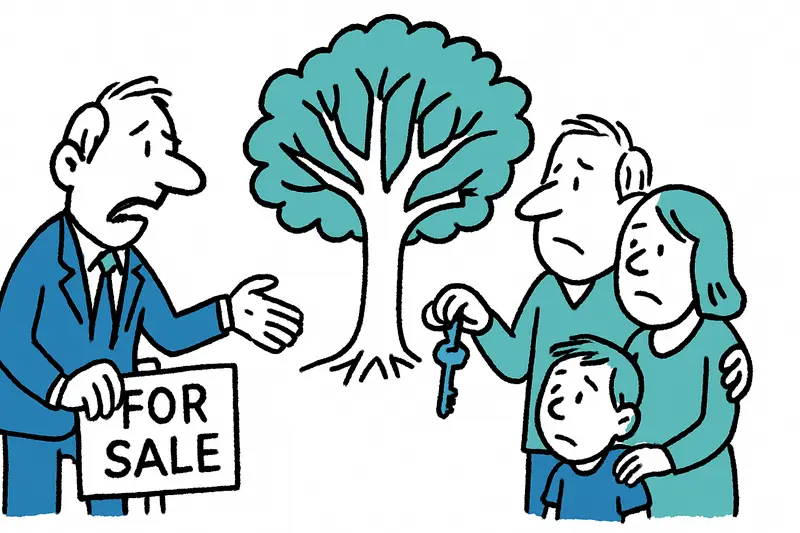
Conclusion: the rising number of family transfers is a symptom, not a cure. In Palma as in smaller towns it shows how people creatively bypass the market when the state and municipalities do not react quickly enough. Those who want to prevent ownership from becoming a lottery between generations must combine transparency, targeted support and neighborhood-level solutions. Otherwise many young Mallorcans will remain spectators while family trees distribute the keys.
Frequently asked questions
Why are more homes in Mallorca being passed on within families?
Can inheriting a home in Mallorca help young people stay in the city?
Is buying a home in Mallorca still realistic for local families?
What makes Mallorca's housing market so hard for residents without family property?
What is happening with inherited apartments in Palma?
Why does the Mercat de l'Olivar reflect Mallorca's housing pressure?
What housing solutions are being discussed for Mallorca?
Should older property owners in Mallorca get advice before transferring a home?
Similar News
Just Bought — Already Trouble: Water Damage in the Heiters' Villa and What Owners in Mallorca Should Know Now
A newly purchased sea-view property — and within days a water damage. What risks lurk in new properties in Mallorca, and...
Rich, Richer, Mallorca? A critical look at the growing super-rich bubble
Numbers: Around 3,600 millionaires in the Balearic Islands hold a combined €27.6 billion. What this concentration of wea...
Chain reaction on the MA-1: Eight injured in rear-end collision near Portopí
On Tuesday morning there was a crash at the Andratx exit to the MA-1 towards Palma: a rear-end collision between a car a...
Happy Couple and Water Damage in Mallorca: A Reality Check for Home Buyers
Just moved in, already water under Mallorca's sun: the case of the influencer couple highlights risks often overlooked w...
Bendinat as a meeting place: Padel Cup brings together nearly 120 players
Three days of padel at the Bendinat Urban Country Club: organized by El Económico and Borbalán, with around 120 particip...
More to explore
Discover more interesting content

Can Cap de Bou

Townhouse Lleo 72
