
Fatal accident in Palma: Why the street in front of the school became the scene
Fatal accident in Palma: Why the street in front of the school became the scene
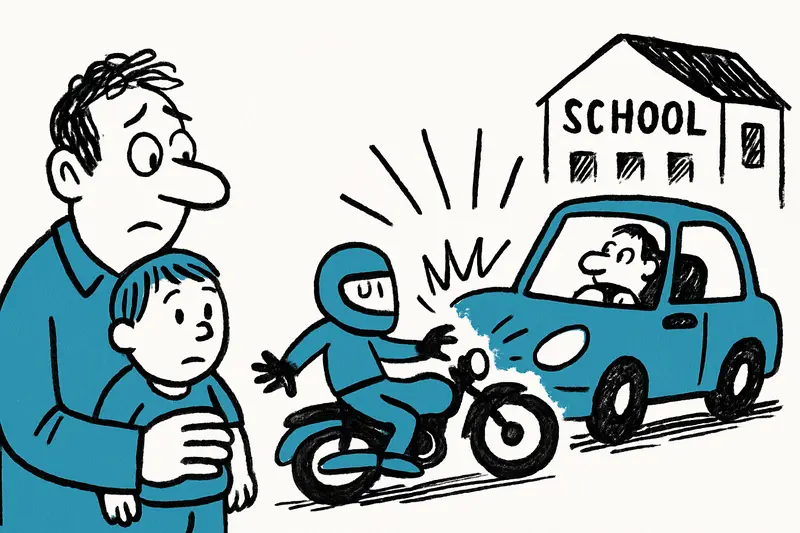
A 38-year-old motorcyclist died after a collision with a car on Calle Indalecio Prieto, directly opposite the CEIP Rafal Vell primary school. The local police are investigating the causes of the accident — alcohol and drug tests on the car were negative. Why it keeps being so dangerous here is the big question.
Fatal accident in Palma: A morning that should not have happened
A motorcyclist dies near the primary school – politics and the street are now on duty
On Saturday morning around 8:30 the quiet, slightly cool atmosphere on Calle Indalecio Prieto was brutally interrupted: at number 50, opposite the CEIP Rafal Vell primary school, a motorcycle and a car collided. The 38-year-old motorcyclist was trapped under the car and suffered a cardiorespiratory arrest. Emergency services from SAMU 061 provided immediate aid but were unable to save the man's life. The driver of the car was taken to hospital in shock; alcohol and drug tests were negative. A special unit of the local police (UVAC) is securing evidence and investigating, as in the case of After head-on crash in Palma: Fleeing and many questions – 31-year-old dies.
Key question: Why do such serious accidents happen at a spot that lies in the middle of a residential neighborhood and directly opposite a primary school?
First thoughts quickly turn to speed and sightlines: in the morning parents are on the move, school buses stop, children cross the street. At the same time many streets in Palma experience dense traffic, the sound of engines mixes with the clatter of schoolbags and the smell of fresh coffee from the cafés at the edge. That is precisely what makes this spot sensitive, a concern echoed in Third traffic death in a few days: Do Palma's night streets need to be safer?.
Critical analysis: The facts leave several questions open. Was the street sufficiently marked as a school zone? Was there a zebra crossing or speed bumps that effectively force vehicles to slow down? What is the lighting like in the early morning, and are there enough sightlines at the junction for fast vehicles? Similar questions arose after Serious accident on Calle Aragón: A loud bang, many questions. Authorities have not yet released detailed reports; the UVAC has taken over evidence collection, but results will take time.
What is missing so far in the public debate: an honest assessment of danger spots in Palma. We hear about accidents, we get the news, then the topic often disappears again in the flood of daily reports. There is no map of hotspots, no public figures on accidents in front of schools and no binding timetables for measures. Recurring incidents, such as Second fatal accident on the Camí de la Síquia — Why does this stretch remain dangerous?, underline the lack of follow-through. And: the perspectives of residents and parents are rarely collected systematically – yet they know the small everyday risks.
An everyday scene for context: Whoever walks along Calle Indalecio Prieto in the morning feels the dense life of the city. The delivery van at the kiosk honks, a mother pushes a pram, pupils in jackets and colorful backpacks jostle on the pavement. A scooter rider maneuvers between parked cars. Such scenes are normal — until they are not.
Concrete solutions that should be examined immediately: introduce and enforce a mandatory 30 km/h speed limit in front of schools; raised crossings at all school entrances; clear signage and flashing warning lights during school times; mobile or fixed speed cameras at known danger points; increased local police presence at rush hours; better lighting and trimming of bushes that block visibility. This also includes school programs for traffic education and a simple reporting point for residents to flag dangerous spots.
Technology can help: accident data must be compiled faster so that municipalities and traffic experts can identify concentrations of danger. A publicly accessible map with accident clusters, broken down by time of day and by those involved (pedestrians, cyclists, motorcyclists), would make the discussion more factual and help prioritize measures.
And something very practical: schools, kiosks and local shops should work with the city to see whether volunteers or city wardens can organize traffic during drop-off and pick-up times. It costs little, shows responsibility and often works faster than political decisions.
Punchy conclusion: This death is not just a sad statistic – it is a wake-up call. When an accident opposite a primary school ends fatally, alarm bells should ring: road planning, enforcement and neighborhood protection apparently still have room for improvement at this location. The UVAC is investigating, the facts will follow. Until then the city must act, not only offer condolences.
The duty remains to make the place safer: for children, residents and everyone hurrying to work or school in the morning. Any measure that is unpleasant, inconvenient or expensive is still better than the next terrible morning.
Frequently asked questions
Why are school streets in Mallorca often considered dangerous in the morning?
What makes a road section in Palma especially dangerous for traffic accidents?
What should drivers watch out for near schools in Mallorca?
Are speed bumps and 30 km/h zones effective in Palma school areas?
What happened on Calle Indalecio Prieto in Palma?
Why do accident investigations in Palma take time?
What safety improvements could help school streets in Palma?
When should residents report a dangerous street in Mallorca?
Similar News

Haute Nuit in Puerto Portals: Fashion, Art and Indulgence by the Water
On October 2 the Lobster Club in Puerto Portals will be transformed into a stage for curated fashion, art and culinary e...
Magaluf: Watchtower Alarm – Lifeguards Pull Unconscious Beachgoer from the Water
After a drama in the late afternoon, two lifeguards at Magaluf beach rescued an unconscious 44-year-old man. He was stab...
Turquoise in the City: How dangerous is the color play of the Sa Riera?
The Sa Riera in Palma suddenly turned turquoise — a pretty motif, but behind the effect lies a discharge of saline waste...

Jeckliner at Sunnesching: Cologne spirit sets sail from Palma
In September 2027 the Mein Schiff 2 briefly becomes a floating carnival stage: four days with Cologne bands, comedy and ...
Finally Home: Mike and Leyla Heiter Buy Villa with Sea View in Mallorca
The reality TV couple Mike and Leyla Heiter have bought a house in Mallorca with a roof terrace and sea view. An Instagr...
More to explore
Discover more interesting content

Can Cap de Bou

Townhouse Lleo 72
