
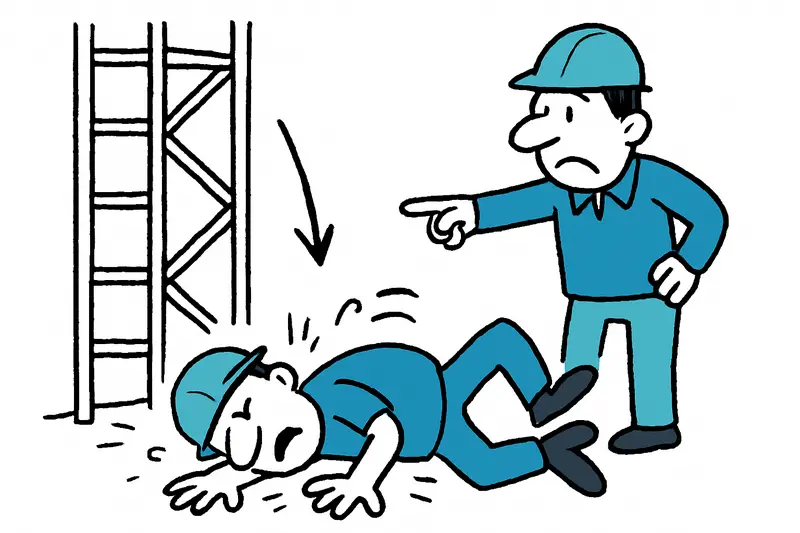
Fatal Fall in Ibiza: Why Do Such Accidents Happen — a Reality Check
A 43-year-old worker died after a fall of around twelve meters in Santa Eulària. Why do fatal accidents during tree work keep happening — and what is missing in how they are handled?
Fatal Fall in Ibiza: Why Do Such Accidents Happen — a Reality Check
A man lost his life midweek while carrying out tree work in Santa Eulària on Ibiza after falling from a great height. The Guardia Civil confirmed that the worker was 43 years old and that the exact cause of the accident has not yet been determined. The shock is deep — and the simple question remains: How can something like this be prevented in the future?
Brief assessment
Known facts are sparse: the worker fell from about twelve meters, struck a container and died despite rapid aid on site. Nothing more has been officially confirmed. Yet such scenes are familiar: workers climbing in the crowns, the buzz of chainsaws, ground teams working below. On Mallorca this is a regular sight — for example when municipal teams from Emaya are roped into street trees to cut branches. There, professionals use rope techniques, are trained and follow internal rules.
Critical analysis: Where things go wrong
First: working in tree crowns is inherently dangerous. But danger becomes a catastrophe when training, equipment or organization are inadequate. Missing or faulty fall protection, unclear work instructions, time pressure or multiple assignments given to poorly coordinated subcontractors increase the risk. Language barriers and precarious employment conditions can also lead to safety rules being ignored or not understood. Authorities report cases, providers rarely speak openly about near-misses, as in Fatal accident in Santa Margalida: Concrete slabs bury worker – How safe are our construction sites? The interaction between clients, companies and inspections is often patchy.
What is missing in the public debate
The debate usually focuses on the individual accident — the image of a tragic isolated case. What remains unexamined is how tree work is commissioned, supervised and quality-assured. There is a lack of transparency in tender criteria: which companies receive contracts? Who checks the equipment? How often are unannounced inspections carried out? The question of liability and insurance coverage in cross-border employment also rarely comes up, and local incidents have prompted calls for change, for example Fatal accident in Santa Margalida: concrete slabs bury worker – calls for improved workplace safety. And finally: how are migrant workers informed and protected when they work without stable social security?
A scene from everyday life
Imagine Palma in the early morning: the Passeig del Born smells of freshly brewed coffee, delivery vans are parked, and two workers in neon vests climb the trees over the street. A local stops and watches a rope slowly lower a severed branch — that very routine, which looks safe and routine, is based on a handful of rules that must be followed. On Ibiza, that apparently was not the case.
Concrete solutions
The buzzwords are not just more inspections, but more concrete measures:
1. Uniform minimum standards: Introduce binding requirements for tree work (equipment, personal protective equipment, rope systems) to be applied to all contracts.
2. Certification and training: Only certified teams should be involved in safety-critical work. Regular, documented training, also in the languages of the workers, should be mandatory.
3. Awarding contracts based on safety criteria: Public municipalities should weigh safety concepts in procurement criteria, not just price.
4. Independent inspections: More unannounced checks by labor inspectorates with clear sanctions for violations.
5. On-site risk assessment: A documented risk assessment must be carried out before each deployment — for example regarding fall paths (containers, vehicles), ground conditions and traffic management.
6. Mechanical alternatives: Where possible, use aerial platforms or other technical aids instead of relying solely on climbing work.
7. Protection for precarious workers: Communication, insurance coverage and a reporting office for violations should be easily accessible — multilingual and anonymous.
A brief conclusion
This tragedy in Ibiza is more than the sad news of an isolated case. It is an indication that safety systems can fail in practice — for reasons that often remain hidden, as in Concrete stacks in Santa Margalida: When the safety chain fails: pressure of orders, gaps in inspections, lack of training or precarious employment conditions. Anyone who walks past a tree team in Palma in the morning and watches them cut must know: rules alone are not enough. They must be lived, checked and enforced. Otherwise the next tragic accident is only a matter of time.
Frequently asked questions
Why are tree work accidents so dangerous in Mallorca and the Balearic Islands?
What makes fall protection so important for workers in Mallorca?
How can workplace accidents in Mallorca be prevented when subcontractors are involved?
What safety rules apply to municipal tree work in Palma?
When is mechanical equipment better than climbing for tree work in Mallorca?
What should workers in Mallorca be told before dangerous outdoor jobs?
How often should safety inspections happen for high-risk work in Mallorca?
What can people in Mallorca do if they see unsafe work at height?
Similar News
Ancient Piece Brought to Light: Guardia Civil Recovers Roman Anchor Fragment off North Coast of Mallorca
Divers from the Guardia Civil recovered a massive iron piece from Roman times off Mallorca's north coast. The roughly 35...
Who Benefits from the Half‑Hourly Flight on the Edge? Aena, Investments and the Island's Interests
Almost one billion euros is flowing into Son Sant Joan. The figures show the scale of investment and expected beneficiar...
Are the Balearic Islands the Southern Border of Europe? A Reality Check on Immigration
The Balearic Islands are again calling for EU aid after a sharp rise in arrivals by sea. Conflicting priorities between ...
"Expensive chaos" and many open questions: What clients can do when a lawyer suddenly stops responding
Several clients complain that a well-known German lawyer in Mallorca has been unreachable for months. Key question: What...
TV tip: 'The Last Problem' — Mallorca as the setting of a classic crime
A classic whodunit on Mallorca: A new miniseries set in spring 1959 brings storm, an isolated hotel and a dense web of s...
More to explore
Discover more interesting content

Can Cap de Bou

Townhouse Lleo 72
