
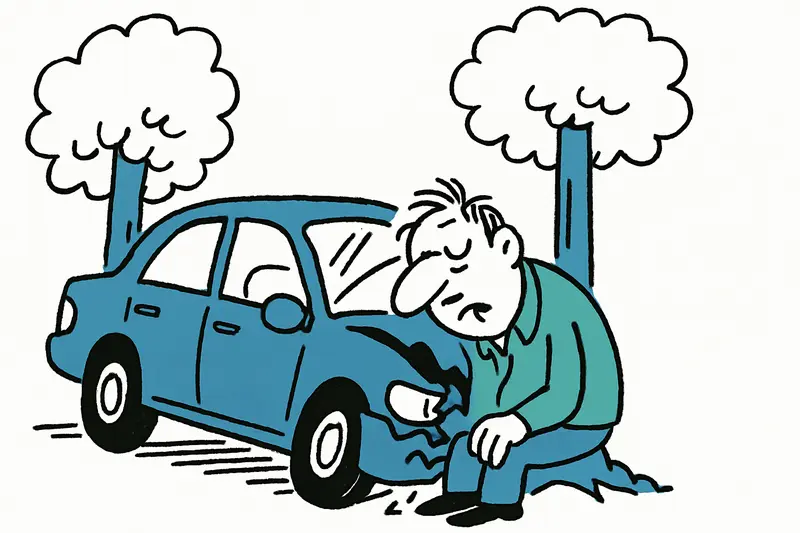
Fell asleep at the wheel after climbing: rental car crashes into trees on Camí de Son Rapinya
Fell asleep at the wheel after climbing: rental car crashes into trees on Camí de Son Rapinya
A tourist lost control of a rental car on Sunday afternoon on the Camí de Son Rapinya and crashed into two trees. Alcohol was ruled out; the driver said he had been tired after a climbing trip in Caimari. His wife suffered minor injuries.
Fell asleep at the wheel after climbing: rental car crashes into trees on Camí de Son Rapinya
Alcohol ruled out, fatigue as a possible cause – Emaya cleaned the road, the passenger was taken to hospital with minor injuries
Key question: How dangerous is driver fatigue, especially for tourists, and what is missing in our everyday life so that such collisions occur less often?
On Sunday afternoon at around 2:15 pm a middle-aged tourist lost control of his rental car on the Camí de Son Rapinya in Palma. The car initially mounted the pavement, knocked over a traffic sign, drove over the cycle path, ran over one tree and finally crashed into a second tree. Fortunately, the pavement and cycle lane were clear at that time, so no pedestrians or cyclists were injured. Several local police units carried out a breathalyzer test on site; it was negative. The driver said he had just returned from a climbing trip in Caimari and was very tired. An ambulance from Clinic Balear treated the passenger for a minor injury and took her to Clínica Rotger. A tow truck removed the vehicle and Emaya staff cleaned the accident site.
Critical analysis: Fatigue at the wheel is not a minor nuisance; it is a real risk factor, as documented by the Sleep Foundation's drowsy driving facts. In Mallorca many people move around who want to get to know the island quickly: rental cars, narrow streets, unfamiliar terrain. Those who get back into a car after a strenuous activity like climbing or hiking often underestimate how much their concentration is impaired. Lack of familiarity with the vehicle, difficulty orienting in Palma, and sudden lane corrections can end at narrow road edges or in green strips; similar nighttime collisions have occurred elsewhere in Palma, such as the Nighttime Accident in Son Oliva.
What's missing in public discourse: Discussions about driver fatigue among tourists rarely play a role. Media and authorities often talk about alcohol checks or speed, but exhaustion remains marginal; coverage of other serious incidents like the Fatal crash at Son Castelló tends to focus on other causes. Likewise, there is little systematic guidance at rental handovers about local danger spots. The presence of a fixed speed camera near the accident site is notable, but it says nothing about the root cause; attention and tiredness behave differently.
A scene from everyday life: On the Camí de Son Rapinya you can hear the rhythm of the buses and the clicking of bicycle gears on Sundays. Residents sweep olive leaves, delivery vans honk, and tourist maps flash in hands between parked cars. Here, where a pavement runs close beside a cycle lane and trees stand close to the carriageway, a short blackout at the wheel is enough for the car to end up in the green.
Concrete solutions:
For rental companies: Mandatory information at handover: brief notes on the local traffic situation, warnings about driver fatigue after outdoor activities, multilingual information sheets and an optional SMS reminder with tips to take breaks, following practical pointers such as AAA's rental car safety tips. Vehicle checklists, short familiarization drives in residential areas, and offering flexible start times to allow an extra quiet hour.
For the municipality: Review dangerous sections where pavements and cycle lanes run closely together. Install protective bollards between the roadway and cycle path, position or secure trees to reduce the impact of collisions, and carry out targeted checks at critical points to detect risky driving behavior.
For organizers of outdoor activities: Clear advice to members and guests: no immediate driving after strenuous tours, information sheets in climbing centers and hiking offices, cooperation with taxi companies to offer discounted return trips on tiring days.
In conclusion: This accident is not a singular stroke of bad luck but an indication that fatigue at the wheel is underestimated – especially by visitors who get back into a car after a day in the mountains. Small, practical rules and local measures could prevent the next tired driver from ending up against a tree instead of at a traffic check; other local incidents, like Sant Elm: Car slides three meters down slope, underline the point. It does not require major legislation, but more everyday prudence, better information at rental handovers and targeted urban safety measures at spots like the Camí de Son Rapinya.
Frequently asked questions
What is the weather usually like in Mallorca in spring?
Is it warm enough to swim in Mallorca during spring?
What should I pack for a spring trip to Mallorca?
Is spring a good time to visit Mallorca for sightseeing?
What is Port de Pollença like in spring?
Is Pollença worth visiting in spring?
Is Valldemossa busy in spring?
Can you do outdoor activities in Mallorca in spring?
Similar News

Rental Car Theft in El Arenal: What This Incident Reveals About Our Gaps
A teenager steals a running rental car in El Arenal, flees on foot, climbs over walls and is caught by the Guardia Civil...

Red Rope in Palma's Library: What Helps Against Selfie Tourism — and What's Missing
Palma's city library cordoned off an area with a red rope to keep selfie tourism away from reading and working activitie...
Fort San Carlos: Museum, Harbor Dispute — and a Conflict That Demands Answers
The military museum at Fort San Carlos sits right on Palma's harbor, with unexpectedly quiet rooms filled with cannons a...
Old Town Under Pressure: When a Doorway Becomes a Sleeping and Shower Place
For months a woman has been living with a parasol, a clothes rack and personal belongings next to the social welfare off...
When Shopping Weighs Heavier: Mallorca Demands a Tax Pause on Food and Fuel
Rising prices are putting pressure on households and agriculture. The Balearic Islands are calling for temporary tax rel...
More to explore
Discover more interesting content

Can Cap de Bou

Townhouse Lleo 72
