
Magaluf: Beach operations stall – who bears the consequences of the delay?
Magaluf: Beach operations stall – who bears the consequences of the delay?
On Magaluf's beach the usual offer of sunbeds, umbrellas and kiosks is still missing because the concession wasn't awarded. Uncertainty is growing for seasonal workers and local residents.
Magaluf: Beach operations stall – who bears the consequences of the delay?
Key question: Why is the beach in Magaluf still lying fallow at the start of the season, even though the holiday season is just around the corner?
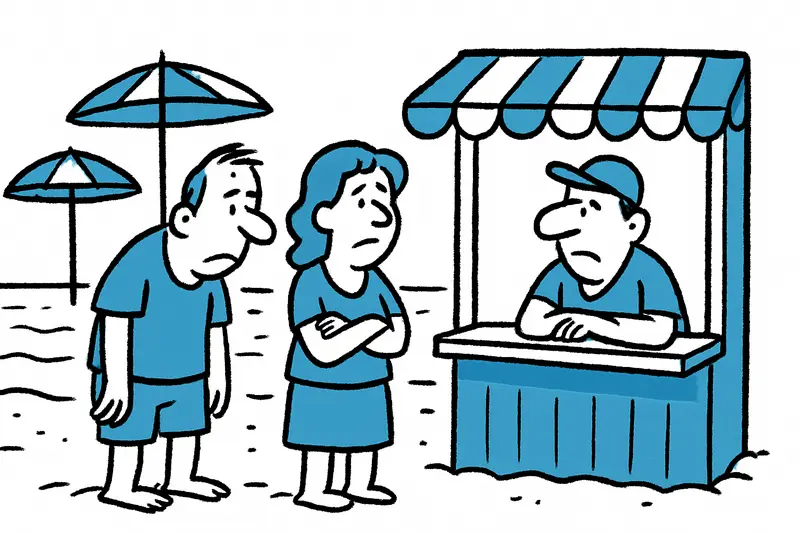
On the wide strip of sand in Magaluf the sea lies calm on a windless morning, seagulls circle, and the promenade slowly fills with delivery vans. One thing is missing: the familiar line of parasols, sunbeds and beach kiosks. The municipality of Calvià had put the concession for the operation out to tender – and last time no one applied. That means the services on this stretch of coast remain closed for the time being.
This is not a purely bureaucratic detail. For seasonal workers who rely on the job, for local landlords and for guests who expect a full beach service, the delay causes tangible problems. Employees report that some of them should already have started in mid‑March or early May; now their employment is in jeopardy, and no one knows for sure whether a future operator will take over the previous staff.
Critical analysis: Why did the tender fail? The municipality returned the last call for tenders because apparently no offers were submitted. Possible reasons are obvious: economic calculations, the high investment and personnel costs for summer operations, bureaucratic requirements in the contract documents, or uncertainties around insurance and liability (Empty Sun Umbrellas, Full Shopping Bags: Why Mallorca's Beach Economy Is Faltering). Added to this are the short season and strong competition within a region that offers many similar concessions. For private bidders the risk can seem higher than the expected return.
What is too often missing from the public debate: little is said about the losers of the delay. Concrete information is lacking on how many employees are affected or how the municipality plans transitional solutions. The perspective of smaller businesses that depend on beach lockers and watersport offerings is often omitted as well (When the Beach Stays Empty: How Mallorca's Sunbed Renters and Chiringuitos Are Fighting to Survive). Furthermore, the question of legal deadlines and possible short‑term permits is rarely explained – yet these are decisive facts for residents and workers.
An everyday scene in Magaluf: Around nine in the morning a delivery van drives along Passeig de Magaluf, the driver is on the phone, and municipal gardeners sweep the areas around the beach entrances on the promenade. On the wooden platforms that are normally prepared for beach service, there are now pallets and tarpaulins. A former beach worker leans on the railing, hands in his pockets, and casually says that he was waiting to put on his uniform – a small but symbolic gesture: summer cannot be put into operation when people do not know whether they are allowed to work.
Concrete approaches to solutions: There are several pragmatic steps the municipality and potential operators should consider. First: an interim permit for seasonal providers to temporarily close the gap – for example, temporary kiosks and reduced service packages. Second: clauses in future tenders that encourage or even require the takeover of existing employees so that skilled staff do not have to be recruited anew every summer. Third: a public information campaign with clear deadlines and requirements so potential bidders can calculate in advance. Fourth: financial or organizational incentives for smaller local providers, for example through shortened approval procedures or partnership models in which several operators take over individual sections. Fifth: considering staggered concessions – instead of one large exclusive concession, several smaller licenses could be awarded to distribute risk and lower entry barriers.
Such measures would not solve all problems, but they would reduce short‑term uncertainty and restore a presence on the beach. For the tourist summer time is a scarce commodity: delays affect the island's image directly when guests encounter empty sections instead of the familiar service (Empty Sunbeds, Tight Coffers: Mallorca's Beach Economy Under Pressure).
Concise conclusion: This is not just about umbrellas and sunbeds. If the concession award continues to stall, people will lose income and the image as a well‑organized destination will suffer. The municipality of Calvià has a duty to design the tender so that it is practicable while also protecting employment. Anyone who experiences the morning silence on Magaluf's beach senses: a simple, quick solution would achieve more here than months of uncertainty.
Frequently asked questions
What is the weather like in Mallorca in September?
Can you still swim in Mallorca in October?
Is Mallorca good for a beach holiday in late summer?
What should I pack for Mallorca in early autumn?
Is September a good month to visit Mallorca?
What is Cala Ratjada like in late season?
Is Port de Sóller still lively outside peak summer?
Are Mallorca’s beaches still suitable for families in autumn?
Similar News

Rental Car Theft in El Arenal: What This Incident Reveals About Our Gaps
A teenager steals a running rental car in El Arenal, flees on foot, climbs over walls and is caught by the Guardia Civil...

Red Rope in Palma's Library: What Helps Against Selfie Tourism — and What's Missing
Palma's city library cordoned off an area with a red rope to keep selfie tourism away from reading and working activitie...
Fort San Carlos: Museum, Harbor Dispute — and a Conflict That Demands Answers
The military museum at Fort San Carlos sits right on Palma's harbor, with unexpectedly quiet rooms filled with cannons a...
Old Town Under Pressure: When a Doorway Becomes a Sleeping and Shower Place
For months a woman has been living with a parasol, a clothes rack and personal belongings next to the social welfare off...
When Shopping Weighs Heavier: Mallorca Demands a Tax Pause on Food and Fuel
Rising prices are putting pressure on households and agriculture. The Balearic Islands are calling for temporary tax rel...
More to explore
Discover more interesting content

Can Cap de Bou

Townhouse Lleo 72
