
Who Cleans Up Son Gual? An Analysis of the Growing Illegal Dump Near Palma
Who Cleans Up Son Gual? An Analysis of the Growing Illegal Dump Near Palma
Right at the access to Son Gual, illegal piles of car parts, bulky waste and construction debris are growing. Who is responsible — and which quick measures actually help?
Who Cleans Up Son Gual? An Analysis of the Growing Illegal Dump Near Palma
Between guardrails, bus stops and luxury villas: why the waste doesn't simply disappear
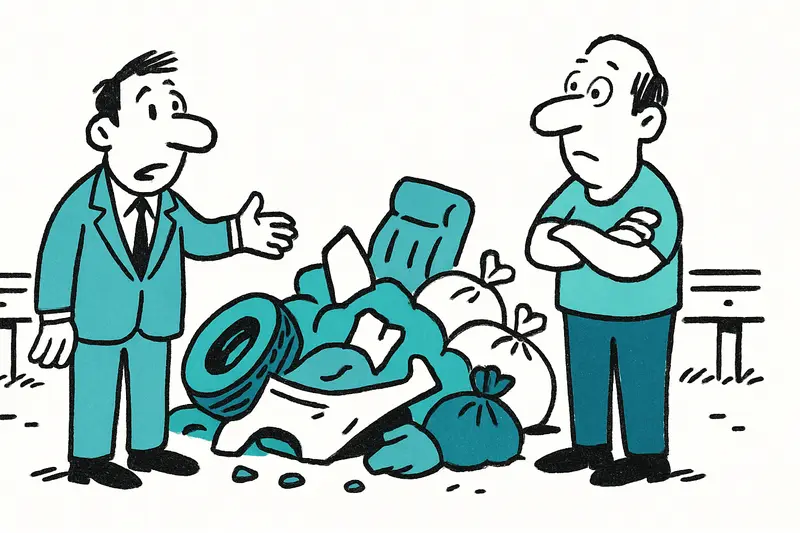
First question: who takes responsibility when mountains of car parts, bulky waste and bags of household refuse lie at the access road to a residential estate? This is not rhetorical but the central question repeatedly asked on site as drivers climb the road from Palma and see the chaotic sight. Similar cases have been documented, as in Son Reus: Massive Dump on Finca Puts the Island's Responsibility to the Test.
The scene is concrete: right next to the turnoff to Son Gual broken bumpers, decommissioned car seats and loose bags are stacked behind the guardrails. At the bus stop you can hear the engine of a TIB bus, tires hiss on the paved verge, and from the gardens of the supposedly well-kept residential complex comes the hum of a lawn trimmer. The contrast is painful — well-maintained private properties on one side, wild waste deposits on the other.
Critical analysis: the problem has several layers. First, this is a classic spillover problem: waste is dumped at municipal boundaries or difficult property sections, precisely where responsibilities blur. This occurs elsewhere — Binissalem Suffocates in Waste: Who Cleans Up - and Who Pays? documents similar cross-boundary dumping. Second, there is apparently no effective order and control regime. If the same waste has been growing for months, that's not a sign of isolated oversights but systemic gaps in monitoring, enforcement and cleanup. Third, there are incentives for dumpers: low disposal costs, unclear controls and the prospect of not being caught.
What is often missing in public debate: a realistic assessment of costs and procedures. It's not just about collecting the waste in a single day. Construction debris must be disposed of separately and properly, car wrecks require environmental inspections, and illegally dumped household waste poses health risks to crows, stray dogs and people walking by. Also rarely discussed is the interface between private land, municipal roads and highway verges — exactly where legal questions arise, as discussed in Palma Cleans Up — Who Pays, What Remains?.
Everyday scene: a delivery driver who takes the Son Gual access road every morning shows us empty coffee cups among the shards; an elderly woman walks her dog past a place where a piece of car door is half stuck in the bushes. A gardener from the residential complex sighs and says he can no longer water the plants with a clear conscience because rubbish often blows into the flower beds. These small, everyday impressions show: the problem has already arrived in neighborhood life, mirroring neglect of public spaces such as Parc de la Mar neglected: Who will save Palma's living room at the foot of the cathedral?.
Concrete solutions, practical and without exaggerated bureaucracy:
1. Immediate measures: In the short term, mobile cleaning sweeps should be organized — coordinated units that collect construction debris, metal scrap and household waste separately. Disposal must be documented so it is clear what was collected.
2. Clarify responsibility: Palma and the neighboring municipality must immediately draw up a joint responsibility map for sections along access roads, bus stops and guardrails. Where boundaries are unclear, an interface agreement helps.
3. Sanctions and deterrence: More checks in the early morning hours, increased video surveillance at crime-prone hotspots and consistent fines for illegal dumping. Important: tie fines to removal costs so dumping becomes economically unattractive.
4. Prevention and infrastructure: Easily accessible, cheaper possibilities for legal disposal of bulky waste and scrap nearby reduce the temptation to dump illegally. Mobile collection points on set dates for bulky waste could help.
5. Citizen participation: Neighborhood initiatives need support rather than just complaints. A "hotline" portal for quick reports combined with camera analysis can consolidate tips and enable rapid responses.
What doesn't help now: mere symbolic actions without sustainability. One-off cleanups without follow-up quickly lead to relapse. Likewise, uncoordinated cleanings that deposit unsorted material cause harm.
Concise conclusion: the waste mountains at Son Gual are not merely a local nuisance but a symptom of organizational gaps. Improvements can be achieved within weeks — but only if short-term operations are linked with permanent rules. Residents, municipalities and waste companies must pull together; otherwise the slope seen from Palma will remain a monument to how small deposits quickly become a large-scale problem.
Frequently asked questions
Why is there so much illegal dumping near Son Gual in Mallorca?
Who is responsible for clearing illegal waste near roads in Mallorca?
What kind of waste is usually found at illegal dumps in Mallorca?
Why can’t illegal waste near Palma just be removed in one cleanup?
Is illegal dumping near Son Gual a risk for people living nearby in Mallorca?
What can authorities do to stop illegal dumping in Mallorca?
When is bulky waste collection useful in Mallorca?
Why do illegal dumps keep coming back near Palma, Mallorca?
Similar News
Warning to Bathers: Nipping Fish in Cala Major and Other Coves — a Reality Check
In Cala Major and several beaches around Mallorca, bathers report painful “nips”. Who are the animals, why are they gett...

Rental Car Theft in El Arenal: What This Incident Reveals About Our Gaps
A teenager steals a running rental car in El Arenal, flees on foot, climbs over walls and is caught by the Guardia Civil...
Red Rope in Palma's Library: What Helps Against Selfie Tourism — and What's Missing
Palma's city library cordoned off an area with a red rope to keep selfie tourism away from reading and working activitie...
Fort San Carlos: Museum, Harbor Dispute — and a Conflict That Demands Answers
The military museum at Fort San Carlos sits right on Palma's harbor, with unexpectedly quiet rooms filled with cannons a...
Old Town Under Pressure: When a Doorway Becomes a Sleeping and Shower Place
For months a woman has been living with a parasol, a clothes rack and personal belongings next to the social welfare off...
More to explore
Discover more interesting content

Can Cap de Bou

Townhouse Lleo 72
