
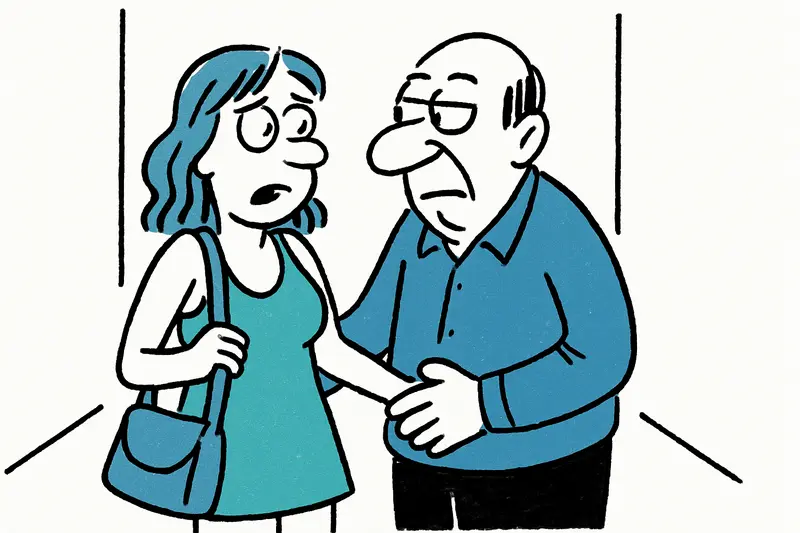
Playa de Palma: Probation after Elevator Assault — Enough Justice for Guests?
A verdict following an assault in a hotel elevator at Playa de Palma has left people puzzled: six months' imprisonment, suspended on probation. Is that enough to restore holidaymakers' sense of safety? A look at gaps, prevention and concrete measures.
Probation after elevator assault: A verdict that leaves questions unanswered
The scene is quick to tell: elevator, a short stop, a young female tourist and a much older guest — followed by an incident that called the police in October 2023 and has now ended up in court (Turista de 20 años en Playa de Palma acosada en un ascensor: el agresor recibe condena con suspensión).
What the verdict says — and what it keeps silent about
Formally, the behavior was recognized as punishable. That matters, especially after the reform of sexual criminal law ("Solo sí es sí"), as explained by BBC: Spain's "Only yes means yes" law: a clear no or absent consent makes any touch a criminal act. Nevertheless, the decision not to enforce the sentence sounds to many residents and tourists like a softer signal than expected. Judges cited intoxication, a confession and a previously paid compensation as mitigating circumstances. For victims and observers the conclusion remains: acknowledgment yes, a tangible sanction — questionable; similar controversies have appeared before, for example in Palma: Suspended sentence after €35,000 fraud – was that enough?.
What is often missing from the discussion
Headlines revolve around punishment and guilt. But on Mallorca much of it happens in daily life: the warm summer night, the clinking of glasses on the promenade, the hum of air conditioners — and the question of how hotels handle a moment like that. Were emergency protocols in place? Were staff trained? Were there multilingual notices at reception and in elevators? Such details often decide how safe someone feels and how quickly help arrives.
Concrete measures instead of just a legal debate
Conversations with those affected and employees produce practical suggestions: mandatory sensitivity workshops for reception and night staff; clear, visible procedures at reception in multiple languages; well-lit entrances and camera or alarm solutions at elevators; easily reachable emergency buttons that connect directly to the Policía Nacional. Technical aids — apps that provide quick contacts to the police, reception or anonymous counseling centers — would be particularly useful for young travelers.
Prevention means a system, not case-by-case management
Important is: it is not enough to react conservatively after an incident. The island needs binding standards. These could be regulatory requirements or industry certificates that recognize hotels with strong safety and reporting concepts. Cooperation between tourism associations, police and social services — for example fixed contacts in every municipality — would show that safety is more than a polite sign at the reception desk, an argument underlined by reactions after the Palmanova verdict: Two years in prison — and what Mallorca must learn now.
An appeal to authorities, hoteliers and guests
Playa de Palma lives from the chatter on the beach promenade, from the walkway full of towels and the morning traffic of buses. Precisely for that reason it is bitter when travelers take home a feeling of vulnerability. Authorities and hoteliers are now called upon: visible presence, transparent procedures and a genuine offer of support for those affected. Only then can trust be regained — for the people who live here and those who visit our island.
Note: For reasons of victim protection no further personal data was published. The police advise: if something feels off, inform staff or authorities immediately.
Frequently asked questions
Is Playa de Palma safe for solo female travellers at night?
What should I do if I feel unsafe in a Mallorca hotel?
Do Mallorca hotels usually have emergency procedures for guests?
When is Playa de Palma the busiest time for tourists?
What kind of hotel safety features should I look for in Mallorca?
How are assault cases in Mallorca hotels usually handled by the police?
Is Playa de Palma a good area to stay in Mallorca?
What should tourists in Mallorca do if something feels off in a hotel or lift?
Similar News
After Being Admitted to Hospital Again: Heinz Hoenig and the Questions We Should Ask in Mallorca
Long-time Mallorca resident Heinz Hoenig was admitted to hospital again. A clear “what next?” is missing from the covera...
Yellow Alert: Is Mallorca Prepared for the Next Rain Band?
Aemet has issued a yellow alert for the south, southwest and the island's interior. Thunderstorms and heavy rain are for...
Kegel brothers trial postponed: Why Mallorca must wait for a verdict
The trial of 13 German holidaymakers will not begin until May 2028. The long wait raises questions — for victims, defend...
Chaos on Palma's Runway: Why the Summer at the Airport Was So Disrupted
This summer laid bare where Palma airport is faltering: only just over half of departures were on time and seven percent...
Cocaine Offer on Ham Street: Why the Open Trade Should Ring Alarm Bells
In the middle of Pare Bartomeu Salvà a tourist was offered a packet of cocaine as part of a sunglasses deal. A short int...
More to explore
Discover more interesting content

Can Cap de Bou

Townhouse Lleo 72
