
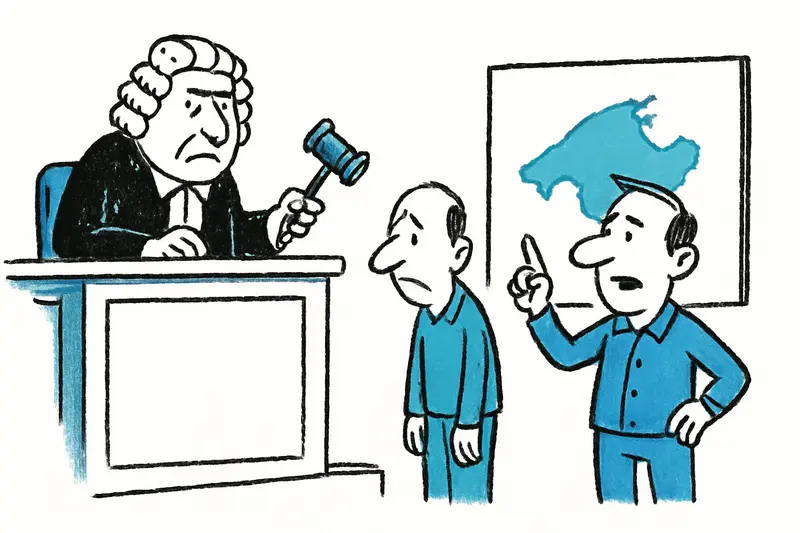
Palmanova verdict: Two years in prison — and what Mallorca must learn now
The Palma district court sentenced a man for an assault in Palmanova to two years' imprisonment, suspended. The verdict raises questions: Is legal retribution sufficient? What responsibility do hosts, neighbors and the island administration bear — and what practical steps could Mallorca take now to make private parties safer?
Palmanova verdict: Two years in prison — and what Mallorca must learn now
In the summer of 2021 a party in Palmanova ended traumatically for a young woman. Now the Palma district court has sentenced a man to two years in prison; the sentence was suspended and linked to compensation and conditions. For the victim this may be a legal full stop. For the island community the real question begins: What do we learn from this so that private gatherings do not become a danger? Read more on this specific ruling in Suspended Sentence After Abuse in Palmanova: A Verdict That Raises More Questions.
Confession, money and the question of justice
The defendant confessed and paid — around €12,000 of €13,000 had already been deposited before the trial — and was also issued a restraining order. The procedural reality is simple and bitter: victims receive financial compensation, while the perpetrator largely remains free as long as he does not reoffend. The long duration of the proceedings was considered a mitigating circumstance by the court. For many outsiders the verdict therefore feels ambivalent: an admission and money do not replace the feeling of safety.
The guiding question: Is a verdict enough to make the night safer?
In summer, Mallorca has loud nights, flashing lights, scooters buzzing along the promenade, and crowds of people looking for a few hours of fun. On such evenings tourists, locals and seasonal workers gather in holiday apartments and fincas. Alcohol, loud music and cramped spaces are often ingredients for a dangerous mix. Legal consequences follow later. The real challenge, however, begins earlier: with hosts, neighbors and the culture of looking away.
Unseen responsibilities: hosts, neighbors and institutions
What is often missing in the public debate is the question of host liability. Those who rent out an apartment or house think about bed linen, final cleaning and tourist reviews — rarely about boundaries, safe retreat spaces or a guest list. Cases like the one in Palmanova show that private spaces can be just as risky as clubs or bars. Clear expectations are needed for landlords and party organizers — not as paternalism, but as prevention.
Equally underestimated is the role of the neighborhood. The Calle de la Iglesia, where the party took place, still whispers. A resident remembers loud music but not an alarm call. Neighbors are often the first to notice when something is going wrong. Yet many hesitate to call the police out of shyness, uncertainty or language barriers. A courageous neighborhood can save lives. That must be trained — with simple rules: when to call emergency number 112, how to inform in a de-escalating way, and how witnesses can stay safe.
A third, often suppressed point is the length of proceedings. Trials strain those affected, erase memories and reduce trust in the justice system. That delay is treated as a mitigating factor is met with incomprehension: for victims it feels like a postponement of punishment, not justice. This procedural delay is analysed in When the Verdict Is Delayed: Why Court Proceedings in Mallorca Often Take Years.
Concrete steps that can be implemented locally
The island needs pragmatic measures that can be felt next summer. A few proposals that should be discussed in municipalities such as Calvià, Palma or Manacor:
Similar doubts about whether sentences protect victims have been raised elsewhere, for example in Palma: Suspended sentence after €35,000 fraud – was that enough?.
Information where the holiday begins – Information sheets in rental agencies, flyers at the airport, notices in beach bars and at tourist hotspots. Short, multilingual reminders about consent, emergency numbers and support services would be a sensible start.
Duties for hosts – Minimum information for guests, clear house rules, a local contact person and simple safety checks (locks, night lighting, retreat options). For larger parties a requirement to register with the Ajuntament could be tested as a pilot.
Neighborhood and bystander trainings – Local workshops on how to help safely: signal words, short intervention rules, how to call police or medical help without endangering oneself. Such trainings could be offered together with tourist centers.
Faster support pathways – Less bureaucracy for forensic examinations, fixed contact points for psychosocial support on Mallorca and clear timeframes in which victims are accompanied. Visible counseling centers in larger towns would reduce inhibitions.
Legal reviews – Whether models such as limited host liability or insurance offers for private rentals could help should be examined. Not to criminalize hosts, but to reduce risks.
Hear the quiet warning signs without losing the loud summer
The verdict from Palmanova is a legal point, but not a societal full stop. Mallorca can keep its lively summer nights — if it simultaneously strengthens the protection of the vulnerable. That means not only thinking about harsher penalties but very concretely about how hosts are prepared, how neighbors act and how authorities can support more quickly.
Names are withheld out of consideration. What remains are the question and the task: Will we in future hear the quiet warning signs? And who will stand up when the music gets too loud?
Frequently asked questions
What should Mallorca visitors know about private parties in holiday homes?
How do courts in Mallorca usually handle cases with a confession and compensation?
What should I do in Mallorca if I think someone at a party is in danger?
Why do court cases in Mallorca sometimes take so long?
Are holiday apartment hosts in Mallorca responsible for guest safety?
What can neighbours in Mallorca do if a party sounds wrong?
When is summer nightlife in Mallorca most likely to become a safety issue?
What safety steps could Mallorca towns introduce for private parties?
Similar News
The End of the Cheap Ride? Why Mallorca Is Hit Harder by the Fuel-Price Shock
Gasoline and diesel average close to two euros per liter. What this means for commuters, supply chains and renters in Ma...
Relaxed liquid rules in Munich: What Mallorca travelers will notice
At Munich Airport the 100-milliliter rule will be lifted at all checkpoint lanes — thanks to new CT scanners passengers ...
For 45 Years on Mallorca — and Then This: How a Market Visit in Santa Ponsa Became a Lesson
A woman who has lived on the island for decades lost money and important documents at the Mercat Setmanal in Santa Ponsa...
10 percent surcharge on the beach: How legal and transparent is the extra charge at Playa de Muro?
A German part-time resident noticed days after a restaurant visit in Playa de Muro that the bill included a flat ten per...
Body near the Llevant Market: What this death says about our city
A man was found dead on Sunday afternoon near the Llevant Market. Police say the death appears natural. The scene raises...
More to explore
Discover more interesting content

Can Cap de Bou

Townhouse Lleo 72
