

Sencelles and the WhatsApp Channel: Language Protection vs. Access to Information
Sencelles and the WhatsApp Channel: Language Protection vs. Access to Information
In Sencelles a new German- and English-language WhatsApp channel is causing controversy. The regionalist party Més demands its closure citing protection of the Catalan language. A reality check: who is right — and what could a solution look like?
Sencelles and the WhatsApp Channel: Language Protection vs. Access to Information
In Sencelles, calm is usually a strength: olive trees, the church on the plaza, the clatter of shoes on cobblestones in the early afternoon. These days, however, people here are discussing matters more loudly — and with more tension than usual: a newly launched WhatsApp channel that sends messages to residents in German and English is under criticism. The regionalist party Més demands that the chats be closed because, they argue, the Catalan language is supposedly being disadvantaged.
Clear guiding question
Should municipal communication be restricted because it does not take place exclusively in Catalan — or must municipalities find ways to make information accessible in multiple languages without weakening the local language?
Critical analysis
The demand to close a channel is, from Més's perspective, an act of defending the Catalan language. The argument is based on the principle that official announcements should primarily be in Catalan, a theme also explored in Language dispute in Mallorca: subsidies, comparisons and the question of cultural justice. At the same time, the faster, informal dissemination via messenger raises questions: Who runs the channel? Is it an official municipal information source or a private initiative with a local focus? And: Are contents deliberately published in other languages to specifically reach certain groups?
There are two levels that are often mixed. One is the legal/administrative level: What obligations does a municipality have regarding the official language? The other is the communicative practice: How do authorities — or those responsible — reach the residents living here quickly and reliably, many of whom speak German or English?
What is missing from the public discourse
There is currently a lack of transparency and practical answers. Authorities and initiatives should disclose who operates the channels, which contents are shared and whether translations are available. In addition, there is too little discussion about data protection: WhatsApp is widespread, but the platform raises questions from a privacy perspective that are particularly relevant for municipal communications, as noted in Island Council launches WhatsApp channel — practical, but not without caveats.
An everyday scene from Sencelles
Imagine Calle Major on a Saturday afternoon: an older woman on the bench next to the kiosk, a boy with a bicycle, the hum of a tractor in the distance. A neighbor says he received a message in the channel that the water supply will be briefly interrupted on Monday. He appreciates the information — even though he understands Catalan, the quick update was useful. This small incident shows that information needs and language issues in everyday life are very practical.
Concrete solutions
1) Duty of transparency: Clarify whether the channel is official or private. Official channels should be clearly labeled. 2) Catalan as the first language: Official announcements should continue to be published primarily in Catalan, complemented by translations — digitally and on paper if needed. 3) Multilingual summaries: Short texts in Catalan plus a brief translation (DE/EN) as a technical option enable access to information without displacing the language. 4) Data protection check: Before using WhatsApp, assess whether alternative, more privacy-friendly tools can be used or how consents can be obtained transparently. 5) Citizen participation: A small committee of locals and residents could develop rules for multilingual communication.
Concise conclusion
The debate in Sencelles is not a culture war for its own sake, but a practical problem: how to inform a diverse community without neglecting the local language? Simply shutting down channels does not solve it. A better approach would be a set of rules that protects Catalan, allows translations, creates transparency and respects data protection. Then the bells on the plaza could ring as usual — and information on all channels would arrive calmly and properly.
Frequently asked questions
Why are WhatsApp announcements in German and English controversial in Sencelles?
Do municipalities in Mallorca have to use Catalan in official communications?
Is it useful for Mallorca towns to send urgent updates on WhatsApp?
What should residents in Mallorca check before joining a municipal WhatsApp channel?
Is WhatsApp the best way for town halls in Mallorca to protect privacy?
How can Mallorca towns share information in more than one language without weakening Catalan?
Why is Sencelles being discussed in relation to language policy in Mallorca?
What is the best way for Mallorca councils to communicate with both locals and foreign residents?
Similar News

Pool ordered for €46,000 – €23,000 paid, no work carried out: A fraud case in Palma
A homeowner in Palma transferred €23,000 for the construction of a pool. Weeks later it emerged that no building applica...

Summer greetings from the Pitiusas island: Gottschalk and Krüger enjoy the sun on Ibiza
A friendly photo of Thomas Gottschalk and Mike Krüger on Ibiza evokes memories of their shared film years and shows that...
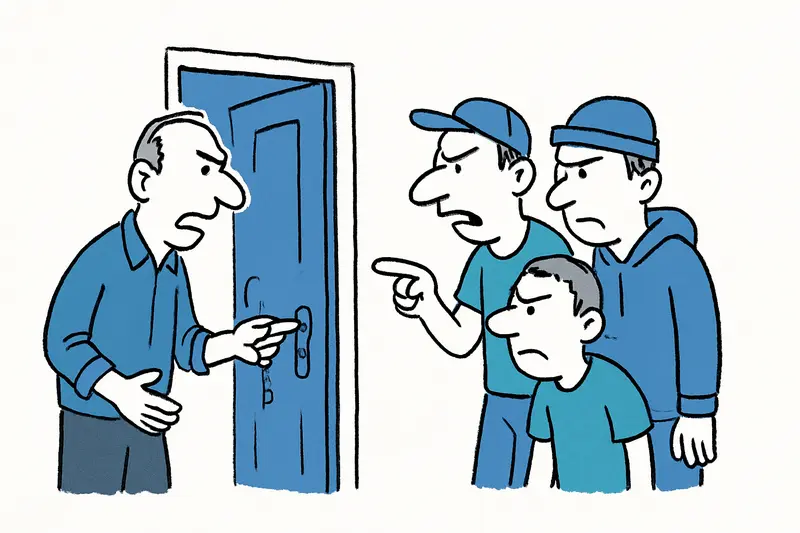
Occupied in a Few Days: When Property in Mallorca Turns into a Dispute
Six young men were arrested in Palma after homeowners returned and could no longer open their own door. A case that rais...

Serious fall at Port d’Andratx: Who protects cyclists on this route?
A 66-year-old German cyclist fell between Port d'Andratx and Camp de Mar, hit his head and was taken to hospital. One ac...

Four goals, heart-stopping moments, a message: Germania Mallorca takes three points in Consell — questions remain
The new German club on the island won its first away game in Consell 4:3. Celebration, a 4:0 lead, then a nervous finish...
More to explore
Discover more interesting content

Can Cap de Bou

Townhouse Lleo 72
