
Festival of Solidarity - and the Question of How Long Volunteers Alone Can Save Lives
Festival of Solidarity - and the Question of How Long Volunteers Alone Can Save Lives
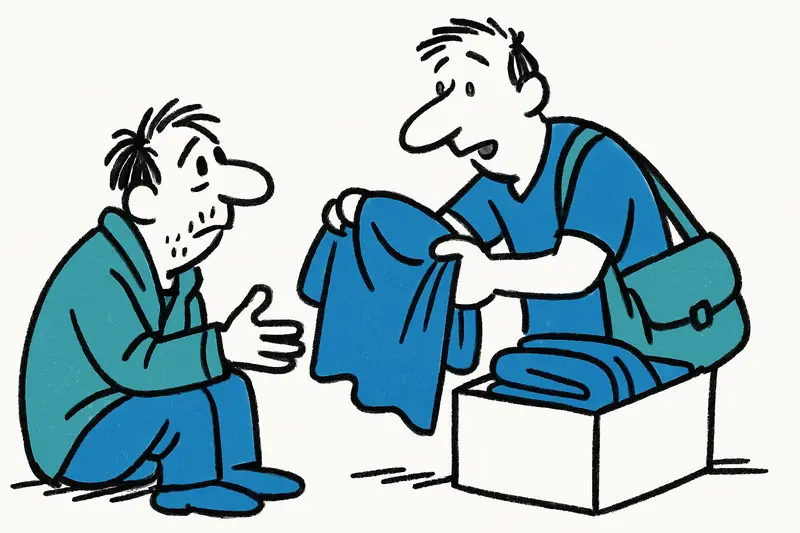
Volunteers distribute blankets and clothing in Palma. Volunteers report cold-related deaths. The assistance is tangible — but it does not replace permanent policy.
Festival of Solidarity - and the Question of How Long Volunteers Alone Can Save Lives
Key question: Is sympathy enough, or does Mallorca now need a permanent system instead of ad hoc aid?
In the early morning, when the trams are still sighing softly and market traders are setting up their stalls, volunteers stand with bags full of blankets at well-known meeting points in Palma. A man named Jordi hands out winter coats; schoolchildren have brought socks and thermal mugs. The sound of cars and seagulls mixes with short conversations; the helpers stay until the sun gets a little warmer. Many island residents see such scenes and find them comforting. But the small actions are not the whole story.
The bitter reality: volunteers report that people in Mallorca have died of cold. Rubén Díaz of the Alma initiative says he personally witnessed three such cases. Cases in which elderly people and also a young man who had slept in public spaces did not survive. Such reports should wake us up — not only at Christmastime.
Those who help often organize via social networks. Groups distribute blankets, warm clothing and food. They provide invaluable immediate aid: time, closeness, conversation. Back from the firefront: What Mallorca's responders really need. That is exactly what motivates many helpers. But the supply gap is larger than the good gestures. Numerous municipal offices and social services appear overloaded, and there is a lack of systematic recording: How many people sleep permanently outdoors? How many live in precarious emergency shelters? Without reliable figures, the answer to the guiding question remains unclear.
A second aspect: the image of people on the street has changed. It's not only single men who are affected. Couples, families, people from other regions of Spain and migrants — mental illness, exploding rents, unemployment and bureaucracy act together. The idea of the lone addicted 'typical homeless person' falls short. Anyone who wants to help must consider the complex web of health, housing and social security.
What is missing in the public discourse? First, an honest inventory: binding figures, transparent reports from municipalities and regular situation reports. Second, a clear winter plan: expanded emergency shelters, mobile medical teams and coordinated night care. Third, preventive measures: affordable housing, fewer bureaucratic hurdles for reallocations and a stronger focus on mental health.
Concrete solutions that would be feasible in Mallorca: the creation of regional streetwork teams that make contact regularly in the mornings and evenings; a binding 'Housing First' program for the island; shared use of vacant hotel capacity in the low season as a transitional solution; and a central database in which NGOs and municipalities register their deployments. Lifeguards Strike: Safety Questions and the Uncomfortable Debate Over Seasonal Work. Schools could be involved in social projects on a long-term basis — as they are today on Christmas Day — so that young people not only bring donations but also learn how structured aid works.
Practically, this means: not just one-off gift tables, but reliable places with showers, basic medical care and access to social workers. And: clear responsibilities between the municipality, island administration and aid organizations. Without these interfaces, much remains piecemeal.
An everyday observation from Palma: On the Plaça de Cort there is often someone rolling up their blanket. Once a social worker passed by, spoke calmly, noted a name — and two weeks later you could see the same person in a day center, cleaner, with a warm tea in hand. Such transitions succeed when help is reliable and continuous. When it is curated and not just born of goodwill.
The helpers in Mallorca show that Mallorca's emergency crews head to the mainland: solidarity — and open questions. But compassion must not replace the responsibility of the state. When people die because of cold, it is the failure of the system as a whole. The challenge is to connect the energy of volunteers with planned, financed structures.
Conclusion: Those who hand out blankets at Christmas do something important. But the real task begins on December 26. For those who are regularly out on the streets, the work does not end with the lights on the Passeig. If we want no woman or man to die of cold, we must transform the small festivals of solidarity into a year-round, politically anchored system.
Frequently asked questions
Does Mallorca have enough support for people sleeping rough in winter?
Why are volunteers in Palma handing out blankets and warm clothes?
Can people really die from the cold in Mallorca?
What kind of homelessness support does Mallorca seem to be missing?
What is a Housing First program and would it help in Mallorca?
How do volunteers in Palma organise help for people on the street?
What should Mallorca do differently to help homeless people in winter?
Where do people in Palma go for help beyond one-off donations?
Similar News
Injured captain, big plans: Germania Mallorca before the away match in Consell
The newly founded FC Germania Mallorca travels to Consell on Saturday. Captain Bastian Müller is out injured, but coach ...
Palma, Palma de Mallorca, Palma‑Mallorca: What is it really about?
The debate over the city's name is more than grammar: it concerns identity, law and branding policy. A sober reality che...
Warning to Bathers: Nipping Fish in Cala Major and Other Coves — a Reality Check
In Cala Major and several beaches around Mallorca, bathers report painful “nips”. Who are the animals, why are they gett...
Rental Car Theft in El Arenal: What This Incident Reveals About Our Gaps
A teenager steals a running rental car in El Arenal, flees on foot, climbs over walls and is caught by the Guardia Civil...
Red Rope in Palma's Library: What Helps Against Selfie Tourism — and What's Missing
Palma's city library cordoned off an area with a red rope to keep selfie tourism away from reading and working activitie...
More to explore
Discover more interesting content

Can Cap de Bou

Townhouse Lleo 72
