
Finally peace in the cloister garden: court confirms ownership of the Hieronymite nuns in Palma
Finally peace in the cloister garden: court confirms ownership of the Hieronymite nuns in Palma
The Spanish Supreme Court has ended the long-running case over the Santa Isabel convent in Palma. The Hieronymite nuns remain owners and the diocese has been ordered to cover the legal costs. The community can breathe a sigh of relief.
Finally peace in the cloister garden: court confirms ownership of the Hieronymite nuns in Palma
Twelve years of dispute end, the sisters breathe easier – and Palma regains a bit of everyday life
On a late Friday afternoon, when the sun warms the tiles of the old town and the seagulls wheel above the Moorish city wall, there was noticeably less excitement in the neighborhood around the Convent de Sant Jeroni than there had been years before. The Spanish Supreme Court did not admit the diocese's final appeal and thereby confirmed the judgment: the sisters of the Santa Isabel convent are the lawful owners.
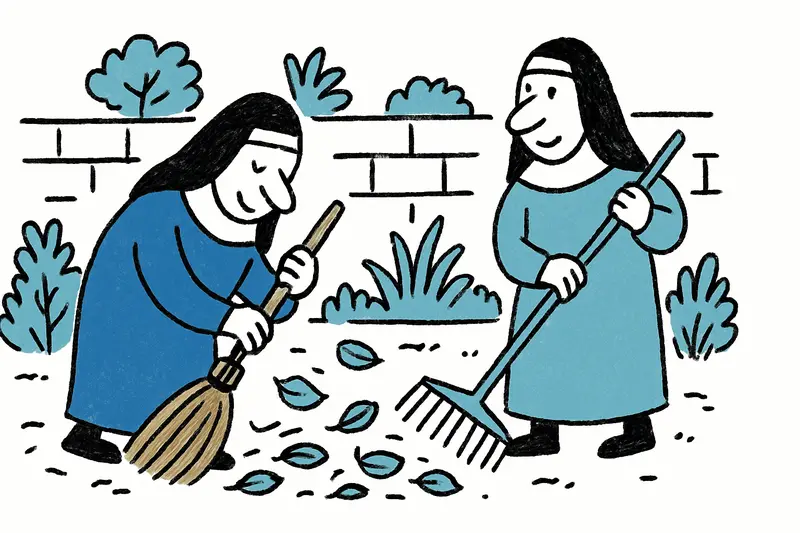
For the small cloistered community this means the end of a long, draining dispute that began in 2014. The Hieronymite nuns – a community whose roots go back to the 14th century and which, according to the records, has cared for the property since 1485 – may continue to maintain their home, the old building and the famous garden. At the gate you can now more often hear the rustle of leaves and the sisters' quiet conversations as they go about their daily tasks.
Legally the matter is thus settled: the refusal to admit the cassation appeal renders the decision final. Entries in the land register based on certificates issued during the tenure of Bishop Javier Salinas Viñals (2012–2016) are therefore no longer valid and have been deleted. In addition, the diocese has been ordered to assume the legal costs of all instances.
The decision was communicated to the community; order secretary María del Carmen and Sister Natividad (Ángeles Sanz Rodríguez), who represents the federation of Hieronymite convents, expressed relief. The sisters' lawyer, Pilar Rosselló, made it clear that with this step the legal burden is over and the nuns can live in peace again.
This has significance beyond the local level, as discussed in El tribunal frena la discriminación: por qué la sentencia es positiva para los propietarios de inmuebles en Mallorca. In Palma it is also about preserving a historic ensemble that is part of the fabric of the old town: narrow lanes, the murmur of passers-by, the green of a monastic garden behind high walls Los jardines de la Misericòrdia: el tranquilo latido de Palma brilla de nuevo. When such places are secured, the city as a whole benefits – not least because cultural heritage and community life often go hand in hand.
On the ground, it is now possible to consider what the coming years will look like: the sisters will continue to care for the building and the garden. At the same time, the legal clarity gives the administration and neighbors planning security. In times when construction noise and tourism pressure are often felt in the old town, stability is a rare value.
A small everyday suggestion: municipalities, neighborhoods and volunteers could coordinate joint activities to care for the garden – of course only if the community wishes it. Such projects have already fostered good neighborhood relations in other parts of Palma, allow a cautious opening without disturbing the cloistered atmosphere and connect tradition with modern urban culture.
And one more thing seems important: the dispute has shown how quickly centuries-old property relations can be questioned and how much the lives behind them suffer; other rulings, such as Absolución en Can Picafort: el tribunal supremo anula la condena en gran caso inmobiliario, underline the stakes for residents.
What remains is a quiet contentment: in a city where construction sites, tourists and politics often make the headlines, this end to a legal battle shows that some conflicts can have a good outcome. For the neighborhood it means less strife, for the sisters a secure roof over their heads and for Palma a piece of cultural continuity.
Frequently asked questions
What did the court decide about the Hieronymite nuns in Palma?
Why was the convent dispute in Palma important for the neighborhood?
Can you visit the Hieronymite nuns’ garden in Palma?
How long has the convent property in Palma been linked to the Hieronymite nuns?
What happens next for the convent after the Palma court ruling?
Do court decisions like this affect historic buildings in Palma?
Who will pay the legal costs in the Palma convent case?
Why is the Convent de Sant Jeroni in Palma part of the city’s heritage?
Similar News
Cafetería San Siro: A Meeting Place on Schinken Street Since 1966
In the middle of Schinken Street, Cafetería San Siro has been offering Mallorcan hospitality for more than six decades —...

From Ballermann to Prison: What the Verdict Against the Femina Operator Means for Palma
The Munich Regional Court convicted a German operator for subsidy fraud. What does the verdict mean for the Femina Club,...

Underpass Verge de Lluc: 19-year-old fights her way out of flooded car – a warning sign for Palma
A 19-year-old recently escaped swimming from her car after the Verge de Lluc underpass held up to one and a half meters ...

When the Floodgates Open Again: Why Palma's Floods Aren't a Coincidence
A sudden heavy downpour around 5 p.m. brought Palma to a standstill: flooded streets, full basements, panicked commuters...

Playa de Palma: Life-saving at Balneario 11 – Lifeguards Act Quickly
A German holidaymaker suffered cardiac arrest at Playa de Palma. Lifeguards resuscitated her on the beach; emergency ser...
More to explore
Discover more interesting content

Can Cap de Bou

Townhouse Lleo 72
