
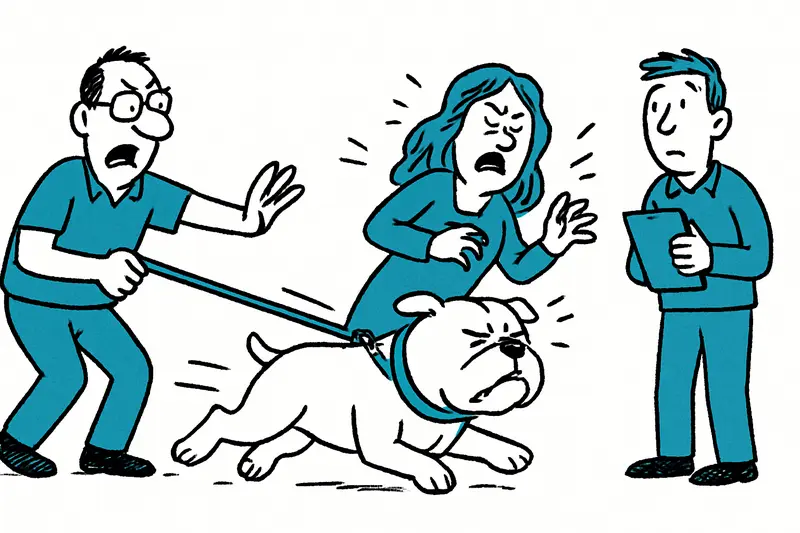
Blind dog, serious consequences: How safe are adoption processes in Majorca?
Blind dog, serious consequences: How safe are adoption processes in Majorca?
A blind American Bully named Bruno bites a volunteer severely. The incident raises questions about intake practices, care for visually impaired animals and state protection measures.
Blind dog, serious consequences: How safe are adoption processes in Majorca?
Main question: How could a blind dog, accompanied by helpers, get so out of control that a woman was seriously injured — and what lessons must Majorca draw now?
It was hot that July morning in Palmanyola; the cicadas buzzed over the fields, and in front of the small door of the Clínica Huellas stood a tangle of people, veterinary noises and the dull honk of a delivery van. A blind American Bully named Bruno was there that day, getting used to his third home. What happened next is hard to fathom in its coldness: while trying to put a muzzle on him, he bit and injured his companion so severely that both upper arms were broken and extensive reconstruction was required.
The facts are clear: Bruno had been at the Son Reus shelter, veterinarians diagnosed a degenerative retinal disease with irreversible vision loss, and a family had taken him in a few days earlier. The attack occurred during a visit to the clinic; the woman was operated on at Son Espases after emergency treatment. The Centre de Protecció d'Animals Domèstics (CEPAD) took the dog and, following protocol, placed him under quarantine.
The bare chronology is not enough. Viewed critically, one must ask: What safety measures were in place during this acclimation? What risk assessment was made for a blind dog that had previously been abandoned, and what training do the companions, volunteers and clinic staff have for such situations? Other abandonment cases, like Female dog in a trash container: What the Pollença case says about our relationship with animals, underline the problem.
Shelters live on empathy. On Majorca you see it every day: volunteers at Son Reus who arrive early to clean kennels; people in Inca and Palma who try to calm frightened dogs with treats and a gentle voice. But this warmth cannot by itself fill the gap that opens when medical findings, behavioral assessments and concrete action plans do not come together.
From the perspective of an everyday observer, several deficits stand out: first, there is often no binding dangerousness assessment that goes beyond a short behaviour-test video, as shown by Who Is Responsible? Dog Injures Four-Year-Old on Playground in Son Armadans. Second, there are rarely mandatory conditions for the transition period — compulsory muzzles in public, secured transport or accompaniment by trained specialists. Third, follow-up care for adopters is too fragmented: who supports the family in the first weeks when the animal reacts fearfully?
The public discourse is dominated by the words "rescue" and "second chance" — emotionally correct, but insufficient. Little discussed are the questions of financial and logistical resources: Do the protection organizations have enough staff to guarantee intensive acclimation? Who pays for behaviour therapy that a blind animal needs? And how transparent are the procedures toward prospective adopters, when transport failures such as Horror at Palma Port: 27 Dogs Dead After Ferry Crossing — What Went Wrong? illustrate the stakes.
Concrete solutions are on the table and practicable: a unified assessment protocol for animals with disabilities; binding transitional requirements for adoptions (e.g., initially only in a home environment, mandatory muzzle use in public traffic for unclear cases); a short-term accompaniment service by trained professionals in the first 14 days; mandatory information sessions and written handover protocols that include risks and emergency contacts.
At an institutional level, better coordination is needed between shelters, clinics like Clínica Huellas and authorities: a reporting office for serious incidents that collects anonymized data to recognise patterns; funding for behaviour therapy; and clear rules on who continues care or takes the animal back in which cases.
In courtrooms and in politics, legal questions are often asked: liability, penalties, preventive regulations. That is important. But preventive measures that protect people while not criminalising animals must come first. Stigmatising a blind animal helps no one — yet recklessness in placement must not become the norm.
When I walk past the clinic that day I smell disinfectant and coffee; an older woman from the village asks anxiously for news, and a craftsman with dusty hands sits on a bench. Such scenes show that Majorca's community is close-knit — yet responsibility for safe adoptions often remains diffusely distributed, while cases of hidden suffering like Neglected Horses in Son Gual: Why Animal Suffering on Mallorca Often Remains Hidden remind us of systemic gaps.
Conclusion: The incident with Bruno is a wake-up call. It calls not for quick blame but for clear rules, better training and a system that combines care with safety. Those who want to give dogs a chance must provide real tools to them and the people who take them in — from behaviour tests to financial support for therapy. Otherwise, good intentions risk causing suffering on both sides.
Frequently asked questions
What safety checks should I expect before adopting a dog with disabilities in Mallorca?
How can Mallorca shelters improve safety during the adoption of blind or disabled dogs?
What lessons arose from a recent incident involving a blind dog at a Mallorca clinic?
How should families in Mallorca be supported in the first weeks after adopting a blind dog?
Why is coordination between shelters, clinics like Clínica Huellas, and authorities important for safe dog adoptions in Mallorca?
What questions should potential adopters ask to assess a dog's behavior and adoption risk in Mallorca?
How do local Mallorca towns like Palma or Inca contribute to safer dog adoptions?
Why is it important to balance compassion with safety when adopting dogs with disabilities in Mallorca?
Similar News

"Expensive chaos" and many open questions: What clients can do when a lawyer suddenly stops responding
Several clients complain that a well-known German lawyer in Mallorca has been unreachable for months. Key question: What...
TV tip: 'The Last Problem' — Mallorca as the setting of a classic crime
A classic whodunit on Mallorca: A new miniseries set in spring 1959 brings storm, an isolated hotel and a dense web of s...
Nipping Sea Creatures: Why Bathers in Cala Major and Elsewhere Should Be Cautious
In Cala Major, bathers have reported being nipped by small fish. What is behind it, how can problems be avoided — and wh...
Forced eviction in Santa Catalina: When a 65-year-old slept in her car and showered on the beach — a question of responsibility
The story of Pilar López from Santa Catalina represents a problem affecting many Mallorcans: How can an island with a bo...
New traffic rules from October 1: What Mallorca visitors and locals need to know
From October 1, 2026, Spain will implement far-reaching changes to traffic regulations. Important for Mallorca: greater ...
More to explore
Discover more interesting content

Can Cap de Bou

Townhouse Lleo 72
