
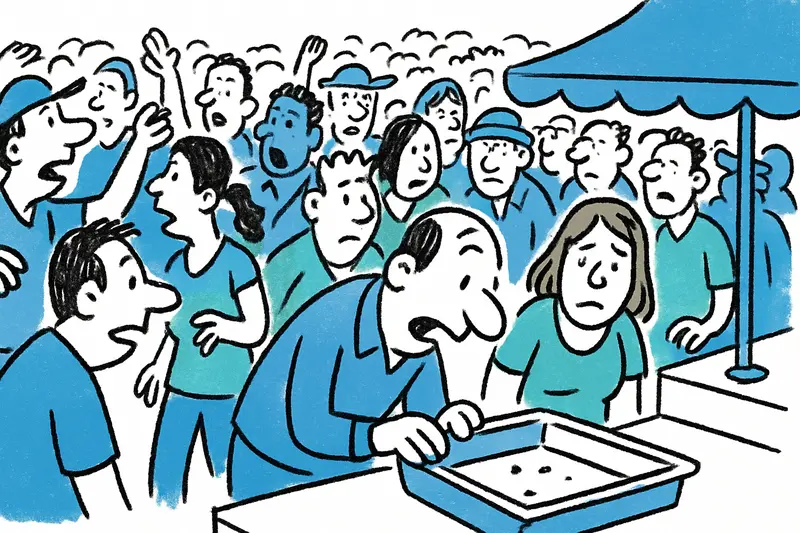
Premiere of the Fira del Variat in Pere Garau: Much Applause - and Empty Plates in the Afternoon
Around 30,000 people flocked to the first Fira del Variat on Plaza Pere Garau. The atmosphere and program impressed, but many stalls were sold out before noon. How can a popular neighborhood festival be better organized without losing its charm?
Busy crowds, bright sun and a logistical problem
On Saturday and Sunday the Plaza Pere Garau felt like a heart suddenly beating faster: music, conversations, children's laughter and the smell of fried variat in the air. The organizers speak of just under 30,000 visitors, as reported in Fira del Variat in Pere Garau: Neighborhood Night of Tapas, Music and Community Spirit. At around 22 °C and clear skies, the offer drew people from Santa Catalina, El Born and even Palma Nova. The atmosphere was cheerful, almost familiar — until many stalls were suddenly cleared out around midday.
The key question: How do you scale a neighborhood festival without overloading it?
That is the question that was passed around in the street cafés after the opening weekend, as covered in First 'Fira del Variat' in Pere Garau: Palma celebrates sharing on small plates. Juan, an experienced caterer from Palma's neighborhoods, says openly: “We planned reserves, but the pace was faster than expected. By 11:30 there were queues up to the corner.” Such scenes are not limited to a single table. They show that popularity and supply do not automatically go hand in hand.
Why supplies ran out so quickly — and why that matters
Several reasons come into play: incorrect demand forecasts, limited cooling capacity and a concentrated visitor peak at lunchtime. Small bars, neighborhood stalls and larger vendors all faced the problem. Some visitors improvised picnics from what they could still find; others went home disappointed. For vendors this can appear as a short-term success — full tills, rapid turnover — but it also leads to alienated customers and lost opportunities for repeat business.
What is often left out of the public discussion
People quickly talk about portions and queues, yet three aspects are often underexposed: first, the infrastructure — refrigerated trucks, power, water — that such an event requires, as outlined in HSE event safety guidance. Second, the strain on small vendors who want to showcase their product with limited resources. And third, visitor management: without clear routes and information, hotspots form that overwhelm certain stalls while others remain empty.
Concrete opportunities and practical solutions
The organizers have already announced plans to revise logistics and visitor guidance. That is good, but more concrete measures are needed. A few suggestions that would seem plausible on the square:
1. Time slots and token system: For especially sought-after stalls, time-limited tokens could be issued — analog or digital. This spreads demand and shortens queues.
2. Pre-ordering and pick-up stations: Local vendors should be able to accept orders via a simple app (see guide to online ordering and pickup) or by phone. Clearly signposted collection counters reduce crowding.
3. More infrastructure: Additional refrigerated trucks, mobile hand-washing stations and more trash bins. This helps prevent shortages and boosts hygiene and sustainability.
4. Capacity planning for small vendors: A negotiated quota of mandatory portions per vendor could be established, combined with an emergency pool of portions kept on site by larger caterers.
5. Volunteer-based visitor guidance: Volunteers or paid stewards at bottlenecks, clear walking routes and electronic counters at entrances create transparency about visitor flows; for practical capacity planning tips see capacity planning for events.
Keeping the balance: Avoiding commercialization, preserving variety
One pitfall is overplanning. If every portion is presold and everything runs in slots, the festival can easily lose its spontaneous character. The challenge is to introduce structure without killing the improvised charm: local bands should continue to play between the stalls, children must have space to run, and familiar market voices must not be drowned out by promotional booths.
What residents, vendors and organizers can do now
Communication is the key. A simple information sheet before the festival, real-time social media updates about sold-out stalls, and a clear plan for resupplies would ease many problems. Vendors could coordinate in advance — who offers alternatives, who can deliver more in an emergency. The city could also subsidize logistics packages (refrigerated containers, waste disposal) so that small vendors are not disadvantaged.
Conclusion: Much applause - and a clear call to action
The premiere of the Fira del Variat was a crowd success. Music, smells, chattering neighbors and the irregular clatter of chairs on the pavement are now part of the neighborhood's story. But empty plates in the afternoon must not become a tradition. With targeted organizational improvements, better infrastructure and clear rules on capacities, the improvised bustle can become a reliable, lively festival — without losing its character. Tip for next year: come early. By 11:30 the best portions are gone, but the atmosphere lasts all day.
Frequently asked questions
What is the Fira del Variat in Mallorca?
Why did the stalls at the Pere Garau food festival run out of food so early?
What is the best time to go to the Fira del Variat in Palma?
What kind of weather did the Pere Garau festival have, and what does that mean for visitors?
What practical improvements could help the Fira del Variat work better in Mallorca?
What is the atmosphere like at Plaza Pere Garau during the Fira del Variat?
How can small food vendors in Mallorca avoid running out of stock at a festival?
Is the Fira del Variat in Pere Garau likely to return next year?
Similar News

Maribel: Five Decades of Service – Housekeeper from Peguera Celebrated with a Special Honor
Over 50 years in the hotel business: María Isabel “Maribel” Molinos was honored in Palma at the Nit del Turisme by Unive...

Orange Alert over Parts of Mallorca: Are We Prepared?
Dark clouds and an announced wet spell have triggered an Orange alert in parts of Mallorca. A reality check: what's miss...

Sundair & Co.: Sale speculation and what it could mean for Mallorca
Rumors about a possible sale of the airlines Sundair and Fly Air 41, which belong to Schauinsland-Reisen — and whether b...
Anne Wünsche in Mallorca: A job offer with a catch — who fits the role of personal assistant?
Influencer Anne Wünsche has left Berlin and is urgently looking for a full-time personal assistant in Mallorca. Why the ...

Daily from New York: Palma Between Boom and Strain
United will increase the Newark–Palma route to daily flights in 2027 using Boeing aircraft (231 seats). What does the in...
More to explore
Discover more interesting content

Can Cap de Bou

Townhouse Lleo 72
