
Water chaos in Terminal C: Who protects the pipes — and passengers?
A buggy apparently struck a fire-protection pipe, flooding parts of Terminal C at Palma airport. More than wet shoes: questions about protection, maintenance and accessibility remain unanswered.
Water runs through the terminal – an incident with consequences
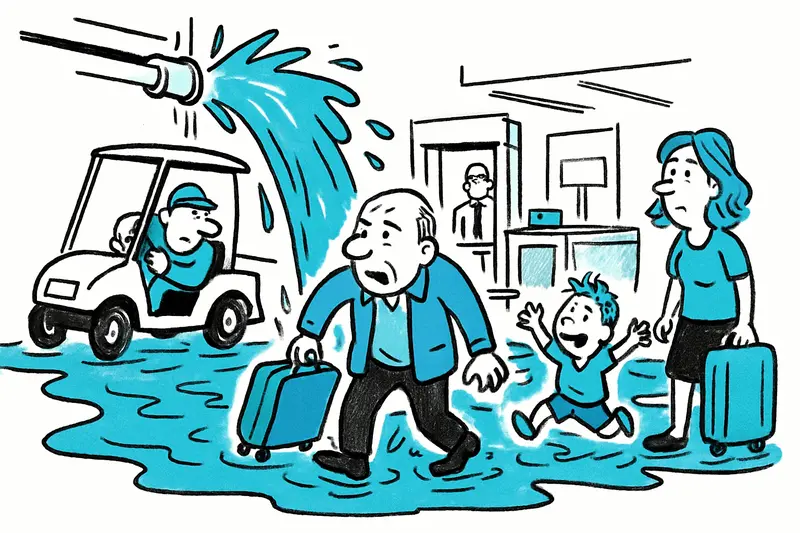
On the morning of September 25, a section of Palma's airport briefly turned into a small lake, a situation later reported as a burst hose at Gate C46. Around 07:40 a.m. an employee with a so-called service buggy for travelers with reduced mobility is said to have brushed against a fire-protection pipe. The result: a trickle became a jet that covered the tiles in the departure hall within minutes.
On site: smell of wet rubber and hurried hands
I was at Terminal C at about 08:15. It smelled of wet rubber and cleaning agents, rolling suitcases squeaked through puddles, and the next boarding call played routinely over the loudspeakers — so normal, as if nothing had happened. Small shops had placed goods on boxes, checkouts were deactivated, warning signs and folding chairs formed makeshift barriers. Children splashed involuntarily, older travelers pulled up their shoes or looked at their wet soles shaking their heads.
Eyewitnesses reported a continuous jet flowing over the floor tiles. Airport staff and cleaning crews worked with mops and dryers; the fire brigade shut off pipe connections to stop the water supply. By midday the main access routes were open again, the last dampness had been professionally removed – yet questions remained that go deeper than wet shoes and delayed flights, echoing earlier reports of water streaming into the baggage handling area.
More than an operational accident: the question of piping
The immediate cause seems clear: a buggy in contact with a pipe. But the central question is: why is such a sensitive pipe so unprotected in the traffic area? In a modern airport fire-protection pipes should be protected against mechanical impacts. Railings, protective sleeves or retractable pipe guides are common measures – whether and to what extent such protections existed here is currently being investigated.
Often overlooked is how much daily operations favor such accidents: narrow lanes for service vehicles, time pressure during escorts, different vehicles (buggy, luggage carts, cleaning machines) and the question of whether drivers receive sufficient training. Mobility aids are important and necessary, but they must be able to be operated safely — especially for people who depend on assistance.
Consequences for airport operations and those affected
Several connections were delayed because routes to gates were closed or boarding had to be improvised. According to initial information there were no injuries, but damaged bags, wet passports and missed connections did occur. Short-term assistance zones for those affected were set up – a pragmatic response, but not a long-term answer.
Legally and organizationally, clarifying responsibilities is next: who is liable for the damage? The driver, the vehicle operator, the airport operator for insufficient protection of the pipe, or even the company that installed the piping? Legal disputes may follow, but they do not answer the preventive question: how do you prevent repetitions?
Less noticed: accessibility at risk
Ironically, the incident occurred in the context of a buggy that was assisting people with reduced mobility. When aids themselves become a risk factor, the weakest are hit hardest. Accessibility must not only mean that routes are wide enough: it must also be safe and protect infrastructure that is essential in an emergency.
Concrete steps needed now
Cleanup is important, but it does not replace a structural analysis. Short-term sensible measures would be:
- Visual inspection and retrofitting of all exposed pipes in traffic areas, fitting protective sleeves or guards.
- Traffic routing for service vehicles clearly marked and, if necessary, physically separated.
- Training for buggy and service vehicle drivers, plus mandatory speed limits within the hall.
- Regular inspections of fire-protection and utility pipes by independent assessors.
- Transparency towards travelers: quick information about disruptions, clear guidance on responsibilities and possible reimbursements.
In the long term it's about planning security: investing in robust infrastructure costs money, but prevents larger operational disruptions, liability cases and hazards; similar weaknesses were highlighted during a rain chaos stress test at Palma Airport.
If you're flying today: check your airline's app, expect short delays — and look twice before entering a gate. The next puddle may come as a surprise.
This incident is more than a local anecdote. It shows an urgent need for action on safety, accessibility and maintenance of critical infrastructure at Palma airport.
Frequently asked questions
What happened at Palma Airport Terminal C when water flooded the departure area?
Will a water incident like this cause flight delays at Mallorca Airport?
Was anyone injured in the Palma Airport Terminal C flooding incident?
Who is responsible when a fire-protection pipe is damaged at an airport in Mallorca?
How safe is accessibility transport inside Palma Airport?
What should passengers do if their belongings get wet during an airport flooding incident in Mallorca?
What kinds of safety measures should Palma Airport have to protect exposed pipes?
What should travelers do at Palma Airport if a gate area is suddenly flooded?
Similar News

Maribel: Five Decades of Service – Housekeeper from Peguera Celebrated with a Special Honor
Over 50 years in the hotel business: María Isabel “Maribel” Molinos was honored in Palma at the Nit del Turisme by Unive...

Orange Alert over Parts of Mallorca: Are We Prepared?
Dark clouds and an announced wet spell have triggered an Orange alert in parts of Mallorca. A reality check: what's miss...

Sundair & Co.: Sale speculation and what it could mean for Mallorca
Rumors about a possible sale of the airlines Sundair and Fly Air 41, which belong to Schauinsland-Reisen — and whether b...
Anne Wünsche in Mallorca: A job offer with a catch — who fits the role of personal assistant?
Influencer Anne Wünsche has left Berlin and is urgently looking for a full-time personal assistant in Mallorca. Why the ...
Daily from New York: Palma Between Boom and Strain
United will increase the Newark–Palma route to daily flights in 2027 using Boeing aircraft (231 seats). What does the in...
More to explore
Discover more interesting content

Can Cap de Bou

Townhouse Lleo 72
