
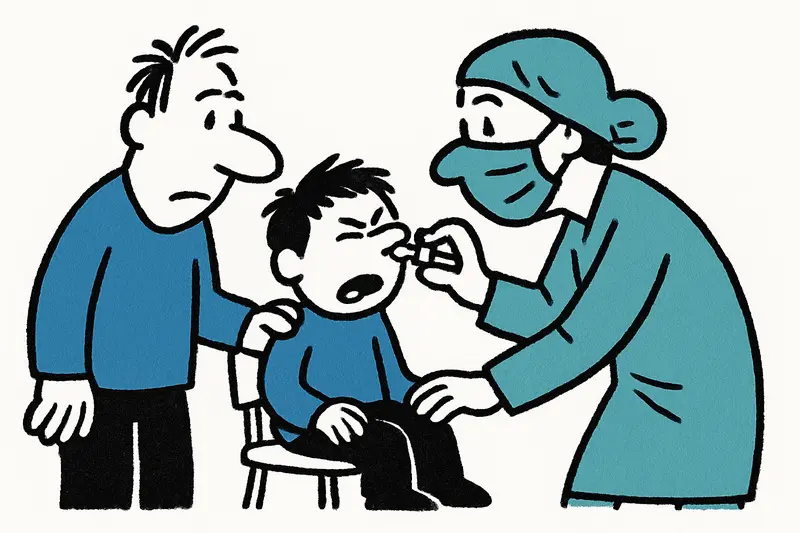
Vaccination Campaign for Preschoolers Starts: Nasal Spray in Mallorca's Schools
From October 6, around 28,000 preschool children in the Balearic Islands will be vaccinated in schools with a nasal spray against flu — about 275 schools on Mallorca are participating. Mobile nursing teams bring the vaccines directly into the classrooms and make life easier for families.
Major vaccination campaign for the little ones: nasal spray instead of waiting rooms
On October 6, the Balearic Islands will launch a large-scale flu vaccination campaign for children born in 2020, 2021 and 2022 (Flu Vaccination Campaign 2025/26 in Mallorca Starts: Preschools First, Then Risk Groups). On the islands, more than 350 schools — about 275 of them on Mallorca — will vaccinate around 28,000 children with a nasal spray by early November, as detailed in Quiet autumn protection at daycare centers and schools — many questions, small solutions. Mobile nursing teams visit the schools; appointments are scheduled in the mornings and usually take only a few minutes per child. For parents this means: no long waits at the doctor, no missed work day and less stress in the morning.
Why vaccinating at school is a good idea
Children are little virus express trains: they infect each other easily and bring infections into families and daycare centers. After a successful pilot project last year, health authorities are now relying on the scaling effects of the school route. In the classrooms procedures can be standardized, waiting times are eliminated and vaccination coverage increases more quickly — especially if the first autumn days are cooler and rainy and life moves more indoors again.
How the vaccination is carried out on site
The vaccination is given as a nasal spray. For many children this is more pleasant than an injection; the mobile teams consist of nurses who bring everything, document the process and inform parents. Appointments are scheduled so that not all classes are attended at the same time — this reduces crowding in the schoolyard and prevents chaos during breaks. Teams usually work between 9 a.m. and 1 p.m.; at the end of the day the documents are forwarded to the health authority.
Important for parents: They receive information sheets via the schools and must sign a consent form. Those who do not give consent do not have to have their child vaccinated — the campaign is voluntary. Alternatively, the vaccination can also be carried out by the pediatrician or in certain pharmacies.
On side effects
Side effects are rare and generally mild: a runny nose, slight discomfort or a short-lived fever may occur, severe reactions are very uncommon. In case of uncertainties it is always worth a short conversation with the pediatrician — and the mobile teams are trained to observe and react after vaccination.
Everyday life in Mallorca: practical and locally planned
I visited a primary school at the Plaça Major last week and observed the procedures (small tip: the cafeteria next door makes good coffee). The atmosphere was calm — no hectic crowds, more the smell of freshly cleaned classrooms and the distant sound of playing children. The nursing teams looked experienced, teachers supported with clear instructions, and parents sent signed forms via a digital platform or in the schoolbag.
For the island community this means fewer sickness-related absences in schools and day-care centers, relief for parents in working life and a contribution to the stability of the health system during flu season. Politically at the local level the measure is a precautionary step that, if well organized, can make the winter less stressful.
What parents should do now
Parents should read the information from the school, check the consent form and contact health centers or the pediatrician with any open questions. Those who are unable to attend often find catch-up appointments at the school or with the family doctor. It remains important: participation is voluntary — but a high vaccination rate helps the whole community.
The coming season will show how effective the model is. Until then, the school vaccination campaign is a pragmatic, locally planned step to get Mallorca and the other Balearic Islands through the winter more safely — a little calm, a nasal spray and a good coffee next door are sometimes enough to make everyday life easier.
Frequently asked questions
How does the flu vaccination for preschool children work in Mallorca schools?
Is the flu vaccination campaign in Mallorca voluntary for parents?
Why is the flu vaccine given as a nasal spray for young children in Mallorca?
What should parents in Mallorca do before the school flu vaccination?
Are there side effects after the flu nasal spray for children in Mallorca?
Which children in Mallorca are included in the school flu vaccination campaign?
Can children in Mallorca get the flu vaccine outside school if they miss the school appointment?
Why are schools in Mallorca being used for the flu vaccination campaign?
Similar News
Fewer Airlines, Fewer Destinations: What Palma's Winter Flight Schedule Means for Mallorca
Analysis shows: Winter at Son Sant Joan Airport will be quieter, with significantly fewer airlines and destinations. Who...
German tourist dies in Sa Calobra – a reality check for emergencies on Mallorca's beaches
A 40-year-old tourist died at the Torrent de Pareis. The emergency call, a doctor who happened to be present, a defibril...
Deadly Tractor Accident in Bunyola: What Needs to Be Done Now
In a work accident on an estate near Bunyola, a roughly 40-year-old man lost his life. His wife and a small child were o...
Head-first dive into the shallow part of Cala Fonoll: An accident and the unresolved question of responsibility
A young tourist dove into Cala Fonoll and was seriously injured. Key question: Why are clear warning signs missing at da...
Mistaken identity with fatal consequences: Brutal assault in S'Aranjassa — what's missing in the follow-up?
At S'Aranjassa a visitor to a finca was tied up, beaten and thrown out of a van. Three men have been arrested, including...
More to explore
Discover more interesting content

Can Cap de Bou

Townhouse Lleo 72
