
Quiet autumn protection at daycare centers and schools — many questions, small solutions
Mobile vaccination teams work in more than 350 schools across the Balearic Islands — pragmatic, low-key, met with praise and unanswered questions. What is working well and where improvements are needed.
Autumn air drifts through the schoolyard — and a hint of clinic-style organization
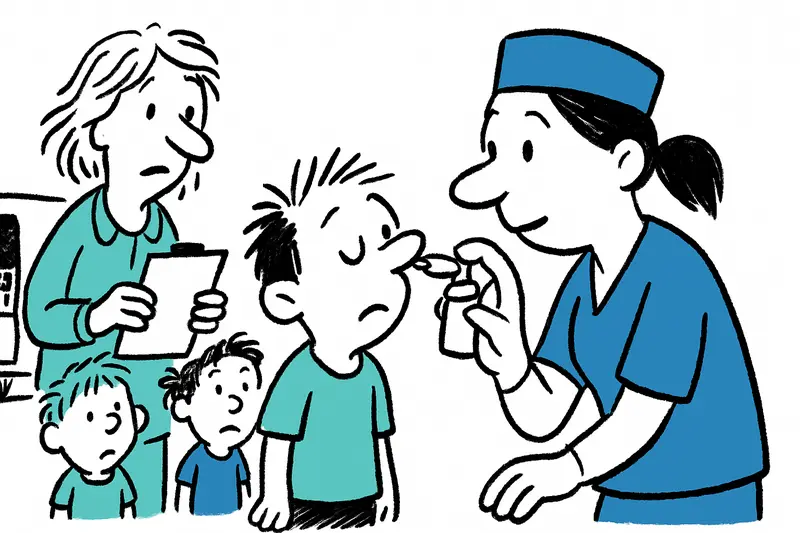
On a morning in Palma, Inca or Manacor, quiet white vans have become part of the school routine amid recess bells, the crunch of chestnut leaves and the distant tolling of a village church. Thermoses next to play benches, teachers ticking off lists, and nursing staff explaining in calm voices how a nasal spray works: not a loud campaign, but a determined calm under the mild autumn sun.
Process and figures — what happens on site
Vaccination actions are running at more than 350 schools across the Balearic Islands until early November. Almost 28,000 children from the 2020, 2021 and 2022 cohorts have been invited to take part — provided their parents gave written consent, as reported in Vaccination Campaign for Preschoolers Starts: Nasal Spray in Mallorca's Schools. Mobile teams, usually nursing staff, work according to prearranged time slots. In small groups the children receive age-appropriate information, get the nasal spray and after a short explanation return to play. Teachers report few tears and a lot of curiosity; parents praise the organization, while others remain cautious.
The key question: Does the campaign protect — and at what cost?
The official goal is clear: to dampen the seasonal spread of influenza among groups of children and thus reduce absences among children, caregivers and teachers. The question that deserves more attention, however, is: Does the program achieve these goals without undermining other important aspects — trust, teaching quality, clear communication channels and data protection standards?
Four aspects that are often overlooked
First: follow-up. There are information stands and numbered lists on site, but how are possible side effects systematically documented? Who informs parents quickly if a reaction becomes apparent after the child gets home? A standardized follow-up is missing in many places.
Second: staffing. Rooms are temporarily converted into treatment areas — which means replacement care, interruptions to lessons and extra workload for teachers. This is not a dramatic problem, but it strains everyday life and costs hours that need to be reimbursed or compensated for.
Third: social accessibility. Not all parents on Mallorca speak Spanish or Catalan fluently. German, English and Arabic are part of the conversation — but information materials and consent forms are not available everywhere in clear multilingual formats. This increases mistrust and reduces participation chances, especially among families who are already harder to reach.
Fourth: data security and transparency. How and where are vaccination records stored? Who has access? Such questions are often only marginally addressed, even though they are central to trust in these programs.
Communication decides success
Many parents decide for or against a vaccination not only for medical reasons, but based on how well the information is presented. Low-threshold offers — short FAQs, clear infographics, brief videos or on-site consultation hours — could reduce fears. Especially in the early morning hours, when thermoses are still steaming and parents are juggling work and daycare drop-offs, detailed counseling is difficult.
Pragmatic improvements — concrete and local
Practical experience suggests simple, immediately implementable proposals: a digital consent tool with reminder functions, multilingual information sheets (German, English, Arabic), designated school contacts for inquiries and passive monitoring for side effects by SMS at 24 and 72 hours after vaccination. Mobile teams could also offer fixed consultation hours for parents instead of short vaccination afternoons — this would build trust and interfere less with the schools' morning routines.
What are the chances for Mallorca?
If the campaign succeeds with improved organization, not only the children will benefit. Fewer infections mean fewer absences among caregivers and teachers, more reliable childcare hours for working parents and thus less stress for local businesses: restaurants, trades and family-run companies that depend on predictable childcare. The phased rollout, with preschools prioritized and other groups following, is outlined in Flu Vaccination Campaign 2025/26 in Mallorca Starts: Preschools First, Then Risk Groups. This is not a grand health promise, but a tangible everyday gain.
My impression on site: Not a celebratory event, not a festival of mistrust, but a pragmatic attempt to cushion the autumn. Between recess bells, the distant sound of church bells and the rustle of chestnut leaves, you could see nursing staff calming a boy with a stuffed animal — a quiet protective shield that could become clearer and more transparent.
How to participate: Check the messages from your daycare or school, fill out the consent form and hand it in on time. Do you have questions or language barriers? Ask the school for translations or designated contacts — that helps everyone and makes autumn on Mallorca a bit more relaxed.
Frequently asked questions
How does the flu vaccination at schools in Mallorca work?
Which children in Mallorca can take part in the school flu vaccination campaign?
Does the nasal flu vaccine at Mallorca schools reduce absences?
What should parents in Mallorca know before giving consent for the flu vaccine?
Are there enough language options for parents in Mallorca schools?
What happens if a child has side effects after the flu spray in Mallorca?
How does the school flu campaign affect daily routines in Mallorca?
Where do the school flu vaccinations take place in Mallorca?
Similar News
Man Exposes Himself in Front of Café in Palma: Why This Must Not Be Dismissed as an Isolated Case
A man was arrested in Palma after he lowered his trousers in front of a café and exposed himself to minors. What does th...
Brawl at the Airport: Who Is Responsible for the Escalation Among Transfer Drivers?
A dispute between two transfer drivers escalated on Saturday morning in the arrivals area of Son Sant Joan. One man was ...
Collision in Palma: Why an E-scooter and a Patrol Car Ended Up on a Collision Course
At an intersection in Palma in early September a young e-scooter rider collided with a local police patrol car. No one w...
Warty on the Green: When a Cyborg Is Supposed to Learn Golf in Mallorca
A silver humanoid named Warty visits Son Gual – as advertising for Water D and as a guinea pig for golf lessons. A criti...
Balearics Consider Restrictions on Second-Home Purchases – a Reality Check
The regional government is examining whether purchases of second homes by non-residents can be restricted in future — bu...
More to explore
Discover more interesting content

Can Cap de Bou

Townhouse Lleo 72
