
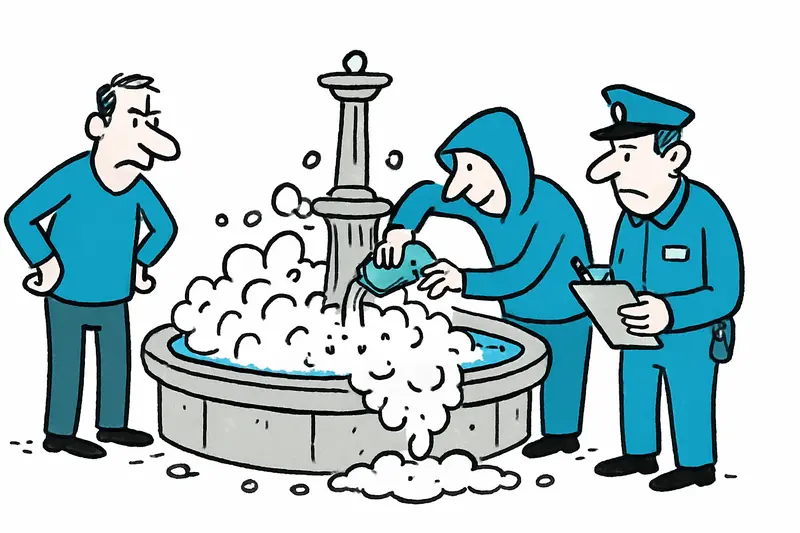
Foam in the Fountain: Plaça de la Reina Again Target of Vandalism
Foam in the Fountain: Plaça de la Reina Again Target of Vandalism
Unknown individuals filled the fountain at Plaça de la Reina with soap. The city is reviewing camera footage; cleaning has begun. A reality check: Who pays for the damage, and how can repetition be prevented?
Foam in the Fountain: Plaça de la Reina Again Target of Vandalism
Key question: Why are public places like the fountain at Plaça de la Reina repeatedly turned into playgrounds — and who bears the consequences?
Yesterday the usually photogenic Plaça de la Reina in Palma turned into a kind of open-air foam party for a few hours. Meter-high, whitish mounds rose from the fountain, passersby stopped, pulled out phones and laughed, while city workers arrived later to pump out the water and clean the stone. The city administration assumes a deliberate act and announced it would review security camera footage. For now, nothing more is known.
The scene at Plaça de la Reina is at once ordinary and worrying: tourists with parasols in front of the cathedral La Seu, a bus honking on Avinguda de Jaume III, seagulls circling among pigeons, and city workers with buckets and shovels. It's warm, a light breeze blows in from the sea through the narrow streets; children laugh, a seller of kalimotxo calls out, and somewhere a rolling suitcase clatters over cobbles. Such scenes explain why acts of vandalism attract attention so quickly here — the location is a crowd magnet.
Critical analysis: The incident is not new in Palma. Public fountains have repeatedly been the target of similar actions in the past; local report on repairs at Plaça de la Reina highlights recurring maintenance needs. Two problems stand out. First: the costs. Cleaning, water use, and possible damage to pumps and equipment generate expenses that must be paid from the municipal budget — ultimately by everyone. Second: security and law. The fact that the city now wants to examine camera footage is right, but often identification is followed only by a fine or a warning. The deterrent effect on potential imitators remains limited.
What's missing in public debate: There is lots of reporting on individual cases, but hardly any on prevention and responsibility. No one regularly discusses how targets are designed: visible basins without lockable technical access, missing clearly visible notices about fines or environmental hazards, or gaps in enforcement of penalties. Also underdiscussed is the role of social media: videos of such actions are quickly shared and can attract copycats. And: there's a lack of transparency about the actual costs of cleaning and repair, as noted in a Spanish report on short-term repair of the Palma fountain — that would make the debate more factual.
Concrete solutions that could work locally:
1) Technical measures: drainage locks, clearly concealed water pumps, sensors that detect unusually heavy foam, and more resilient materials on fountain edges. Small investments in technology save personnel and repair costs in the long run.
2) Preventive visibility: Signs in Spanish, Catalan and English warning of criminal consequences, environmental risks and cleaning costs. Visible signage can sometimes be more deterrent than a camera that no one notices.
3) Rapid clearing and documentation: A clear action plan for city workers: clean within a few hours, take water samples, document and list costs. Quick intervention prevents viral image series that motivate imitators.
4) Community programs: Cooperation with neighborhood associations, schools and tourist information: workshops, short informational videos and local sponsorships for public spaces create a sense of responsibility. People who experience Plaça de la Reina regularly as a meeting place are more likely to look after it.
5) Legal clarity: More precise fine schedules, faster procedures and, where possible, charging the cleaning costs to those found responsible. That requires administrative effort but sends a clear signal.
A practical package would be a sensor that measures water quality and foam development; signs warning of fines; a hotline for rapid reports; and an annual budget item for preventive maintenance. Such measures must be cost-efficient — a simple sensor costs far less than repeated full cleanings.
Pithy conclusion: It's pointless to marvel only at the latest prank. If the city takes the causes seriously — from technology to communication to enforcement — similar incidents can be made rarer and more costly for perpetrators. Until then Plaça de la Reina remains an ambivalent place: beautiful, lively — and unfortunately occasionally misused.
Frequently asked questions
What is the weather usually like in Mallorca in spring?
Can you swim in Mallorca in early summer?
What should I pack for Mallorca if I am visiting in April?
Is Mallorca a good place for outdoor activities outside the summer months?
What is Palma de Mallorca like for a short city break?
Is Alcúdia a good choice for families visiting Mallorca?
What is Sóller known for in Mallorca?
When is the best time to visit Mallorca if you want quieter beaches?
Similar News
So Many Tonnes: What Mallorca's Garbage Boats Accomplish — and What's Missing
23 boats patrol in summer, and 36.8 tonnes were recently pulled from the water. The fleet is shrinking — is that still e...
No Identification Documents on the Steep Slope: Body near Tolleric Raises Questions
The body of an elderly man was found over the weekend in a wooded area near the cliffs of Tolleric. He had no identifica...
Arrest at the Port: Three Suspected Pickpockets Left Mallorca After Series of Thefts
The National Police stopped three men at Palma harbour who are accused of several thefts at the airport. How could the g...

Palma's Rental Bike Boom: More Bikes, More People, More City Life
Since Bicipalma was opened to non-residents, the system has noticeably grown. Students, residents and tourists bring lif...

Palma–Lyon in Winter: Two Weekly Flights Bring Fresh Momentum
From October Transavia France will connect Palma and Lyon in winter as well: Wednesdays and Saturdays, around 17,000 sea...
More to explore
Discover more interesting content

Boat Tour with BBQ along Es Trenc Beach

Private transfer from Mallorca Airport (PMI) to Pollensa
