
Large Nitrous Oxide Finds in Playa de Palma – Who's Pulling the Strings?
Large Nitrous Oxide Finds in Playa de Palma – Who's Pulling the Strings?
Almost 30 kilograms of nitrous oxide in a rental car, two arrests: the case at Playa de Palma exposes loopholes in the party-gas trade and gaps in controls.
Large Nitrous Oxide Finds in Playa de Palma – Who's Pulling the Strings?
Key question: How does so much party gas get onto the streets of our beaches – and who stops the flow?
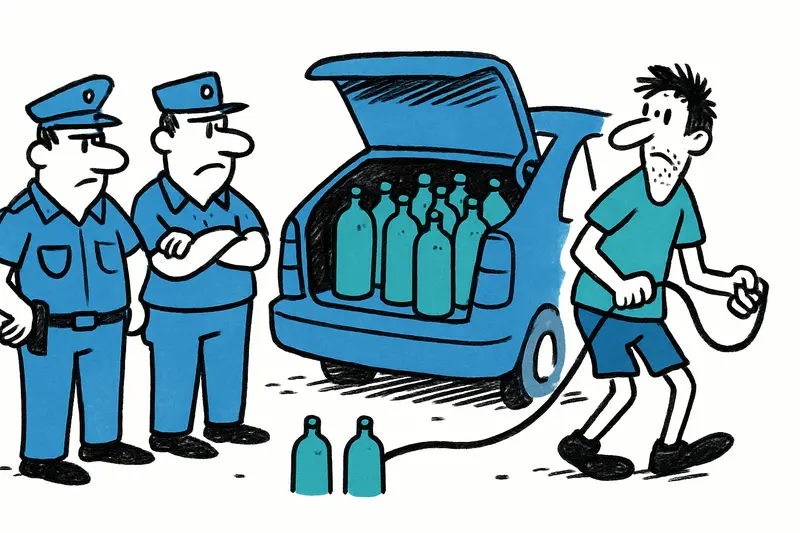
An image you wouldn't expect these days at Playa de Palma: police officers, an opened rental car and 18 metal canisters of nitrous oxide. The discovery, which led to two arrests and removed almost 30 kilograms of nitrous oxide (N2O) from circulation, is more than a brief police snapshot – it points to a system that only partially reveals itself to the public and law enforcement.
Briefly on what happened: In the early morning hours, a man behaving conspicuously and apparently escorting a rental car was noticed at a checkpoint. During the check, officers found gas canisters and accessories that, according to investigators, were intended to facilitate immediate consumption on the street. The suspected owner later told police that the cargo belonged to him; he was arrested.
Critical analysis: the incident exposes three problem areas. First: logistics. 18 canisters of around 1.5 kilograms each are not a private quantity for a one-time use on the beach. Such amounts suggest commercial offering on site, interim storage or distribution to several buyers. Second: the sales channels. Nitrous oxide can be obtained via online marketplaces, wholesale suppliers for the catering industry and via gray channels. Third: the demand side. At Ballermann and neighboring beaches there is a high demand for quick intoxication experiences – this makes the island attractive to dealers seeking rapid turnover.
What often gets short shrift in public debate: the health risks are usually reduced to a few headlines; the structural reasons for distribution remain invisible. Who benefits most from these supply chains? How closely are retailers, car rental companies, as discussed in After Cash Robbery in Playa de Palma: What the Risky Escape in a Stolen Rental BMW Reveals About Mallorca's Security Gaps, and online platforms involved in the spread? And: are existing legal instruments and controls sufficient to prevent larger quantities from circulating?
Everyday island scene: Late in the evening, when the beach bars quiet down and the last buses rattle along Avinguda de Joan Miró, empty boxes, small metal nozzles and single-use balloons lie on the sand. Tourists look for shade and quick entertainment. Residents hear the sputtering of scooters and the clinking of the last glasses. This mix of partying and carelessness creates spaces where trade in legal and semi-legal substances can thrive.
Concrete approaches: what is needed is not an ethics committee, but practical local policy. First, targeted checks should be strengthened on access roads and at rental stations, combined with training for officers to recognize signs of commercial transport. Second, wholesale flows should be monitored: deliveries exceeding normal catering needs should be reportable. Third, local regulations should ban the public use of gas cartridges and set clear fines for violations. Fourth, online commerce is a lever: nationwide rules could require platforms to report large-quantity sales and tighten age verification.
Prevention must not end in repression. A simple but effective measure is education: posters on beachfront promenades, information at hotel check-ins and short spots in local taxis about the health consequences of nitrous oxide misuse. Collection and disposal points for boxes and cartridges would also prevent remnants from ending up uncontrolled in beach waste.
On the legal framework: offenses against public health can, depending on the scale, be prosecuted as criminal acts. The arrests in Playa de Palma are therefore a necessary step, as covered in Night raid at Playa de Palma: assessment, questions and what's missing. But they do not automatically answer why structures form on the island that facilitate short-term business with intoxicants.
My conclusion: the find is a warning sign, not a one-off shock. Anyone who walks the beaches of Palma in the morning sees more than sand and umbrellas – they see how quickly temporary markets for drugs of all kinds establish themselves. Short-term police successes are important, but equally important are rules, controls and neighborhood work that make access to such substances more difficult. If we take the problem seriously, the response must go beyond individual arrests: close systemic gaps, fill information deficits and secure the places where holidays become a risk.
In the coming weeks, investigations will show whether this was an isolated vehicle with dubious contents or the tip of a larger distribution system, as seen in Half a Tonne of Cocaine at Playa d'en Bossa: Who Benefits — and What Must Change?. Until then, Playa de Palma remains a test for police, politics and all of us who live on or visit the island.
Frequently asked questions
Why is nitrous oxide a concern at Playa de Palma?
How do police usually find larger nitrous oxide shipments in Mallorca?
Is nitrous oxide legal to buy in Mallorca?
What health risks are linked to nitrous oxide use on Mallorca's beaches?
Why is Playa de Palma a place where drug dealing can spread quickly?
What can be done to stop nitrous oxide sales on Mallorca?
Where do nitrous oxide canisters on Mallorca usually come from?
What should visitors to Mallorca know about nitrous oxide on the beach?
Similar News
So Many Tonnes: What Mallorca's Garbage Boats Accomplish — and What's Missing
23 boats patrol in summer, and 36.8 tonnes were recently pulled from the water. The fleet is shrinking — is that still e...
No Identification Documents on the Steep Slope: Body near Tolleric Raises Questions
The body of an elderly man was found over the weekend in a wooded area near the cliffs of Tolleric. He had no identifica...

Arrest at the Port: Three Suspected Pickpockets Left Mallorca After Series of Thefts
The National Police stopped three men at Palma harbour who are accused of several thefts at the airport. How could the g...

Palma's Rental Bike Boom: More Bikes, More People, More City Life
Since Bicipalma was opened to non-residents, the system has noticeably grown. Students, residents and tourists bring lif...

Palma–Lyon in Winter: Two Weekly Flights Bring Fresh Momentum
From October Transavia France will connect Palma and Lyon in winter as well: Wednesdays and Saturdays, around 17,000 sea...
More to explore
Discover more interesting content

Boat Tour with BBQ along Es Trenc Beach

Private transfer from Mallorca Airport (PMI) to Pollensa
