
Fog paralyzes Son Sant Joan: Why visibility disrupts the flight schedule — and what could help now
Thick morning fog at Palma Airport (Son Sant Joan) caused numerous delays, crowded taxi ranks and tired travellers. A look at the causes, the little-noticed consequences for the island, and concrete proposals for how such disruptions can be mitigated in future.
Thick fog slows flight operations at Palma Airport — a morning of changing displays, blankets and taxi queues
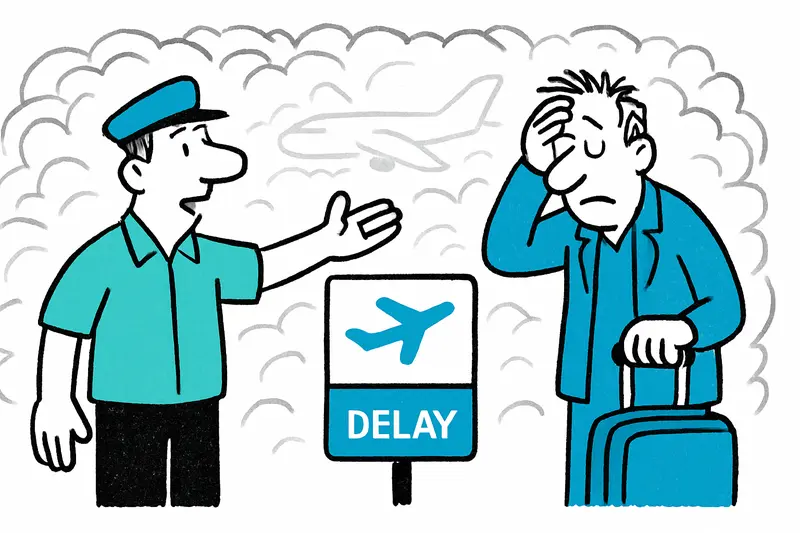
The day began sluggishly at Son Sant Joan Airport: thick fog hung over the taxiways, displays flickered with constantly updated departure and arrival times, and passengers waited with their suitcases in hand. Between 7:00 and 9:30 a.m. many commuters and holidaymakers reported delays of up to an hour and a half. The clouds hardly lifted in front of the terminals; only the low hum of engines and the distant beeps of the flight information systems broke the foggy silence. This was also reported in Mallorca in Fog: Visibility Almost Non-Existent, Airport Operations Disrupted.
The central question: Is Son Sant Joan well enough prepared for recurring fog events — or do such mornings expose weaknesses in information flow and island logistics? A recent piece, Morning fog paralyzes Palma airport – How weatherproof is the island's infrastructure?, explores similar issues.
What exactly happens when fog rolls in?
When visibility falls below a defined threshold, air traffic rules come into effect: runways are used less, separation between movements is increased, and certain ground handling tasks are carried out only in a restricted manner. Air traffic controllers then switch to a tightened safety regime — resulting in fewer movements per hour. This is not a bureaucratic reflex but a basic safety reality. For passengers this means new times on the displays, patience on the benches and, as observed today, longer queues for buses to Palma city and at the taxi ranks by the access road.
Such scenes are also familiar from the long‑stay car park: families with damp jackets, small children sitting on suitcases, a staff member at Gate B12 handing an elderly lady a blanket and a coffee — small gestures that make the morning more human.
Aspects that are often underdiscussed
First: the domino effects for the island economy. Delayed arrivals shift transfers, reduce time for hotel check‑in and can affect excursions or ferries. Second: the communication flow. Not only airlines, but also the airport operator and local transport providers need to deliver synchronized, clear real‑time information — which does not always happen. Third: ground work organisation. Ground staff work more slowly and cautiously in poor visibility — this is necessary but often not cushioned by flexible rostering.
And fourth: comfort and protection for waiting travellers. In foggy conditions the early hours are damp and cold — covered waiting areas, extra hot drink machines or temporary shuttle stations would make a big difference.
Concrete proposals — pragmatic and immediately implementable
1) Better, networked real‑time information: a shared display platform operated by Aena, local transport providers and the airlines could automatically provide updates during disruptions — via app, email and digital panels outside the terminal. Clarity reduces stress.
2) Coordination of ground transfers: when delay risks are higher, a contingency plan should kick in — more buses on standby, temporary taxi regulations and agreements with hotels for later check‑ins. This prevents long queues at the access road.
3) More flexible staffing: ground crews with reserve personnel for fog periods or rotating shifts so that marshalling and service tasks are not delayed further.
4) Short‑term comfort measures: mobile covered waiting areas, free hot drinks for long waits and active assistance for older passengers — simple measures with big impact.
Looking ahead: why patience and planning must go hand in hand
The fog will lift — often already during the day. But today’s picture shows how tightly technology, staff and local infrastructure must be linked so the island can quickly return to its normal rhythm. For travellers: check status updates, allow extra time and act early on connecting flights. For those responsible: there are lessons to be learned from such a morning. Similar challenges were seen during other extreme weather, for example Severe storm halts Palma Airport: Why delays hit inter-island services and travelers especially hard. Not only for efficiency, but also out of respect for those arriving or departing Mallorca in the fog.
In the end there remains a conciliatory image: helping hands at the gate, the smell of coffee in the air and the quiet promise that prevention and pragmatic solutions can make such days less painful in the future.
Frequently asked questions
Why does fog cause flight delays at Palma Airport?
What should I do if my flight from Mallorca is delayed because of fog?
How cold does it feel at Palma Airport during a foggy morning?
Is Palma Airport prepared for fog-related disruption?
How long do fog delays at Son Sant Joan usually last?
Why are taxi queues so long when Palma Airport is affected by fog?
What can airports and transport providers in Mallorca do better during fog?
Should I plan extra time for a Mallorca airport transfer in foggy weather?
Similar News
After Being Admitted to Hospital Again: Heinz Hoenig and the Questions We Should Ask in Mallorca
Long-time Mallorca resident Heinz Hoenig was admitted to hospital again. A clear “what next?” is missing from the covera...
Yellow Alert: Is Mallorca Prepared for the Next Rain Band?
Aemet has issued a yellow alert for the south, southwest and the island's interior. Thunderstorms and heavy rain are for...
Kegel brothers trial postponed: Why Mallorca must wait for a verdict
The trial of 13 German holidaymakers will not begin until May 2028. The long wait raises questions — for victims, defend...
Chaos on Palma's Runway: Why the Summer at the Airport Was So Disrupted
This summer laid bare where Palma airport is faltering: only just over half of departures were on time and seven percent...

Cocaine Offer on Ham Street: Why the Open Trade Should Ring Alarm Bells
In the middle of Pare Bartomeu Salvà a tourist was offered a packet of cocaine as part of a sunglasses deal. A short int...
More to explore
Discover more interesting content

Can Cap de Bou

Townhouse Lleo 72
