
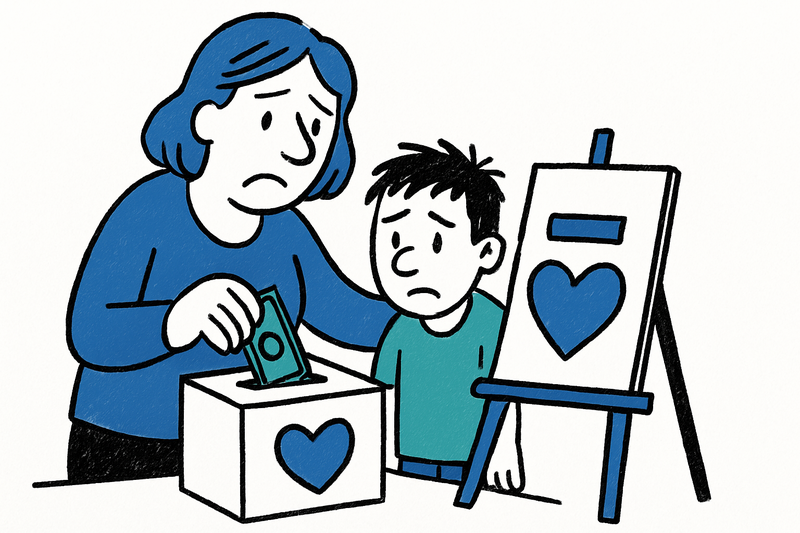
When Grief Costs Money: Fundraiser After Death of a Cyclist in Santa Ponsa
In Santa Ponsa a small neighborhood mourns a 51-year-old resident who died in a traffic accident on his way to work. His family is now collecting donations — and asks an uncomfortable question: why must people here ask for money to cover basic funeral costs?
When Grief Costs Money: Fundraiser After Death of a Cyclist in Santa Ponsa
The corner by Calle del Mar still looks ordinary: a kiosk, the smell of freshly brewed coffee, the occasional rattling of a moped. But since the end of July a heavy silence has hung over Santa Ponsa. A 51-year-old German resident who rode his bike to work in the morning was killed in a traffic accident, a reminder of other island incidents such as Serious Traffic Saturday: Cyclist Dies in Selva, Motorcycle Crash in Sóller Tunnel. He leaves behind a 13-year-old son who had been living with him. The small community is affected — and at the same time faced with a practical question that is surprisingly often swept under the rug here: who pays for the farewell?
Neighbours talk about everyday life
"He was one of those you see in the morning: helmet, shorts, thermos in the pannier," says a kiosk vendor as seagulls call somewhere nearby. Such observations make the loss personal. Friends and neighbors speak quietly about appointments, school routes and who can temporarily support the boy. Everyday life continues — the waves on the promenade, the voices in the bars — only the color is darker now.
The bitter bill: funeral costs in Mallorca
The family has calculated that the total cost of the burial will be around €6,000. The boy’s ex-partner and mother started a fundraiser with the concrete goal of first raising €2,200 to cover the most urgent items. "A minor must not have to bear such costs," the organiser writes, and this hits a nerve: many long-term residents have neither savings nor adequate insurance for such cases.
That families in a wealthy holiday region have to ask for help seems paradoxical. But it is reality: cleaning and transport costs, administrative fees, coffin or urn, and not least bureaucratic formalities — all of this adds up quickly. For residents who have no financial cushion or whose insurance situation is unclear, a personal loss can quickly become a financial emergency.
How the neighbourhood reacts — small gestures, big impact
In Santa Ponsa the community reacts, as so often, pragmatically and warmly. Maria, who runs a café on the promenade, gathered signatures and sold cookies over the weekend in exchange for donations. A schoolfriend of the boy brought over his old bicycle. Some offer clothes, others free hours to handle paperwork with authorities. These gestures are not a luxury — they are direct help. And they show: solidarity on the island often still works on a personal level.
The key question: must grief here become crowdfunding?
The incident raises a central question: why are families forced to ask strangers for money on platforms just to pay for basic funerals? Several aspects are neglected in the public debate: lack of transparency around funeral prices, missing insurance products tailored to long-term residents, and insufficient information about municipal assistance.
Concrete approaches that could help are not new — yet they are often missing in practice: a municipal emergency fund for long-term residents, regular information offers from town halls (Ayuntamiento), for example the Ajuntament de Calvià website, about funeral and advance care options, and the promotion of affordable funeral formats. Expat associations and neighbourhood initiatives could also be better networked to provide quick practical support in acute cases; similar episodes of mourning and unanswered questions are documented in Death on Lombok: Mourning in Mallorca — and Many Unanswered Questions.
What matters now — practical steps
For the boy, big politics are secondary to everyday care: reliable contacts at school, access to psychosocial support and people who can help sort out belongings. Those who want to help should respect the family's request: discretion, no sensationalism, and help that is actually needed — whether money, warm clothing or time for administrative errands.
To safeguard against similar cases, residents in Mallorca could also check: is there funeral insurance? Who can act as legal guardian? And what local crisis support services exist? Recent collisions, such as After head-on crash in Palma: Fleeing and many questions – 31-year-old dies, show how sudden such needs are. These questions are not romantic; they are practical and often decisive.
Outlook: more support instead of one-off actions
The fundraiser in Santa Ponsa once again shows how strong the island community can be. At the same time it is a wake-up call: grief must not become a financial ordeal for children. If long-term structures grow out of the sympathy shown now — neighbourhood emergency funds, better information, municipal support programs — then the grief will at least have a faint silver lining: society learns not to leave losses to those affected alone.
How to help: The family has started a campaign on a well-known platform; details can be found on the GoFundMe crowdfunding platform. Please act respectfully and thoughtfully — and remember: sometimes the most helpful thing is to listen or to offer an hour to help with paperwork.
Frequently asked questions
How much does a funeral usually cost in Mallorca?
Why do families in Mallorca sometimes start funeral crowdfunding campaigns?
What support is available in Mallorca after a sudden death in the family?
How do neighbours in Santa Ponsa usually help after a tragedy?
Who can help with funeral paperwork in Mallorca?
What should residents in Mallorca check to avoid leaving family with funeral costs?
Is there municipal help for funeral costs in Mallorca?
How can people help a grieving family in Mallorca respectfully?
Similar News
Who Benefits from the Half‑Hourly Flight on the Edge? Aena, Investments and the Island's Interests
Almost one billion euros is flowing into Son Sant Joan. The figures show the scale of investment and expected beneficiar...
Are the Balearic Islands the Southern Border of Europe? A Reality Check on Immigration
The Balearic Islands are again calling for EU aid after a sharp rise in arrivals by sea. Conflicting priorities between ...

"Expensive chaos" and many open questions: What clients can do when a lawyer suddenly stops responding
Several clients complain that a well-known German lawyer in Mallorca has been unreachable for months. Key question: What...
TV tip: 'The Last Problem' — Mallorca as the setting of a classic crime
A classic whodunit on Mallorca: A new miniseries set in spring 1959 brings storm, an isolated hotel and a dense web of s...
Nipping Sea Creatures: Why Bathers in Cala Major and Elsewhere Should Be Cautious
In Cala Major, bathers have reported being nipped by small fish. What is behind it, how can problems be avoided — and wh...
More to explore
Discover more interesting content

Can Cap de Bou

Townhouse Lleo 72
