
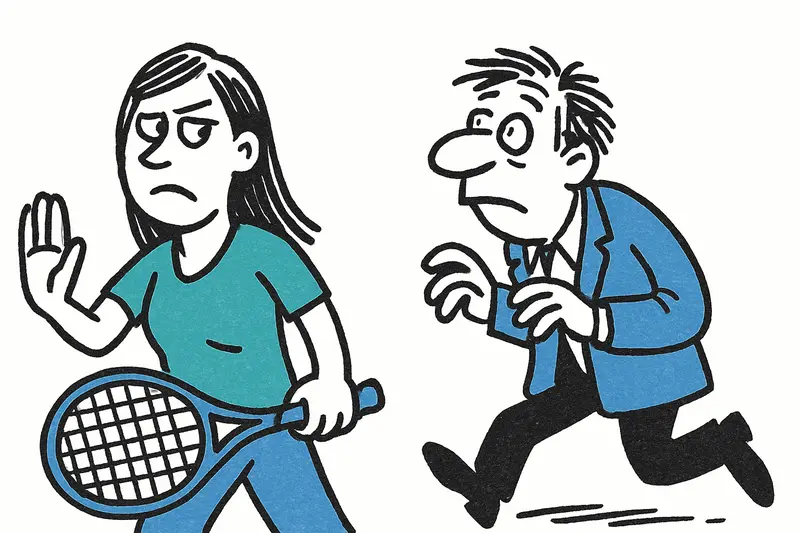
Manacor: Conviction after stalking of Rafa Nadal's sister – How safe are employees in public places?
A German resident in Manacor was sentenced to probation after allegedly harassing Rafael Nadal's sister for weeks. The verdict sets boundaries — but it also raises questions about prevention and the protection of workers in public spaces.
A verdict that sparks discussion on the plaza
On the Plaça of Manacor, where the morning scent of coffee drifts from the bakery and the older men fold their newspapers, this week's verdict was the topic of conversation. A 37-year-old German resident was convicted in an accelerated procedure after admitting to having harassed Rafael Nadal's sister over several weeks. Details were reported in Probation after stalking allegations in Manacor: Is it enough for protection and deterrence?. The facts: repeated unwanted advances at her workplace in the tennis academy, persistent calls and messages at unusual hours, sometimes in the middle of the night.
The court's decision and its consequences
The judge handed down four months in prison, suspended for two years. In addition there is a restraining order and the requirement not to come within 200 meters of the woman. If violated, the probation may be revoked and the sentence enforced. For neighbors and colleagues this is a clear signal — but also a quiet proof that such cases often have to escalate before action is taken.
Key question: Are people at public workplaces in Mallorca truly protected?
This is the central question that keeps coming up in conversations on the Plaça. The answer is complex. On an island like Mallorca, proximity and public life play a special role: people know each other, faces are recognized, and at the same time there is reluctance to make things "public." Many affected persons wait, hoping the problem will go away — and report it too late.
Less noticed aspects
During the trial it emerged that there may have been indications of earlier harassment of other women, as noted in Condena con libertad condicional por acoso a la hermana de Rafael Nadal en Manacor. Such patterns are often not discussed openly in small communities. There is a lack of systematic reporting mechanisms that could capture sensitive incidents early. Nor is there an open discussion about how workplaces with public contact — like a sports academy in a tourist area — can be better protected.
What the community is saying now — and what might be missing
Many in Manacor breathe a sigh of relief: a court has drawn boundaries, the law has responded. At the same time we hear from employees who felt unsafe on their way to work and were temporarily accompanied by relatives. Visible need for protection is especially noticeable on an island — you can see when someone no longer goes to the bus alone.
But a court verdict alone is not enough. Preventive measures are needed, concrete points of contact and better cooperation between employers, police and social services.
Concrete opportunities and approaches
What could help prevent such cases from escalating in the first place? Some suggestions:
For employers: risk analyses for customer-facing workplaces, training for staff on handling threatening situations, clear internal reporting channels and visible protective measures (e.g. controlled entrances, panic buttons).
For authorities: faster enforcement mechanisms for approach and contact bans, better information for victims about legal steps and local support services, possible use of electronic monitoring measures in particularly persistent cases.
For the community: awareness-raising and information campaigns, low-threshold counseling services, and an open climate of conversation that breaks the silence. On an island like ours, closeness helps, but sometimes it also protects offenders — when neighbors tolerate weaknesses instead of acting.
A quiet glimmer of hope — and continued vigilance
The conviction sets clear limits: no contact, minimum distance, probation conditions. For the victim this is a first step back to normality. For Manacor it is a cue to think about protection concepts. The church bells keep ringing, the cafés fill up again — and yet the reminder remains of how vulnerable everyday life can be.
In the end, it's not only about criminal consequences, but about the task for all of us: to look, rather than look away. If the conversations on the Plaça now lead to concrete protective measures, that would be a real improvement for the island community.
Frequently asked questions
How safe are employees in public workplaces in Mallorca when they report harassment?
What should you do in Mallorca if someone keeps contacting you after being told to stop?
Are restraining orders and probation enough to protect victims in Mallorca?
Why do harassment cases in small Mallorca towns often stay quiet for so long?
What can employers in Mallorca do to protect staff at customer-facing workplaces?
What support is available in Mallorca for someone who feels unsafe at work?
What does the Manacor case say about stalking at workplaces in Mallorca?
How can workplaces in Mallorca respond faster when an employee reports feeling threatened?
Similar News

Dog caught on MA-19 near Llucmajor — Police take animal into custody
A large, unmarked dog was roaming the MA-19 near Llucmajor on Sunday morning. Motorcycle units of the Policía Local clos...
Holiday in Mallorca: Where you can still shop on Monday, October 12
The Spanish National Day on Monday, October 12: many shops remain closed, but some supermarket branches and outlet store...
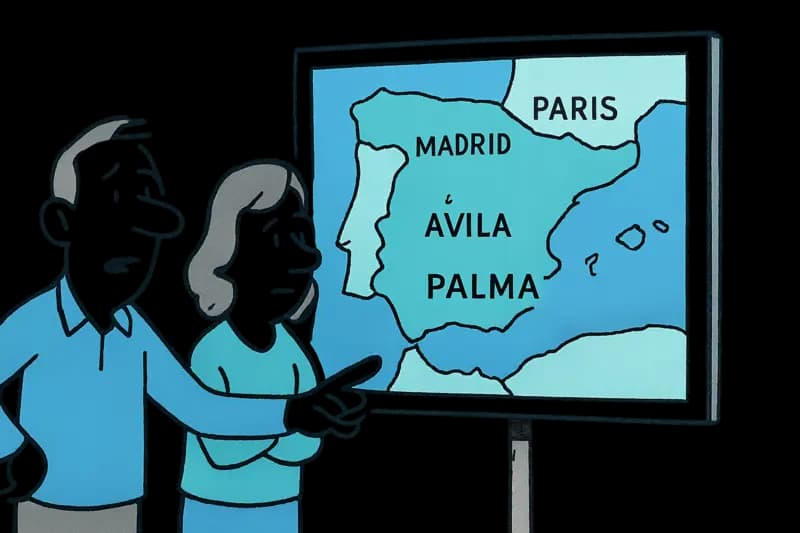
Advertising poster relocates Palma to the mainland - what the mistake says about us
An advertising poster for flights from Andorra shows Palma on the Spanish mainland. Why such an error occurs, what is mi...
Who Protects Valldemossa's Charterhouse? A Construction Site That Leaves More Questions Than It Opens
Two new entrances in the Claustre de les Murteres have pitted the administration against the opposition. Who authorized ...
Between Runway and Keel: How Boatbuilding Lives in Son Bonet, Mallorca
In the small Son Bonet airport, craftsmen preserve the island's boatbuilding tradition: restoration work, woodworking gu...
More to explore
Discover more interesting content

Can Cap de Bou

Townhouse Lleo 72
