
When the Handyman Came: How an Engagement Ring Disappeared in Mallorca and What It Says About Trust
When the Handyman Came: How an Engagement Ring Disappeared in Mallorca and What It Says About Trust
During a repair in Andratx a highly personal engagement ring went missing — a case that calls not only for punishment but for prevention: how do you protect privacy, jewelry and trust when strangers enter the home?
When the Handyman Came: How an Engagement Ring Disappeared in Mallorca and What It Says About Trust
Leading question: How secure are apartments when tradespeople come in, and what gaps do cases like this reveal about rules, pawnshops and neighborhood trust?
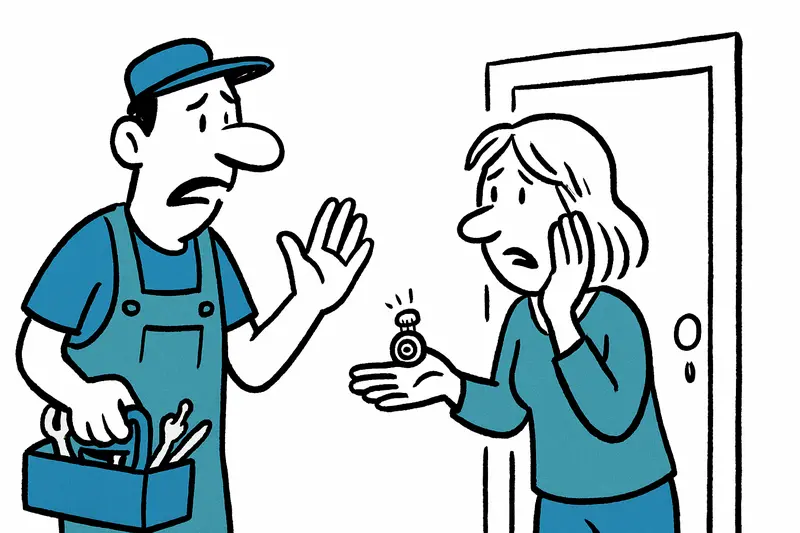
On an ordinary October afternoon in 2021, in a quiet residential area of Andratx, tradesmen rang at a door to fix a heating boiler malfunction. Tools clattered, conversations about pipes, now and then the smell of coffee from an open kitchen — the scene was so unspectacular that the owner overlooked her wedding ring. Later it emerged: a ring with a diamond and a personal engraving — a date and a name — had disappeared. Its estimated value: €3,925. Months later it turned up in a pawnshop on Avenida Gabriel Alomar in Palma, pawned for €395.
Critical analysis: evidence, indications and judicial conclusions
The court found there were enough indications in the overall situation to convict the plumber of theft and his partner of handling stolen goods. Decisive clues: the tradesman's presence in the flat at the time of the crime, the fact that the ring was handed to the woman shortly afterwards, and her own statements to the employer, who firmly rejected the alleged gift. In addition, the woman revealed details about the unusual engraving that could not be described without prior knowledge. The decisive point of discovery was the pawnshop's receipt, which, according to the court, bore her name.
Important: there was no single proof such as video footage of the act. The court relied on a combination of indications. In practice, this means for the rule of law and the public: an immediate "robust proof" is not always necessary; a coherent overall picture can be sufficient. This legal reality is difficult to convey to victims who hope for clearly visible evidence.
What is missing in the public debate
Publicly, the focus quickly turns to punishment: who got what? But few ask how victims can be better protected or how the recovery of personal items can be made easier. Also rarely discussed: the role of pawnshops. They are obliged to check identities, but the practical control mechanism remains patchy. A photo and a receipt were enough in this case to follow the trail. Does that mean pawnshops need stricter checks, longer retention periods or digital networking with police databases? The argument gains weight alongside cases such as a Palma jewelry theft case.
Employers of tradespeople are also insufficiently included in the discussion. Clients trust when company staff enter their homes; incidents such as an alleged handyman fraud in north Mallorca underline the need for company-level protections — for example registering tools, conducting background checks before assignments or a kind of callback protocol for sensitive jobs.
Everyday scene: a Saturday morning in Palma
Imagine Avenida Gabriel Alomar on a Saturday: deliveries roll by, a phone call in Italian is interrupted by the jingle of keys, people pass documents through the counter window of a pawnshop. That's exactly where the ring landed — for a fraction of its value. The woman who brought it may have described it matter-of-factly; for the owner it was a piece of memory, hardly measurable in euros. These small dramas play out in the city every day, half in passing, between café espressos and construction noise. Similar thefts have shaken other towns, for example a jewelry theft in Porto Cristo.
Concrete solutions
1) Better prevention in homes: for sensitive repairs, briefly lock away all valuables or document them visibly. A simple list or photo before entry can make later attribution easier. 2) Duty of care for pawnshops: obligation to longer storage and improved identity checks, digital cross-check with police records for suspicious items. 3) Industry rules for trades companies: employees should wear visible identification, provide proof of origin for handed-over gifts, mandatory customer notification for unexplained handovers. 4) Reporting systems for owners: an easily accessible checklist for missing-item reports and a central point of contact for jewelry theft — this helps to initiate fast-track investigations. 5) Neighborhood work: local neighborhood groups and property managers could raise awareness — those who receive tradespeople frequently get free tips and a small information sheet.
These measures cost little but could significantly improve the police's informational lead when securing traces.
Punchy conclusion
The judge has spoken, two people were convicted. The punishment does not answer the real, quiet question: why are we so careless with the private when strangers enter? Losing a ring with a personal engraving is losing more than money. The justice system's reaction is necessary. For real prevention, however, we must address everyday routines, pawnshop and trade rules and neighborhood networks. Mallorca is small enough to know each other and big enough to be easily overlooked. A little more caution when opening the door, combined with clear rules for pawnshops and tradespeople, would save many unnecessary losses.
Frequently asked questions
What is the best time of year to visit Mallorca for warm weather and outdoor activities?
What should I pack for a Mallorca trip?
Are Mallorca's beaches suitable for swimming throughout the year?
What outdoor activities are popular in Mallorca besides sunbathing?
How can I travel around Mallorca without a car?
Is it safe to swim near Mallorca's coastline?
What should I know about Mallorca's weather and clothing needs?
Where can I find family-friendly beaches or calm seas in Mallorca?
Similar News
How Burglars Test Fincas in Mallorca — and What You Can Do About It
The Spanish National Police warn of a simple but effective trick: small markings on doors reveal whether a finca is occu...
Palma doubles blue zone: What this means for residents, tourists and narrow streets
From 1 January 2027 Palma's ORA area will grow from around 12,000 to 24,000 spaces. Key question: Will the expansion bri...
Engagement ring disappears during repair: court upholds prison sentences for plumber and partner
During a heating repair in an apartment in Andratx an engraved engagement ring disappeared. After a trace to a pawnshop ...
Unknown Suitcase Stops Ibiza Jet: Why a Security Gap Sent Travelers into the Night
A Eurowings flight from Ibiza to Düsseldorf had to divert to Toulouse because a checked bag could not be linked to any p...
Few Visitors on the Paseo Marítimo: Up to a 30 Percent Drop — and What Needs to Happen Now
This summer on the Paseo Marítimo ended markedly weaker than usual: businesses report revenue losses of up to 30 percent...
More to explore
Discover more interesting content

Can Cap de Bou

Townhouse Lleo 72
