
Healthy golfing: When the swing becomes a trap and how to defuse it
Healthy golfing: When the swing becomes a trap and how to defuse it
Golf is gentle — but not harmless. Our reality check explains what strains really mean for the back, shoulder and knees, what is missing from the public debate, and how players in Mallorca can take concrete preventive measures.
Healthy golfing: When the swing becomes a trap and how to defuse it
Key question: How can golf remain healthy for people of every age, without a handicap turning into a physical problem?
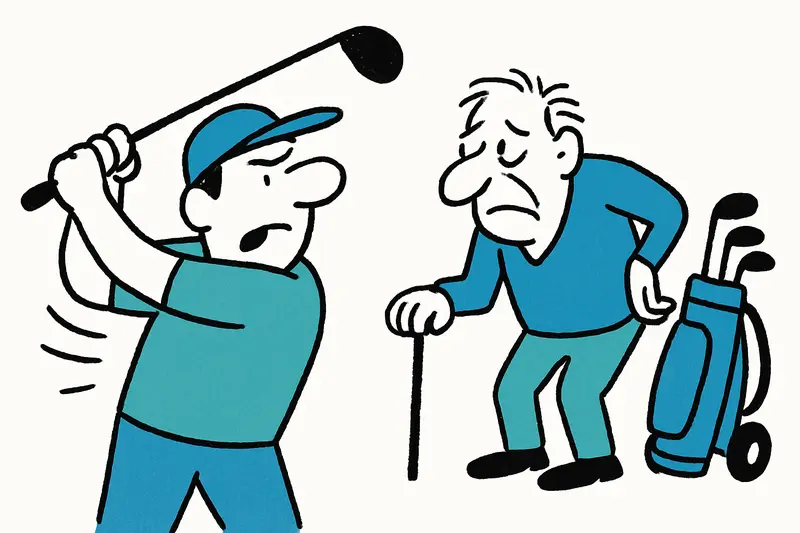
On the early fairways of Son Vida and Son Gual you meet them: seniors with white caps, young couples in the soft morning light, caddies pushing trolleys through the dew. The scene looks calming — but the golf swing can really challenge the body. Many believe golf is just a leisurely walk with a ball and a club. The reality is more complex.
First, the sober analysis: the swing is a coordinative and forceful rotation around the pelvis. If forward bending occurs at the same time or trunk stability is lacking, pressure and shear forces in the lumbar spine increase. Similarly, repeated overhead movements strain the shoulder, and a fixed lead leg generates rotational forces in the knee. The result is often tension, irritation or chronic complaints — especially in the lower back, followed by shoulder and knee problems.
What is often lost in many conversations with players and in the public debate: it's not enough to simply play more often. Technique training without physical preparation is often half-hearted. And passively waiting for improvement can make things worse. Also rarely mentioned is the importance of individually adapted equipment: clubs that are too long or too short, bags carried on one shoulder and the absence of a trolley unnecessarily increase the load.
An everyday scenario from Palma: after the tee shot at Son Gual I often see players rush five minutes to the next tee without warming up. They later complain of pulling in the lower back, stretch frantically at the cart and play on — a recipe for later complaints. Another picture: in the parking lot on Avinguda Méxic retirees push their trolleys into the car, share tips about Theraband exercises and laugh; this little routine often protects more than a good shot alone.
There are concrete, practical solutions for the course and at home:
- Warm-up before every round: five to ten minutes of mobilizing exercises (pelvic rotations, gentle trunk twists, shoulder circles) plus a short walk to activate heart rate and muscles.
- Simple strengthening exercises: side plank variations, hip bridges, rowing movements with a Theraband. Therabands are light, inexpensive and fit in any bag.
- Combine technique with body work: practice club movement and body rotation in separate training blocks; lessons with qualified pros who pay attention to posture reduce incorrect loads.
- Adjust equipment: club fitting for your body height, use trolleys instead of carrying the bag on one shoulder, split bags or backpack-style carry systems.
- Do not keep playing with recurring pain: early orthopedic assessment often saves months of rehab. Multimodal therapy (physiotherapy, targeted strengthening, technique adjustment) is more practical than short-term painkillers.
What is missing from the public discourse: low-threshold, course-based prevention offerings on the islands, more cooperation between golf instructors and physiotherapists and regular short screenings for older recreational players. It would be useful if golf clubs in Mallorca set up warm-up stations with simple exercise instructions and Therabands — a small step with big impact.
For players with complaints, a specialist assessment is advisable. One contact point in Mallorca is the practice of Dr. Heiko Miguel Diedrich (Orthopedics & Sports Traumatology) in Palma, Avinguda Méxic 15. There, orthopedic causes and individual therapy plans are discussed. Contact: Tel. 971-68 43 45, info@ortopedia-palma.es, www.ortopedia-palma.es.
Conclusion: Golf can remain a meaningful, lifelong hobby — if technique, body training and prevention are thought of together. A few minutes of warm-up, regular stability exercises and sensible equipment are easy to integrate into daily life in Mallorca. Those who take warning signs seriously and act early have the best chance of enjoying many rounds at dawn.
Frequently asked questions
How can I play golf in Mallorca without hurting my back?
What is the best warm-up before a golf round in Mallorca?
Can golf cause shoulder or knee pain?
Is walking the course in Mallorca enough exercise for golfers?
What exercises help golfers in Mallorca stay fit and pain-free?
Do I need a custom golf club fitting in Mallorca?
Where can golfers in Palma get help for recurring pain?
Why do older golfers in Mallorca need to be more careful?
Similar News
More water than last year: Mallorca's reservoirs breathe easier
September rain refilled the Tramuntana's reserves: overall fill around 35 percent, Cúber at 40.42 percent, Gorg Blau at ...
Three Luxury Hotels in Banyalbufar: Lots of Money, Many Questions
A Danish investor plans three exclusive accommodations in Banyalbufar — including the historic Son Valentí. The announce...
2.1 tonnes of cocaine on sailing yacht off Spain's coast – a reality check for the coastguard
A 14-metre yacht was seized with 2.1 tonnes of cocaine. Who monitors the ports, how does the international hunt succeed ...
Heat Bonus in Mallorca: 100 Euros Extra for Outdoor Staff at MarSenses
MarSenses pays employees who worked outdoors in August an extra €100 as recognition. Lighter uniforms, reduced hours for...
Renovating in Mallorca: What You Really Can Do Without Neighbour Consent
Many think they can do whatever they want in their apartment. That's partly true — but only as long as structural elemen...
More to explore
Discover more interesting content

Can Cap de Bou

Townhouse Lleo 72
