
Hellish pain after a bite: Are Mallorca's health centers prepared for spiders?
Hellish pain after a bite: Are Mallorca's health centers prepared for spiders?
The brown violin spider (Loxosceles rufescens) is present in the Balearic Islands. Several severe cases show that knowledge and rapid care are lacking in parts of the health system.
Hellish pain after a bite: Are Mallorca's health centers prepared for spiders?
Key question: Do doctors in the Balearic Islands have sufficient knowledge and treatment guidelines to quickly and correctly care for dangerous spider bites?
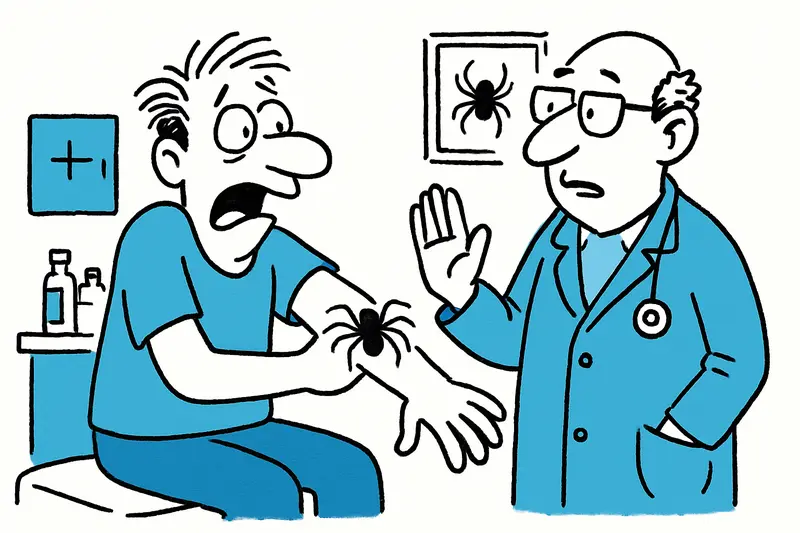
The case of a woman who suddenly felt severe pain in her arm while putting on a sweater, and reports of serious courses on Ibiza remind us: the brown violin spider (Loxosceles rufescens) occurs on Mallorca and the neighboring islands. Anyone who has strolled through Palma's street cafés in recent months has heard the quiet hum of mopeds and felt the cool air, but few people think of spiders when they put on shoes. It is exactly there — in clothing, shoes, dark corners — that incidents happen.
The complaints are no triviality: the bite can cause intense, stabbing pain, the skin becomes hot, and later tissue destruction can occur. Documented cases range from weeks of pain to surgeries and skin grafts when the wound was not recognized in time and treated appropriately.
Critical analysis: In some cases, those affected report being told at health centers that the species does not occur in the Balearics. At the same time, specialists document several severe courses. This is a classic failure at the interface between veterinary and human medicine, public health and primary care: expertise exists, but has not reached everywhere. Missing standard protocols for first responders and unclear reporting pathways complicate quick decisions — for example, when to treat with antibiotics and when to involve surgical assessment.
What is missing in the public discourse: a sober, practical information base for general practitioners, pharmacists and nursing staff. Conversations on buses, at market stalls or in front of schools are more about winter sun and traffic than medical warning signs. At the same time, dramatic accounts circulate in digital groups without clear guidance on what affected people should do immediately. Neither helps anyone.
Everyday scene from Mallorca: A caretaker in Sóller goes up the stairs of an apartment building early in the morning with a sack of old clothes on his shoulder. On one stair lies a few-days-old piece of cardboard, in a corner an open pair of shoes. Nothing unusual: when cleaning a used apartment, workers and residents come close to spiders' hiding places. When a bite then occurs, the phone call to the health center reception often sounds familiar and disturbing at the same time: "It burns like fire, I can't sleep."
Concrete solutions that could be implemented immediately: First, a short mandatory training for general practitioners and nursing staff in the island health centers — 45 minutes, practical cases, photo comparison of bite images, clear alarm signs. Second, simple checklists in practices and pharmacies: symptoms, first measures, warning signs for vulnerable body parts and recommendations for referrals to surgery or dermatology. Third, an information campaign in health centers and pharmacies: posters, leaflets and short videos for waiting rooms, calmly explaining how to check clothing and shoes, how to give first aid and when to seek emergency care. Fourth, a reporting system: central registration of all confirmed cases so that regional clusters can be recognized and resources allocated accordingly. Fifth, cooperation with entomologists: local experts should be available as consultants, including by phone, to assess suspected cases more quickly.
Practical immediate tips for residents and visitors: shake out clothing before putting it on, check shoes inside, wear gloves when handling stones or wood, briefly inspect sleeping areas, especially in shady, seldom-used rooms. After a bite: stay calm, photograph the wound, take painkillers if needed and, above all, seek medical help quickly and explicitly mention a possible bite by this spider species. Early action can make the difference between outpatient care and surgical treatment with a lengthy recovery.
One point must not be overlooked: information must be provided without alarmism. The majority of encounters remain harmless, but the few severe cases are enough to justify targeted measures. Authorities do not need sensational campaigns, but they do need clearly structured, locally adapted action plans.
Conclusion: The Balearic Islands offer not only beaches and mountains but also wildlife that can, in rare cases, have serious health consequences, from snakes described in Why Snakes Are Appearing More Often in Mallorca Now — Danger, Causes and What We Should Do to stinging insects such as Oriental hornet on Mallorca: First nest in Esporles raises serious questions. The key question remains until health centers, pharmacies and citizens share a common minimum of knowledge: recognize, respond, report. This is not a great secret — it is a task for daily practice here on the island, between the marketplace, school and coastal path.
Frequently asked questions
What should I do if I think I was bitten by a spider in Mallorca?
How dangerous is the brown violin spider in Mallorca?
What symptoms suggest a spider bite may need medical care in Mallorca?
Are health centers in Mallorca prepared to treat dangerous spider bites?
Where do spider bites usually happen in Mallorca homes?
How can I avoid spider bites while staying in Mallorca?
What should I tell a doctor in Mallorca after a possible brown spider bite?
Why do some spider bites in Mallorca need surgery or skin treatment?
Similar News

Palma Gets a Welcoming Park: Tirador Goes Greener — and a Café Is Coming
A new green project in Es Fortí/Camí de Jesús will transform the old Voltadora into a city park with an experience fores...
Why the End of "Los Últimos Mohicanos" Is More Than the Closing of a Bar
With squealing tires and one last glass, an icon on the Palma–Manacor expressway closes. Why the demise of this German b...
Protest camp on Plaza España: Who asks for solutions to the right to housing?
Around 30 activists set up a tent camp on Palma's Plaza España to push for stronger tenant rights. Our analysis asks: Ar...
In the Name of a Gang: Alleged Extortion in El Molinar and What It Reveals About the Protection of Sex Workers
A man is accused of posing as a member of the Hells Angels and extorting two women at accommodation in El Molinar. The s...
When Chile Meets the Mediterranean: A New Flavor at Can Bordoy
At Can Bordoy in Palma's old town, Chilean chef Jhonatan Maldonado combines Patagonian seafood with Mediterranean island...
More to explore
Discover more interesting content

Can Cap de Bou

Townhouse Lleo 72
