
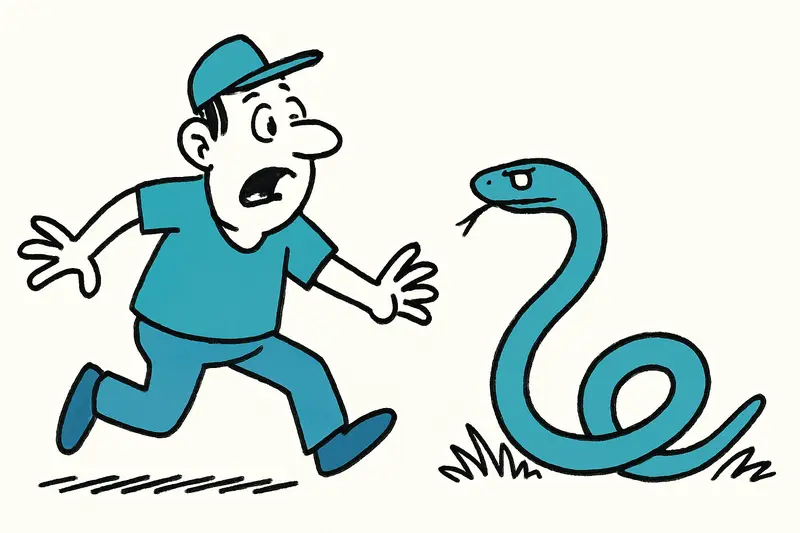
Why Snakes Are Appearing More Often in Mallorca Now — Danger, Causes and What We Should Do
This year locals and holidaymakers are increasingly reporting snake encounters — from Santa Ponça to Santa Maria. What is behind it, how dangerous are the animals really, and which measures could reduce the potential for conflict?
More rustling, more questions: Why the snake discussion is louder now
A rustle in the macchia undergrowth, the clicking of cicadas, a quick heartbeat — and the question: Was that a snake? This summer we are receiving more reports than usual: two particularly large horseshoe snakes in Santa Ponça (including an Alarm at the Malgrats: Invasive Snakes Threaten the Sargantana) and Santa Maria, sightings on promenades and in suburbs. The answer to the main question is not just a natural law: it is a mix of biology, climate, human behaviour and gaps in information policy.
Biology explains the behaviour — but that's only half the story
Reptiles are cold-blooded. When the sun warms a stone wall in the morning, snakes become active, seeking thermals or prey. That explains why more encounters occur around nine a.m. on the beach or the country lane. In addition, longer warm periods and an early spring act as amplifiers. This points to a climate trend that shifts the animals' activity windows — an aspect rarely mentioned in the headlines.
More eyes, more reports — and the role of social networks
Conservationists are better networked, and established reporting chains work faster. At the same time tourists and neighbours post photos in chat groups. That increases the number of reported sightings, not necessarily the number of animals actually appearing. It becomes problematic when curiosity turns into panic: misidentified species, circulating myths and quick lay judgments about “dangerous” or “native”.
Which species you may encounter — and what is often overlooked
Five common species on Mallorca: bastard snake, horseshoe snake, ladder snake, grass/water snake and hooded snake. None of these animals is considered life-threatening to humans — which is reassuring. Less noticed, however, is the dynamic of introduced species: some snakes come from the mainland and become an ecological challenge here because they can affect soil conditions or prey species. Here conservation meets conflict management. A first documented observation is described in 'A snake eats another' - what cannibalism among invasive snakes reveals about Mallorca's ecosystem.
Assessing dangers realistically — without panic
Bites are rare and usually defensive reactions. For medical guidance see NHS advice on snakebites. Nevertheless, situations can escalate when people catch, injure or secretly relocate animals. Such actions harm the ecosystem and often lead to further problems — for example when captured animals end up in the wrong hands or on the black market. A large part of the solution therefore lies in information rather than persecution.
Concrete measures: What would make sense now
1. On-site education: clearly labelled information boards at popular beaches and hiking routes with pictures of the five common species, behaviour tips and the COFIB number help to reduce fear.
2. Training for lifeguards, gardeners and municipal staff: these professional groups are often the first called to find animals. A short training in species recognition and safe behaviour helps avoid unnecessary interventions.
3. Strengthen reporting apps and hotlines: in addition to the emergency number 112, the COFIB number +34 607 554 055 should be better known. Reports with photos allow analysis of distribution patterns and targeted responses.
4. Regulation of the animal trade and control of introduced species: those who bring animals from the mainland must face consequences. Checks at markets and on online ads, combined with information campaigns, would reduce the risk in the long term. This is discussed in Emergency in Mallorca: Why Olive Trees Are Suddenly Banned — and Whether That's Enough.
5. Mapping and research: hotspots (e.g. certain coves, edges of settlements, agricultural hedgerows) should be mapped. That allows seasonal warnings instead of blanket alerts.
Practical rules of conduct for encounters
If you see a snake: stay calm, keep your distance, photograph without approaching, note the location (e.g. "steps to Platja de ses Barques, next to the kiosk"). In an emergency call 112; for wildlife cases use the COFIB number +34 607 554 055 and, if possible, send a photo. Never kill animals or play with children, avoid sudden movements — most incidents arise from panic.
A realistic outlook
Mallorca remains a safe place for hiking and swimming. Nevertheless, the current wave of reports shows that as a society we need to learn to live better with our wildlife. That means: fewer reflexes to "get rid of" animals, more small local measures — information signs, trained contacts and stricter control of introduced species. If we handle the matter sensibly, we can significantly reduce the conflict potential while protecting biodiversity.
Between the cicadas, the scent of pine resin and the clatter of coffee on the plaza, the rustle in the undergrowth is only a sign that the island habitats are in motion. A clear head, a hand on the phone and a photo in the background — often that is all it takes to protect both sides: people and animals.
Frequently asked questions
Are snakes in Mallorca dangerous to people?
Why are snakes being reported more often in Mallorca this summer?
What should I do if I see a snake in Mallorca?
When are snakes most likely to be active in Mallorca?
Which snakes are commonly found in Mallorca?
What is the COFIB number for snake sightings in Mallorca?
Are snakes a problem on Mallorca beaches and walking routes?
Why are invasive snakes a concern in Mallorca?
Similar News
Palma's New Indoor Pool: Sea View, Sunbeds and Space for Everyone
At Aigua Dolça, near the Paseo Marítimo, Palma has a new municipal indoor pool. For a small fee people can now train, re...
How Four Burglars Emptied Ten Houses with a Simple Trick — and What It Means for Mallorca
Four men used the impressioning technique, posed as delivery workers and accepted two years in prison. A reality check f...
Bundles of Drugs, Containers and Open Questions: A Reality Check for Mallorca
3.3 tonnes of marijuana, 80 kilos hidden in golf-ball vending machines and a 44-year-old German released on conditions i...
Rats in Llucmajor: Who clears the streets, who stops the infestation?
In Llucmajor rat sightings and uncollected waste have increased after rain. A local check reveals gaps in cleaning, sewe...
Who will clean up? Illegal rubbish heaps on the highway near Son Gual drive residents onto the streets
For months, construction debris and household waste have piled up along the highway between Palma and Manacor near Son G...
More to explore
Discover more interesting content

Can Cap de Bou

Townhouse Lleo 72
