
Oriental hornet on Mallorca: First nest in Esporles raises serious questions
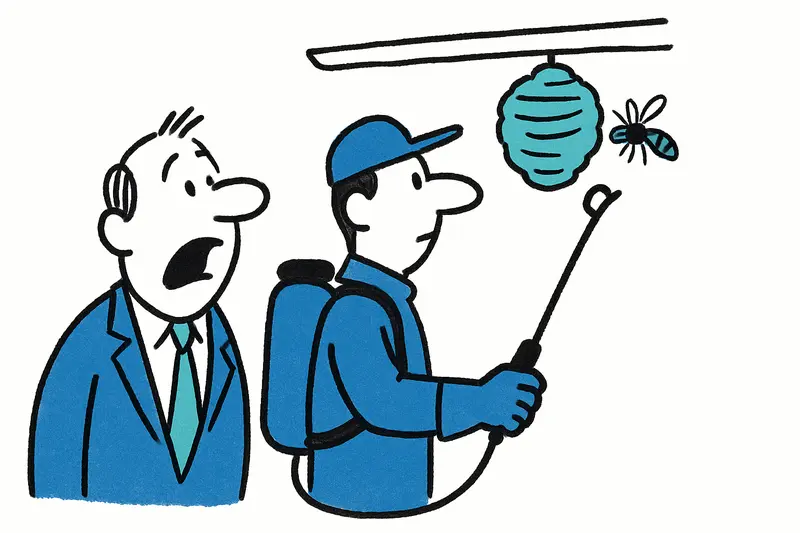
In Esporles the first nest of the Oriental hornet (Vespa orientalis) was discovered on Mallorca. A find that calls for vigilance rather than panic — for beekeepers, municipalities and port controls.
First find in Esporles: A hornet nest that's more than a footnote
One morning, when the scent of damp pine bark still lingered in the alleys and the village cats waited on the wall for the sun, residents in Ses Rotgetes de Canet discovered something unusual for this region: not a single specimen, but an entire nest of the Oriental hornet, as reported in Alarm in Esporles: First Oriental Hornet Nest Discovered – What Matters Now. Staff from the Balearic authority secured the site, workers in yellow vests moved among mortar ruins and pine needles — an image that contradicts the quiet Sunday sounds of the village square.
Key question: How serious is the threat really?
The questions go beyond the usual worry about painful stings: Can the species become established and what would the consequences be for our beekeepers, local biodiversity and tourism? The Oriental hornet originates from North Africa and the Near East and prefers sheltered sites — in sheds, wall crevices or hollow tree trunks. That a nest has now been found on Mallorca indicates the island apparently offers suitable refuges — whether this remains an isolated event or is the start of a spread depends on many factors — climate, available nesting sites and human transport — a development documented in Primer nido de la avispa oriental en Mallorca descubierto – Hallazgo en Esporles.
What is often missing in the public debate
Many headlines focus on the danger to people. That is important, yet ecological and economic aspects easily get pushed into the background. Hornets can stress bees, disrupt hunting behavior at apiaries and thereby affect honey production. Other beneficial insects like hoverflies also suffer from non‑selective traps. And: How did the hornet get here? Plant imports, construction timber, container freight or even a queen travelling in luggage are plausible routes — places like ports, nurseries and garden centers therefore deserve special attention; these possible introductions were also reported in Avispón oriental: se encuentra el primer nido en Mallorca, en Esporles.
Concrete steps that make sense now
First: stay calm and report sightings. Share sightings with location, date and photo to the Servicio de Protección de Especies (Tel. +34 971 176 586, especies@dgmedinatural.caib.es). Second: let experts take the lead. Laypeople should not remove nests themselves — this is dangerous and can make the situation worse. Third: protect beekeepers. Entrance reducer panels, close monitoring of colonies and emergency plans help limit acute damage. Fourth: strengthen municipal prevention. Information leaflets, central reporting points and training for municipal workers increase detection rates and prevent panic reactions.
Why traps are not the simple solution
The temptation to fight hornets with homemade traps is strong — especially on terraces, where more wasps appear in summer anyway. But non‑selective traps often catch bees, hoverflies and other beneficial species. Effective protection requires coordinated monitoring networks under scientific supervision so that non‑target species are spared. Photographing, reporting and keeping distance remain the best immediate measures.
What real prevention could look like
Monitoring at ports and nurseries, fast response chains between municipalities and environmental services, financial support for beekeepers and targeted research: this is not rocket science, but organization. Traps should only be used if they are selective and managed by expert teams. Training for municipal workers, translated information materials for seasonal staff and a hotline for quick assessment could make the difference between containment and slow establishment.
Local voices, practical knowledge
A beekeeper from the valley reports slight unrest at the hive entrances, a neighbor tells of unusually many wasps on the terrace in summer — small observations that together form a picture. Such hints, combined with the smell of pine needles, the chime of the village church and the bustle of the marketplace, are as valuable to specialist teams as laboratory findings.
Outlook: Vigilance instead of panic
Esporles is currently the hotspot — but that does not mean the island will be "infected" overnight. It is a wake‑up call: observe better, act on a sound basis, support beekeepers and equip authorities. In short: don't barricade doors, but keep eyes and ears open.
What you can do immediately: Keep your distance, protect children and pets, photograph sightings and send them to the Servicio de Protección de Especies (Tel. +34 971 176 586, especies@dgmedinatural.caib.es). People with known insect venom allergies should have emergency medication ready. If a nest is nearby, call in experts — and don't lose sight of the beehives in the valley.
Frequently asked questions
What should I do if I see an Oriental hornet nest in Mallorca?
Are Oriental hornets dangerous for people in Mallorca?
Can the Oriental hornet spread across Mallorca?
Why are Oriental hornets a concern for beekeepers in Mallorca?
Should I use homemade traps for hornets on my terrace in Mallorca?
Where was the first Oriental hornet nest found in Mallorca?
How could the Oriental hornet have reached Mallorca?
What is the best time to be extra cautious with hornets in Mallorca?
Similar News

Who Benefits from the Half‑Hourly Flight on the Edge? Aena, Investments and the Island's Interests
Almost one billion euros is flowing into Son Sant Joan. The figures show the scale of investment and expected beneficiar...

Are the Balearic Islands the Southern Border of Europe? A Reality Check on Immigration
The Balearic Islands are again calling for EU aid after a sharp rise in arrivals by sea. Conflicting priorities between ...

"Expensive chaos" and many open questions: What clients can do when a lawyer suddenly stops responding
Several clients complain that a well-known German lawyer in Mallorca has been unreachable for months. Key question: What...

TV tip: 'The Last Problem' — Mallorca as the setting of a classic crime
A classic whodunit on Mallorca: A new miniseries set in spring 1959 brings storm, an isolated hotel and a dense web of s...
Nipping Sea Creatures: Why Bathers in Cala Major and Elsewhere Should Be Cautious
In Cala Major, bathers have reported being nipped by small fish. What is behind it, how can problems be avoided — and wh...
More to explore
Discover more interesting content

Can Cap de Bou

Townhouse Lleo 72
