
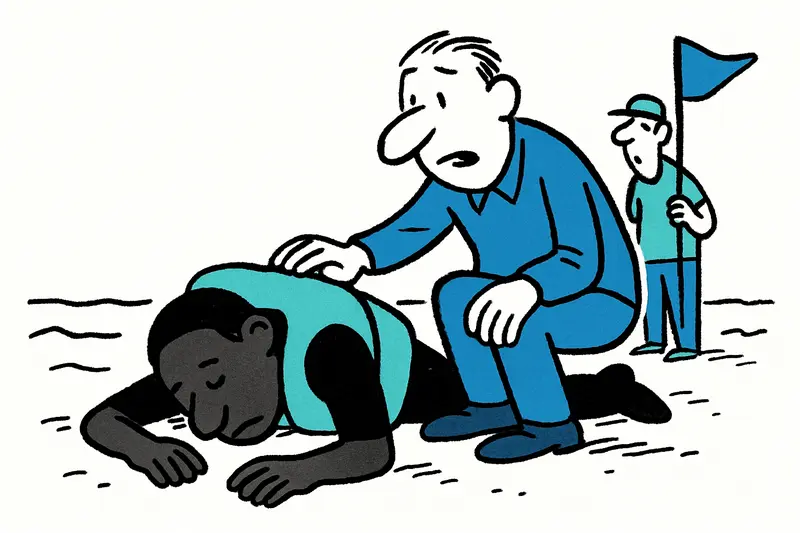
Bodies on Formentera: Who Protects People on the Balearic Route?
Bodies on Formentera: Who Protects People on the Balearic Route?
Two bodies were found on Formentera's beaches. The victims wore life jackets and, according to authorities, came from sub-Saharan Africa. A reality check on the Balearic route: what's missing and what needs to happen?
Bodies on Formentera: Who Protects People on the Balearic Route?
Two dead, many unanswered questions — a look at causes, failures and solutions
In recent days, two bodies were discovered on a beach in Formentera. The Guardia Civil identified the deceased as men from sub-Saharan Africa; both were wearing life jackets and were apparently found by private individuals who alerted the authorities. The cases are part of a series of arrivals via the so-called Balearic route: official figures from 2025 record more than 7,300 arrivals, and the movement has not decreased in 2026, with similar incidents reported as two dead on Balearic coasts.
Key question: How can lives be protected on the Balearic route without merely shifting the political and logistical problems?
The situation requires a sober reality check. First: the cause is not a single event but an interplay of push and pull factors. War, poverty and climate shocks drive people to flee; good weather and calm winds make the crossing possible; and organized smuggling networks provide the means. Second: the technical and personnel resources of surveillance and rescue services are often sufficient only for crisis response, not for prevention. Third: legal hurdles and bureaucratic allocations delay rescue operations and reception.
What is conspicuously missing from public debate is the everyday perspective: there is much talk about numbers, routes and political responsibility, but little about how island societies are concretely affected — and how people on the ground respond. The role of civilian sea rescuers, local clinics and aid organizations also often remains in the background, even though they are the first points of contact in an emergency, as highlighted in reports on 18 people missing off Mallorca.
An everyday scene in Palma illustrates the gap: on the Passeig Marítim early in the morning, when ferries chug between port and sea, anglers sit on the bollards and talk about business and the weather. An older fisherman waves off the conversation when it turns to boat landings: 'We see them, hear the motor noise at night, but often it is too late.' This banal observation hits the core: the island population witnesses events but is often powerless.
Concrete solutions can be divided into three levels: short-term, medium-term and structural. In the short term, more visible search and rescue capacity is needed in sensitive corridors: additional patrol boats, targeted aerial reconnaissance and faster alert chains to ports and clinics. Standardized medical first aid and coordinated handling of bodies should also be implemented.
1. Short-term: mobile sea rescue teams, clear protocols for discovery sites on beaches, a hotline for residents and fishermen, plus coordinated assignment of ships to the nearest safe harbor.
2. Medium-term: expansion of early-warning systems using radar, AIS data and satellite monitoring; training for the Guardia Civil, port police and municipal staff in search and rescue operations; binding agreements between the Balearic Islands and the central government for rapid assistance during peaks.
3. Structural: European cooperation to dismantle smuggling networks, create legal access routes and implement distribution mechanisms within the Union. Equally important are information campaigns in origin regions and programs to stabilize conditions locally — these are not simple projects, but necessary measures if the same tragedies are not to be repeated every year.
The legal dimension must not be neglected: investigations against smugglers must be carried out, while trials and identity checks require humane, efficient procedures. The handling of body transports and identification demands respect for the victims and clear processes so that relatives can be informed.
What matters now is less rhetorical urgency than concrete coordination. The Balearic government has stressed the seriousness of the situation and requested help, but mere statements are not enough: the central government, EU institutions, ports, municipalities and aid organizations must agree on binding, verifiable steps.
Conclusion: Two dead on a popular beach shake the islands' self-image. Similar recoveries were reported in Menorca and Mallorca, including investigations in Ciutadella and off Alcúdia. The sight of life jackets on the sand is briefly shocking, then the outrage often fades. Whoever sits in Mallorca at Café de l'Ombra on Plaça Major and listens to the sound of the ferries should be reminded: these routes are not an abstract statistic. They are a local problem with international causes that require determined and coordinated responses.
Frequently asked questions
Why are people still arriving on the Balearic route to Mallorca and the nearby islands?
What happens when bodies are found on beaches in Mallorca or Formentera?
Is Mallorca prepared to deal with migrant arrivals by sea?
What can residents in Mallorca do if they spot a boat in distress or an unusual landing?
Why do fishermen in Palma and other parts of Mallorca notice sea arrivals late?
What short-term measures could improve safety on the Balearic route?
What role do the Guardia Civil, port police and local clinics play in Mallorca?
Why is the Balearic route considered a European issue, not just a Mallorca problem?
Similar News

The Maricarmen Case: Why an Eviction Is Forcing Spain's Housing Debate
Images of an 87-year-old woman on a stretcher have sparked a debate in Spain that also runs deep in Mallorca. Who protec...
Parking dispute in Els Hostalets: When a gap leads to violence
A parking dispute on Calle Aragón escalated into a mass brawl at night. Why do trivial conflicts here turn bloody so qui...
Bodycams in Palma: More clarity needed so surveillance doesn't become the norm
Palma's local police equip UII officers with Axon Body 4 cameras. Useful for evidence collection — but specific rules on...
When the Bread Door Closes: Why Maria de la Salut Lost Its Last Bakery
The only bakery in Maria de la Salut, a sales outlet of Forn de ca'n Joan Terès from Palma, has permanently closed. What...
Ancient Piece Brought to Light: Guardia Civil Recovers Roman Anchor Fragment off North Coast of Mallorca
Divers from the Guardia Civil recovered a massive iron piece from Roman times off Mallorca's north coast. The roughly 35...
More to explore
Discover more interesting content

Can Cap de Bou

Townhouse Lleo 72
