
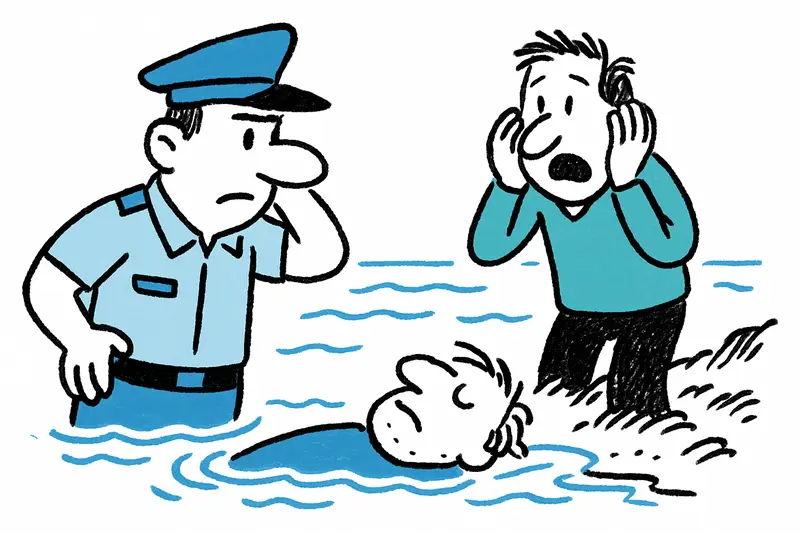
Two Dead on Balearic Coasts: When the Sea Withholds Answers
Within a single day two bodies washed up on the coasts of Menorca and Mallorca. Between fishermen's routines and political debate, a painful question arises: how can such tragedies be prevented?
Two Dead on Balearic Coasts: When the Sea Withholds Answers
On Wednesday rescue teams found a body in two different corners of the Balearic Islands: around 12:30 in the bay of Cala des Talaier near Ciutadella on Menorca, and in the evening, at about 20:00, roughly one nautical mile off the coast of Alcúdia on Mallorca, a case also reported in Two bodies on the coast: Investigations in Ciutadella and off Alcúdia – Many questions remain. Firefighters and the Guardia Civil, including divers from the special unit GEAS, recovered the bodies. On site, police and helpers described the condition as severely decomposed — an indication of a prolonged time in the water.
Two Finds, One Central Question
The central question that remains after days like these is harsh: why do people so often lose their lives at sea — and what could be done differently locally so it does not happen again? Authorities are examining possible links to the small boats that have arrived more frequently from North Africa in recent months, a pattern highlighted in Shipwreck at Cala Millor: One Dead, Many Questions — How Can We Better Protect People?. But the investigative trail is difficult: tides, wind and the warm Mediterranean erase traces. The identities of the deceased are still unknown; families may have to wait a long time for news.
On the pontoons of Port d'Alcúdia the fishermen speak in subdued tones. An older man, who was mending his net, only said: "In recent weeks we've seen this kind of thing more often." You can hear the seagulls, the diesel engine of a fishing boat in the distance and the wind flapping the tarpaulins — and it is precisely this everydayness that makes finding bodies no less shocking, rather more matter-of-fact.
What Often Gets Overlooked
Two images dominate the public debate: the dramatic crossings in overcrowded rubber boats and the political slogans about border control versus solidarity. Less visible, however, are the practical problems on site: small ports without refrigeration for bodies, limited forensic capacity on the islands, and missing interfaces between search-and-rescue, the Guardia Civil and municipal services. The burden on the people who find the bodies — beachgoers, tourists, dock workers — is rarely accompanied systematically, as shown after the Fatal Rescue Attempt in Son Bauló: What Must Change on Our Beaches. Psychological aftercare? Seldom on the agenda of small communities.
Another factor is nature itself: currents and wind patterns can carry bodies over long distances, sometimes between islands, sometimes out to sea. That makes it hard to reconstruct an accident site and to determine whether a case is connected to recorded crossings. And then there are bureaucratic hurdles: how quickly can samples be taken, fingerprints compared or DNA profiles matched across borders?
Concrete Approaches — Not Just Words
If Mallorca and Menorca are to see such tragedies less often, more is needed than outrage. Some pragmatic steps would be:
- Mobile forensic units: A rapid-response team that takes samples, secures documentation and speeds up identification on site. Small ports should have access to such teams.
- Better equipment for small ports: Temporary refrigeration and clear procedures for transporting the deceased can facilitate contact with investigators and inform families more quickly.
- Coordination between search-and-rescue and the Guardia Civil: Joint protocols, shared databases for buoy, GPS and sighting reports, and regular exercises with fishermen and port staff.
- Community reporting and psychosocial support: Simple reporting channels for residents and a clear offer of immediate emotional support after such discoveries.
- European cooperation: Faster DNA matching, shared SAR resources and legal pathways that could reduce life-threatening crossings.
Between Politics and Humanity
Politicians continue to debate closure or humanitarian responsibility. On the quays, however, there is no debate — there is work, mending, recovering and mourning. The perception in small communities is pragmatic: those who look out at the sea every day know its moods. When the water then returns people, it rarely yields simple answers.
For the relatives who may now be waiting for news, time remains agonizing. Investigations are ongoing; every phone number, every buoy, every sighting can be crucial. And while the islands argue politically, the task of preventing such tragedies often falls to local institutions — with few resources but great commitment.
This is not the kind of news anyone likes to read. It is a reminder that the sea promises not only holidays but is also a place where Europe measures its contradictions and duties. In Port d'Alcúdia a fisherman heads home that evening with his net in hand. The seagulls screech, the sky is clear. No one knows the story behind the bodies. Only one thing is certain: questions remain that belong not only to officials but to our whole society.
Frequently asked questions
Why can bodies found off Mallorca be difficult to identify?
What happens when someone is found dead at sea near Mallorca?
Can sea currents around Mallorca carry bodies far from where an incident happened?
Why are small ports in Mallorca important in sea recovery cases?
What is known about the case off Alcúdia in Mallorca?
Why do people in Port d'Alcúdia react so strongly to bodies found at sea?
What support is available for people who find a body on a beach in Mallorca?
How are Mallorca and the Balearic authorities trying to reduce sea deaths?
Similar News
First Day, First Consequences: What Palma's Rent Freeze Really Means
A new decree stops a planned eviction in Palma — but what really changes for tenants and landlords? A reality check with...
When Housing Becomes a Matter of Survival: Mallorca Between Rental Frenzy and Everyday Life
The case of 87-year-old Maricarmen showed that on Mallorca many people's lives are poised between affordable and uninhab...
Autumn in Mallorca: When Melancholy Gets a Window
Why autumn quietly tightens here — and how to make use of the mood: walks, culture, candles and the light from Palma to ...
Near-miss on Lanzarote: Landing Ryanair Jet and Iberia Takeoff — what really went wrong
On Lanzarote there was a dangerous incident: A Ryanair flight (FR5910) from Dublin landed on runway 03 while an Iberia E...
Eurowings introduces new Premium Business seats on Mallorca routes
From December 1, selected Eurowings flights to Palma and other destinations will feature eight particularly generous sea...
More to explore
Discover more interesting content

Can Cap de Bou

Townhouse Lleo 72
